The best bathroom sconce light fixtures light your face from both sides, not just from above. Side sconces flanking the mirror at eye level soften shadows and flatter skin tones, while a well-sized bar suits tight walls. Below, ideas are grouped by placement — single mirror, double vanity, small powder room — with sizing, bulb colour and dimmer tips.
Why Side Light Beats a Single Overhead Light
An overhead light alone shines down from above, casting shadows under the eyes, nose, and chin — exactly where you need to see clearly. Light from both sides, known as cross-lighting, fills those shadows in and gives a far more even view of your face. That is why the classic advice is a pair of sconces flanking the mirror rather than one bright ceiling fixture.
Cross-lighting also changes how the room feels: a single harsh ceiling light feels clinical, while two warm sconces at face height create a softer pool of light for morning routines and evening wind-downs. Keep the ceiling light as background fill, and add a dimmer for bright grooming light or low evening light.
Flanking a Single Mirror: The Classic Pair
For a single vanity mirror, a pair of sconces — one on each side — is the arrangement most designers return to. The fixture centre typically sits around 60 to 65 inches from the floor, putting the light at eye level for most adults. The pair is typically spaced around 36 to 40 inches apart, each fixture usually about 3 to 6 inches from the mirror edge. Those numbers are general guidance, so adjust slightly for an unusually wide or narrow mirror.
Within that placement, the style choices are wide open. Modern glass sconces with a simple metal arm suit a contemporary bathroom and throw a soft, even glow when the glass is frosted or opal. Brass and gold sconces warm up a white or marble vanity and pair naturally with brass taps, and matching the metal finish across the room makes them look intentional. Matte black sconces give the same layout a sharper edge and work well against light tile or pale walls.
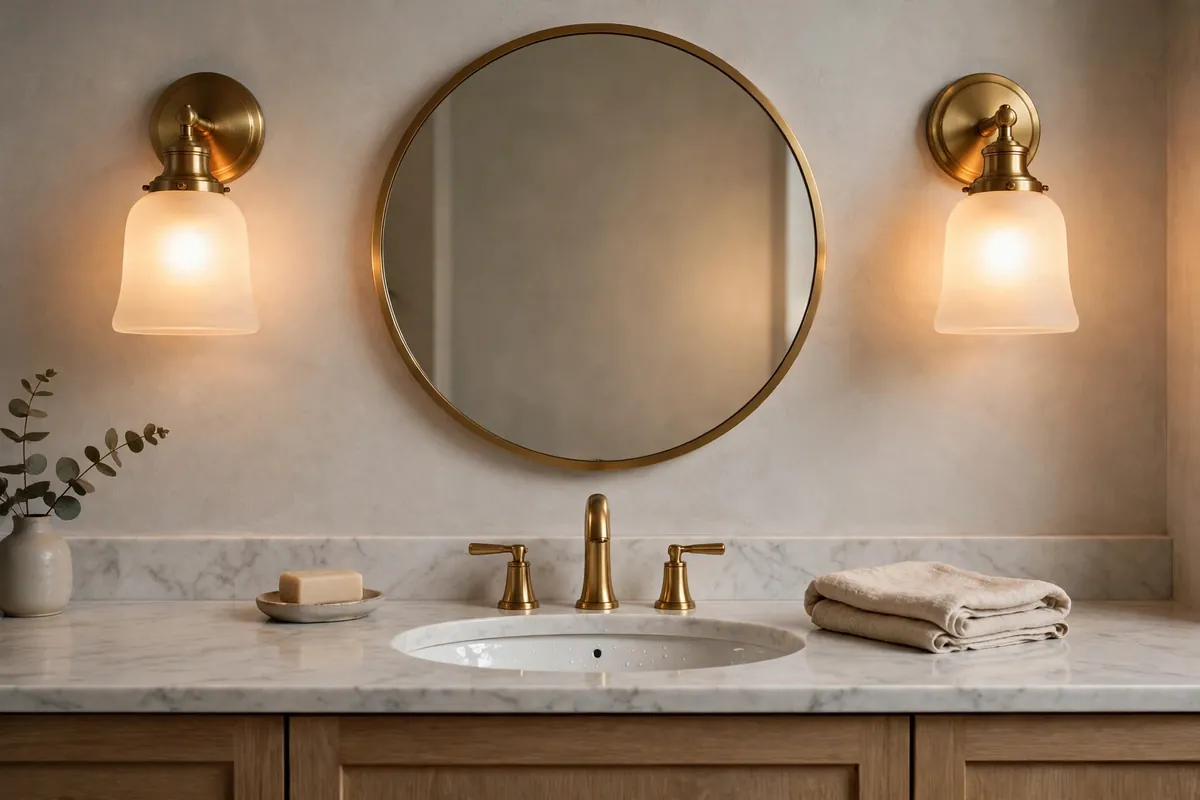
Shade shape matters as much as finish. A frosted or opal shade diffuses the bulb so you see glow rather than a bare filament, which avoids mirror glare. An open shade or exposed bulb can throw hard light and hotspots, so it suits a powder room better than a main grooming mirror; with clear glass, use a frosted bulb.
Above-Mirror Bars for Tight Walls
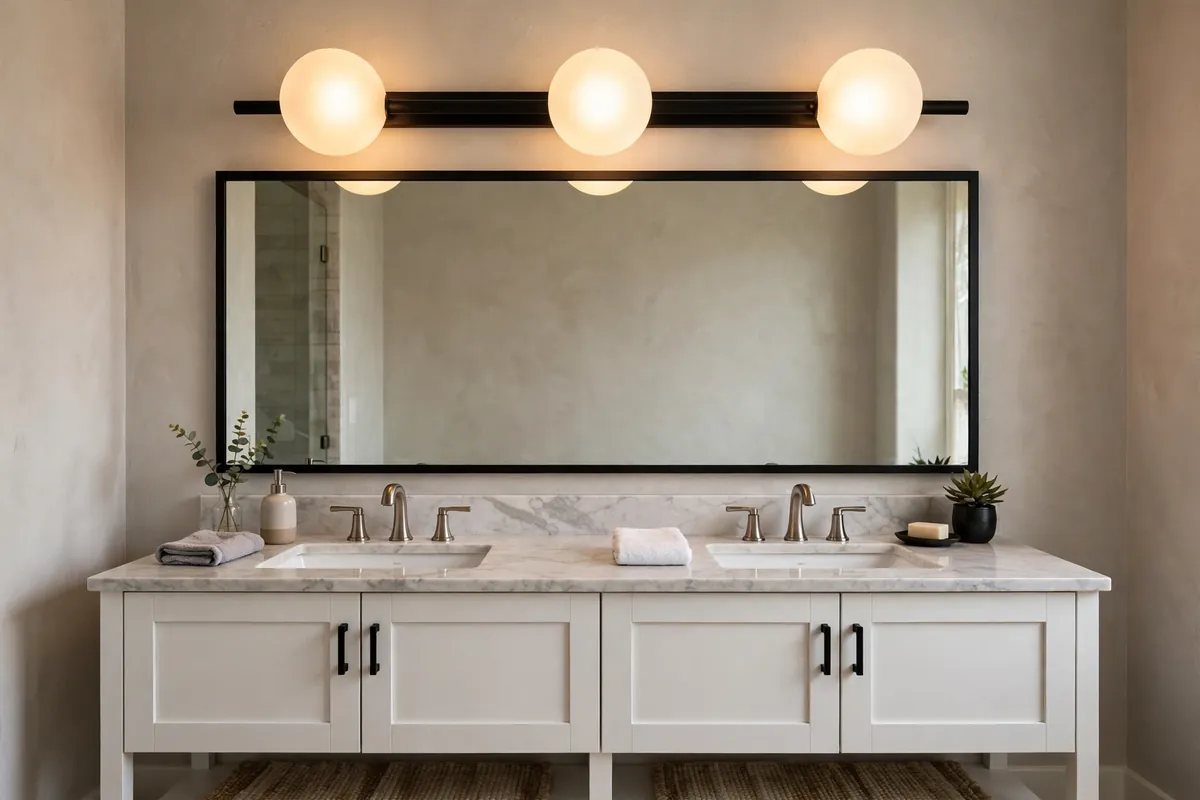
Not every vanity wall has room for a pair of side sconces. If the mirror runs almost wall to wall, or the side walls are taken up by a cabinet or a door frame, a bar mounted above the mirror is the practical answer. The centre of the bar typically sits around 75 to 80 inches from the floor, and the bar itself is typically about one-third to one-half the width of the mirror — one source suggests around three-quarters, which suits wider mirrors.
Bar lights come in the same style families as sconces. A slim modern bar with frosted shades keeps a contemporary bathroom calm, while a brass bar with exposed globes leans traditional. Crystal bars add sparkle and suit a glamorous bathroom, but they throw more patterned light, so they work best alongside a second light source. Whichever style you choose, frosted or opal shades give the most even light, and a dimmer keeps the bar from feeling harsh at night. If the wall itself is getting a refresh, our bathroom backsplash ideas show how the vanity wall can carry the design while the bar handles the light.
Double-Vanity Layouts: One Fixture Per Mirror
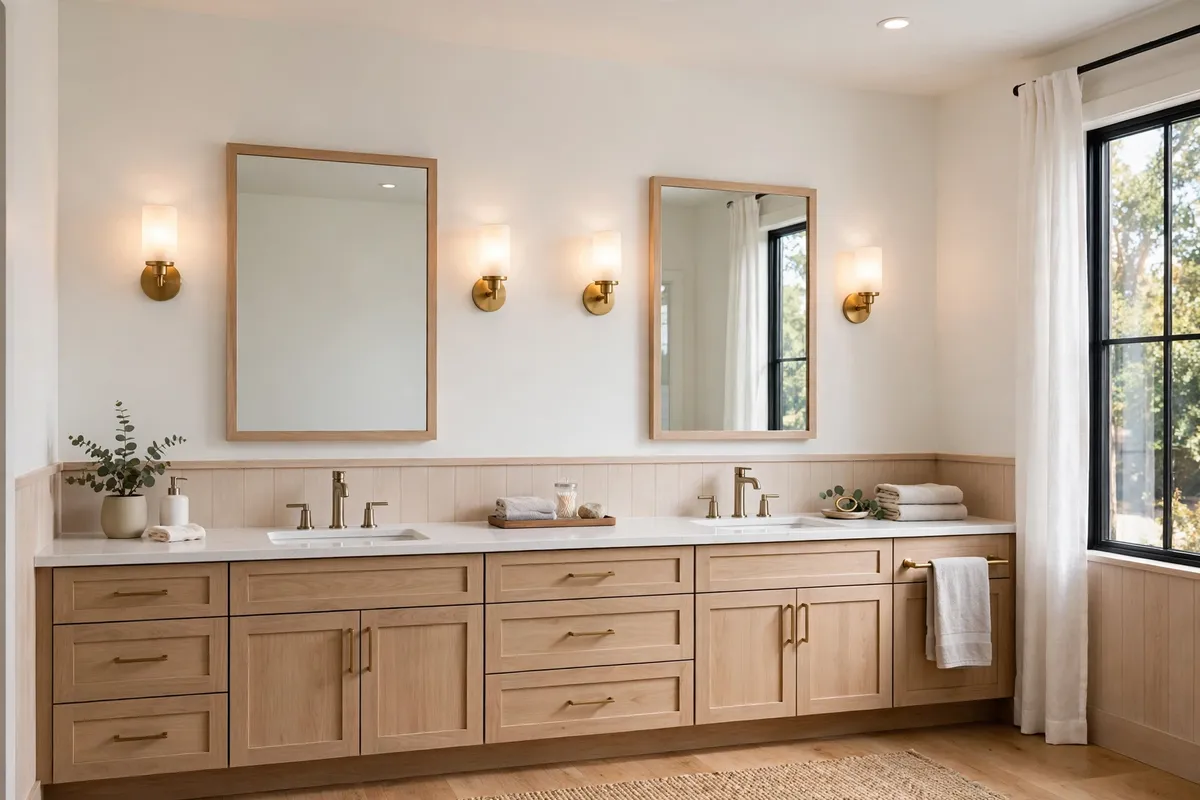
Double vanities need a simple rule: give each person their own light. The most reliable layout is one fixture per mirror — a pair of sconces flanking each mirror, or one bar above each mirror. That way neither person stands in the other’s shadow, and each side can be dimmed independently if the wiring allows.
Where wall space is tight between the mirrors, a three-sconce layout is a neat alternative: one sconce between the mirrors and one at each outer end. The middle fixture serves both sides, and the outer fixtures keep the edges lit. This suits long walls with two mirrors hung close together.
For a shared bathroom, use the same fixture style on both sides so the wall reads as one designed unit. Sconces highlight whatever sits below them, so a tidy counter makes the lighting look twice as good — our best soap dispensers for bathroom guide covers countertop options for under a lit mirror, and the bathroom cabinet storage ideas guide shows how a mirrored cabinet pairs with side sconces.
Small Bathrooms and Powder Rooms
Small bathrooms are where sconces earn their keep, because a single overhead light in a tiny room tends to feel either dim or glaring. A compact pair beside a small mirror gives a powder room a finished, layered look without taking any floor or counter space — the light lives on the wall, where space is usually free.
Scale is the thing to watch: a large sconce that suits a wide primary vanity will overwhelm a pedestal sink, so choose a slimmer fixture with a smaller shade and shorter arm. Battery or rechargeable sconces are worth considering here too: where new wiring is impractical, a rechargeable fixture gives you the flanking look without an electrician, and it suits rented bathrooms. Just check the charging routine first — frequent charging turns a light into a decoration.
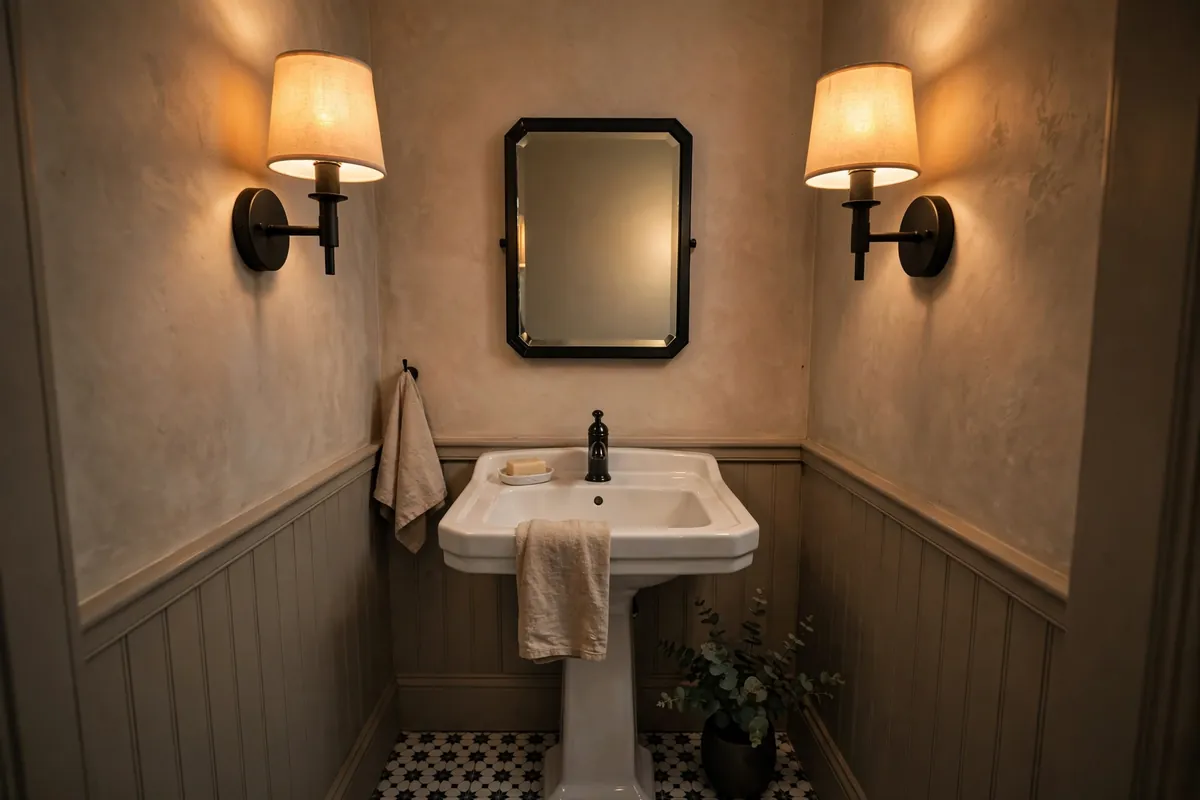
Keep the wall calm: busy tile behind a lit mirror competes with the sconce glow, while a plain wall lets the light itself become the feature. If your small bathroom includes a shower, damp ratings matter even more — our tile shower ideas for small bathrooms cover surfaces that handle that moisture well.
Statement and Decorative Sconces
Not every sconce has to be a grooming light. In a larger bathroom, a statement sconce beside a freestanding tub, on the wall opposite the vanity, or flanking a piece of art turns lighting into decoration. Crystal, wood, rustic, and sculptural modern designs all work here, because the light is there for atmosphere rather than close-up grooming.
Wood and rustic sconces bring warmth to farmhouse bathrooms, especially paired with a wood vanity or open shelving. The wood needs a sealed finish to survive humidity, so keep a rustic sconce sealed and out of direct spray. Crystal sconces suit a glamorous primary bathroom where sparkle is the point, and look best when the rest of the room stays simple. For decorative spots, a single sconce can be enough, and symmetry matters less. If you are styling the walls around one, our corner floating shelf ideas for bathroom show how a small shelf nearby can hold a candle or plant without crowding the light.
Choosing Checklist: Size, Rating, Bulb Colour, Dimmer
Before you buy, run through four checks. First, size: hold the fixture dimensions against your mirror width and wall space, using the typical spacings above, and check the projection so the sconce does not crowd the mirror or walkway. Second, rating: choose damp-rated fixtures for walls near water and confirm the rating suits the spot.
Third, bulb colour: warm white, typically around 2700 to 3000K, is the most flattering choice for bathroom mirrors, since it renders skin tones naturally. Look for a high colour-rendering index, typically CRI 90 or above, so colours read true. Fourth, dimmer: a dimmer costs little and transforms how the sconces feel across the day. Finally, clear the counter below: sconces draw the eye to the vanity surface, so keeping everyday bottles out of sight makes the arrangement look considered — our best under-sink organizers for bathroom guide covers hiding the clutter under the vanity instead.