The best bathroom wallpaper ideas start with the room’s moisture, not the pattern book. A bold botanical print that looks stunning in a powder room can peel within months on a steamy full-bath wall, while a quiet vinyl pattern in the right place will hold its edges for years. Below, the ideas are grouped by what actually decides success in a bathroom: the moisture zone, the material, and only then the pattern.
In short: yes, wallpaper works in a bathroom — if you choose vinyl or vinyl-coated paper, keep it out of direct water, and run the exhaust fan during and after showers. Powder rooms can take almost anything; full baths need vinyl on dry walls only; inside a shower enclosure, tile always wins.
Start With the Moisture Map, Not the Pattern
Competitor roundups mostly sort bathroom wallpaper by pattern — botanical, stripes, toile — and stop there. That misses the decision that determines whether the paper stays on the wall. Think of your bathroom in three zones:
Powder rooms and half baths: wide open. No shower, no steam, so almost any wallpaper works here, including uncoated papers and delicate prints. This is the room to go bold in — guests see it briefly, and it never faces a steam test.
Full baths with good ventilation: a qualified yes. Paper the vanity wall, the wall opposite the shower, or the water-closet wall, and let tile own the wet zone. The exhaust fan is the other half of the deal: run it during the shower and for about half an hour after, and a quality vinyl paper will hold its edges for years. Skip the fan and no material will save it.
The wet zone: never paper. Inside a shower enclosure, directly above a tub deck, or anywhere that takes direct splashes is tile’s job, not paper’s. Asking wallpaper to do it is how the whole category got its bad reputation.
Choose the Material Before the Pattern
Material matters more than motif in a bathroom. Solid vinyl is the safest pick for a full bath: it is non-porous, washable, and steam cannot reach the adhesive layer beneath it. Vinyl-coated paper — a paper base with a protective vinyl layer — suits guest baths and moderate humidity well. Peel-and-stick vinyl is the renter-friendly version of the same idea: it releases cleanly from cured, painted drywall, and if a corner ever lifts you can press it back.
What to avoid in a steamy room: uncoated paper-backed papers, fabric papers and grasscloth. They absorb moisture, swell, and pull away from the wall. They belong in powder rooms only. Whatever you choose, hang it on a clean, fully cured painted wall — paper over dust or fresh paint is already peeling, it just has not told you yet — and consider a mildew-resistant primer underneath for extra grip. Sealing the top and side edges with a thin bead of clear sealant stops humidity creeping under the panel and lifting a corner.
Bold Botanical Accent Walls for the Main Bathroom
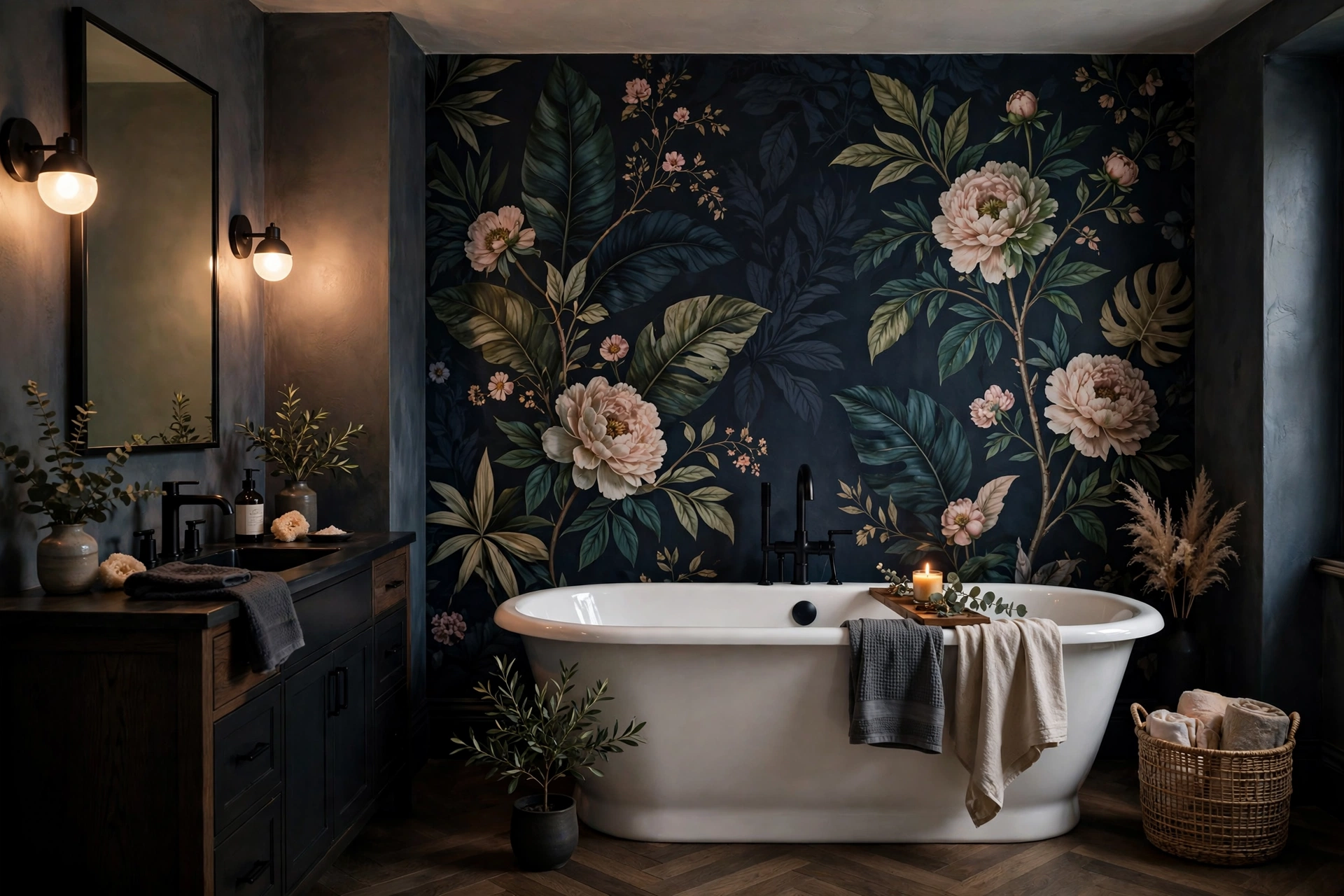
Large-scale botanical prints are the most popular bathroom wallpaper idea for a reason: one accent wall behind the tub or vanity turns a plain room into a designed one, and the leaf shapes suit a room built around water. Dark botanicals — deep green or navy grounds with oversized leaves — work best as a single feature wall with the other walls kept plain, so the room reads dramatic rather than busy.
Keep the scale honest: oversized prints suit a wall with an uninterrupted run, while a wall broken up by a window, towel rails and shelving chops a large motif into fragments. In a windowless or dark bathroom, a dark botanical needs real light to avoid feeling oppressive — our bathroom sconce light fixtures guide covers the side-lighting that keeps a dark wall glowing instead of gloomy.
Peel-and-Stick Patterns for Renters and Powder Rooms
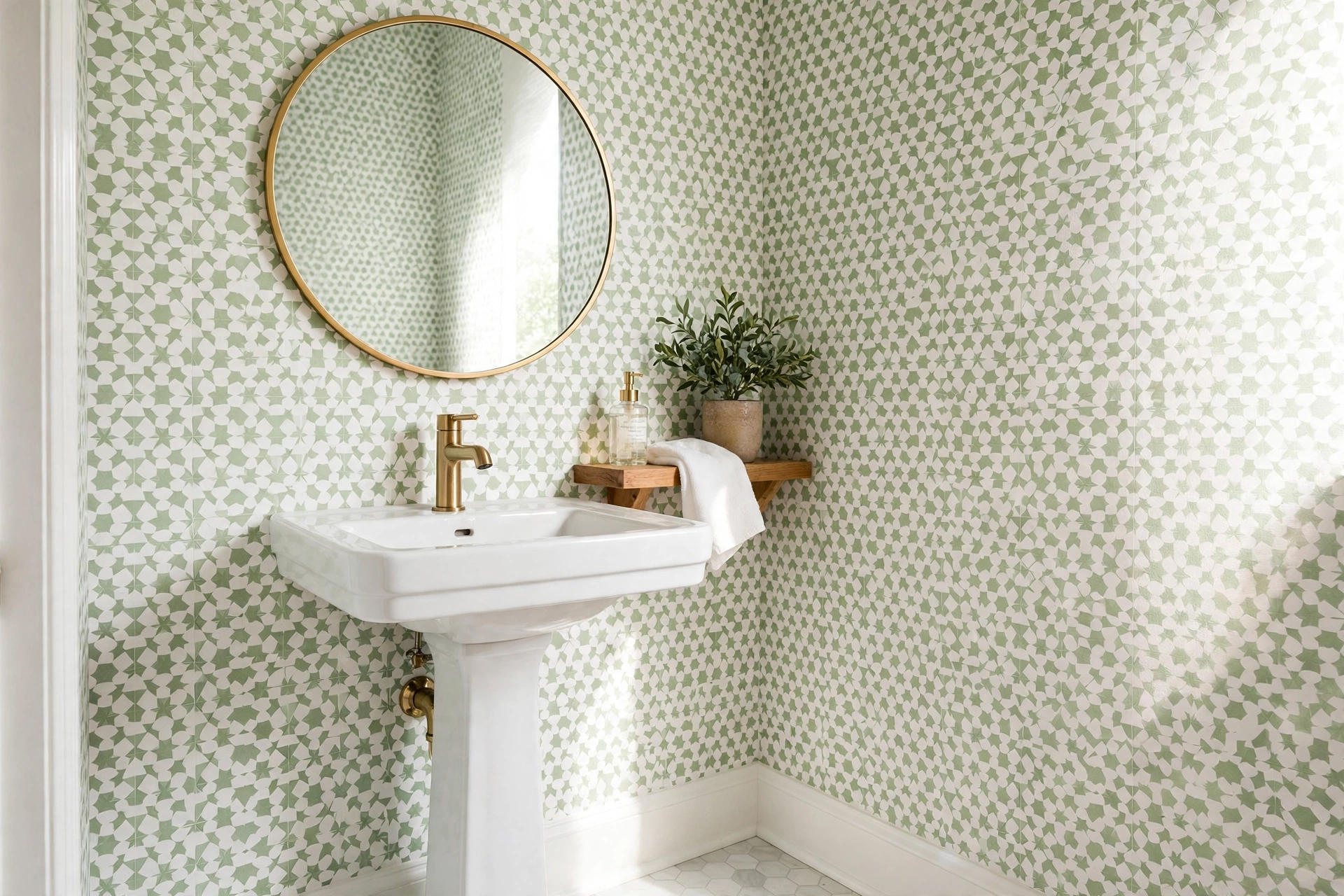
Peel-and-stick wallpaper is the lowest-commitment way to try a bathroom pattern: no paste, no steamer, and it comes off without taking the drywall with it. That makes it the natural choice for rented bathrooms and for anyone who likes to change a look every couple of years. Small geometric repeats — sage green motifs, subtle trellis, tiny dots — are the safest patterns here because they forgive imperfect alignment at the seams, which is where DIY hangs usually show.
Two rules decide whether peel-and-stick lasts in a bathroom. First, buy vinyl or polyester stock, not paper-backed film, and check the maker’s humidity notes before ordering. Second, apply it to a smooth, clean wall and keep it out of direct water zones — a powder-room wall or a vanity wall in a ventilated bath is ideal. Peel only a short strip of backing at a time so you can control placement, and wrap cut edges tightly at corners and around the vanity splashback, since edges are where steam picks its fights.
Light Patterns That Make a Small Bathroom Feel Bigger
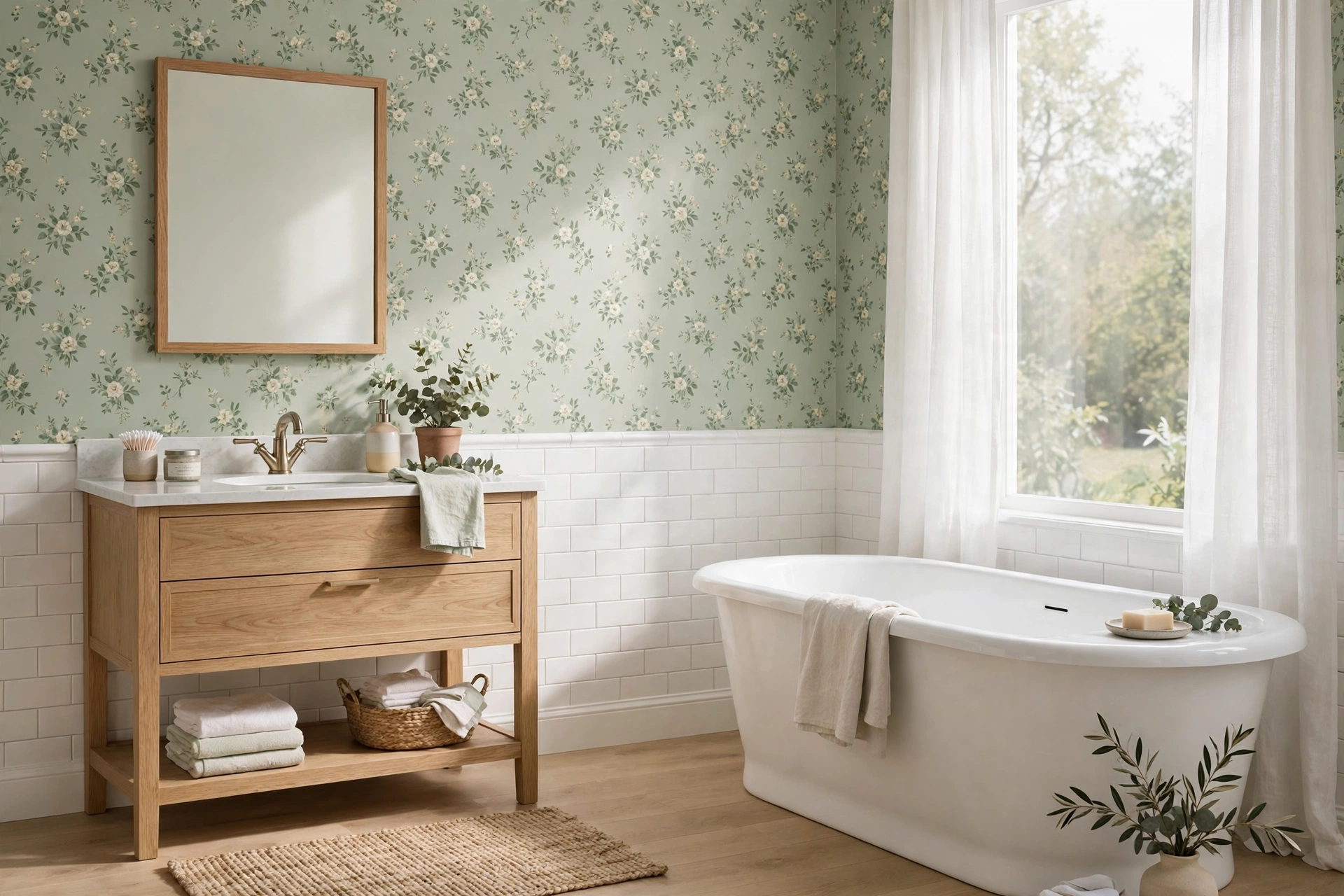
Small bathrooms reward light, small-scale patterns. Pale sage, soft blue and warm white grounds with delicate florals or tiny motifs reflect light instead of absorbing it, and a small repeat does not visually shrink the wall the way a huge motif can. Pairing wallpaper above half-height white tile — paper on top, tile below — gives you pattern at eye level and a wipeable surface where splashes actually land.
Vertical stripes are the other small-room trick: they draw the eye upward and make a low ceiling feel taller, especially in a narrow powder room. Keep the stripe contrast soft — tone-on-tone rather than bold bands — or the room can feel like a corridor. And if the wall behind the mirror is wallpapered, keep the mirror frame simple so the pattern, not the frame, carries the wall — our bathroom mirror ideas cover which shapes sit best on a patterned wall.
Stripes, Geometrics and Murals: Getting the Scale Right
Pattern scale is the quiet rule most idea lists skip. A good guide: the smaller the wall, the smaller the repeat — unless you deliberately want one wall to dominate. Oversized florals and panoramic murals need an uninterrupted wall to resolve properly; a mural behind the bath, facing the door, turns the room into an experience rather than a decorated box. Geometric and art-deco repeats suit modern bathrooms because their structure reads clean even at large scale, while toile and classic stripes lean traditional and pair best with painted woodwork in a colour pulled from the paper.
Whatever the pattern, pull one colour out of the wallpaper and repeat it on the towels, woodwork or accessories. That single repeated colour is what makes a busy pattern feel intentional instead of random — the difference between a room that looks designed and one that looks like a sample book exploded.
Where to Put It: Placement Rules That Protect the Paper
Placement is the practical half of every idea above. The safest walls are the vanity wall (with a splashback guarding the tap zone), the wall opposite the shower, and the water-closet wall. Above half-height tiling is a classic combination because tile handles the splash zone and paper handles the decoration. The ceiling — the so-called fifth wall — is a bold option in a powder room, where it wraps the room in pattern without any splash risk at all.
Where not to put it: inside the shower, on the wall directly behind a freestanding tub’s filler if it splashes, or on any wall with poor ventilation and no fan. If your bathroom has no exhaust fan, fix that before you hang anything — and if the wet zone itself needs a refresh, our tile shower ideas for small bathrooms cover surfaces built for constant water. For the wall behind the sink, our bathroom backsplash ideas show how tile and wallpaper can share the same wall without fighting.
Mistakes to Avoid Before You Hang
Hanging over fresh paint. Paint needs to cure fully — usually several weeks — before paper goes over it, or the adhesive bonds to uncured paint and peels with it.
Skipping the primer on bare drywall. Unprimed drywall drinks adhesive unevenly and tears on removal. A mildew-resistant primer gives grip and a clean release later.
Papering the wet zone. No wallpaper, vinyl included, survives inside a shower enclosure or under direct spray. Tile owns those walls.
Ignoring ventilation. A fan that is never run is the most common cause of peeling paper in a full bath. Run it during and after every shower.
Going dark in a windowless room without light. A moody print in a dark bathroom needs side or backlit lighting to read as atmosphere rather than gloom — plan the light with the paper, not after it.
Choosing Checklist: Zone, Material, Scale, Light
Run through four checks in order. First, zone: powder room, ventilated full bath, or wet zone — and only the first two get paper. Second, material: solid vinyl for a steamy bath, vinyl-coated for a guest bath, peel-and-stick vinyl for renters, uncoated paper for powder rooms only. Third, scale: small repeats for small walls, oversized prints and murals only on uninterrupted walls. Fourth, light: a dark pattern needs real lighting, and a light pattern needs nothing more than a clean wall and a fan.
For more ideas in the same room, browse our Bathroom Decor guides — the wall is one decision in a room that also includes the mirror, the lighting and the surface behind the sink, and choosing them together is what makes the result look designed rather than assembled.