The best bathroom backsplash ideas for a small bathroom are light-colored tiles, vertical patterns, and renter-friendly peel-and-stick options that protect the wall without a renovation. A backsplash is the strip of material behind the sink that catches splashes before they reach the paint or drywall, and in a small bathroom it also sets the whole style of the room, because the vanity wall is usually the first thing you see. We organized these 24 ideas by commitment level: no-drill and budget options first, then classic tile looks, then statement styles for a full renovation.
One practical note before the ideas: the right choice depends on how much water the wall gets. A vanity wall that only catches light splashes can take almost anything, including peel-and-stick tile and wallpaper, while a wall inside a shower or right beside a tub needs real tile or stone. Keep that split in mind as you browse. If your bathroom is short on storage as well as style, our bathroom organization ideas pair well with several looks below, and if the vanity cabinet itself needs more room, our under-sink organizers guide covers the space below the sink.
No-drill and budget ideas. The first eight looks need no wet saw, no grout, and in most cases no landlord permission, which is why they are the best starting point for rentals and small budgets.
1. Peel-and-Stick Subway Tile
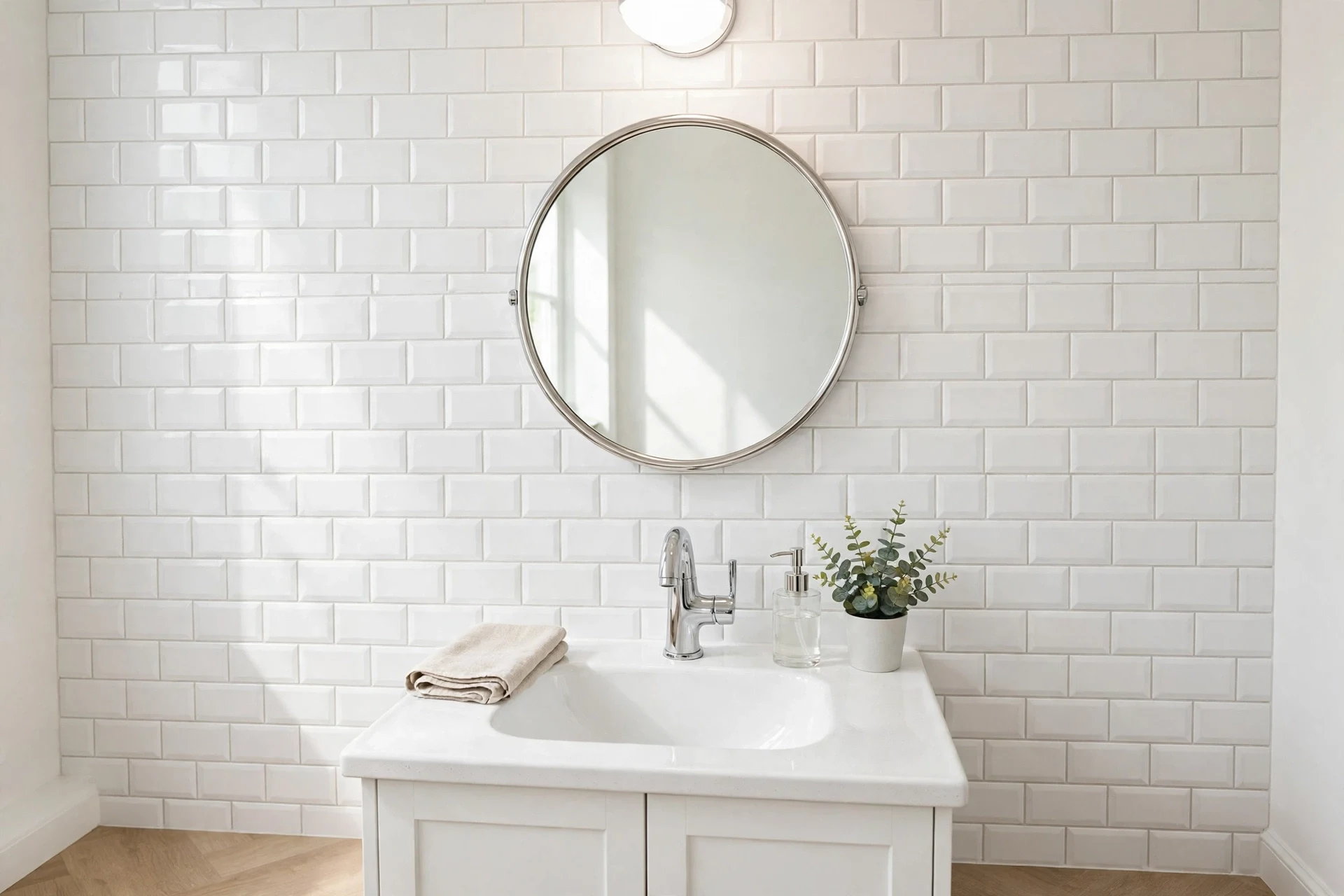
White peel-and-stick subway tiles are the easiest way to get the classic tile look in an afternoon. The tiles go up over clean, dry drywall with a utility knife for trimming, and they cost a fraction of real tile because a vanity backsplash is usually only 8 to 12 square feet. They work best on the vanity wall, where they only catch light splashes, and they come back off with a hairdryer and patience when you move out. Test one tile in a hidden corner first to make sure it removes cleanly from your wall. For a small bathroom, white subway tile is a safe pick: the light color and familiar pattern keep the room feeling open instead of busy.
2. Peel-and-Stick Marble-Look Tile

Marble-look peel-and-stick tiles give a rental vanity a spa-like upgrade without the marble price or the sealing routine. The printed veining looks most convincing in soft grey on white, especially paired with chrome or brass hardware, and the sheets are cut to fit around outlets and mirror edges. Like all peel-and-stick options, these belong on dry vanity walls rather than inside a shower, where constant spray lifts the edges. They are also a useful trial run: if you love the marble look after living with it for a year, you can commit to real stone later with confidence. Keep the rest of the vanity calm so the veining stays the star.
3. Peel-and-Stick Herringbone Tile
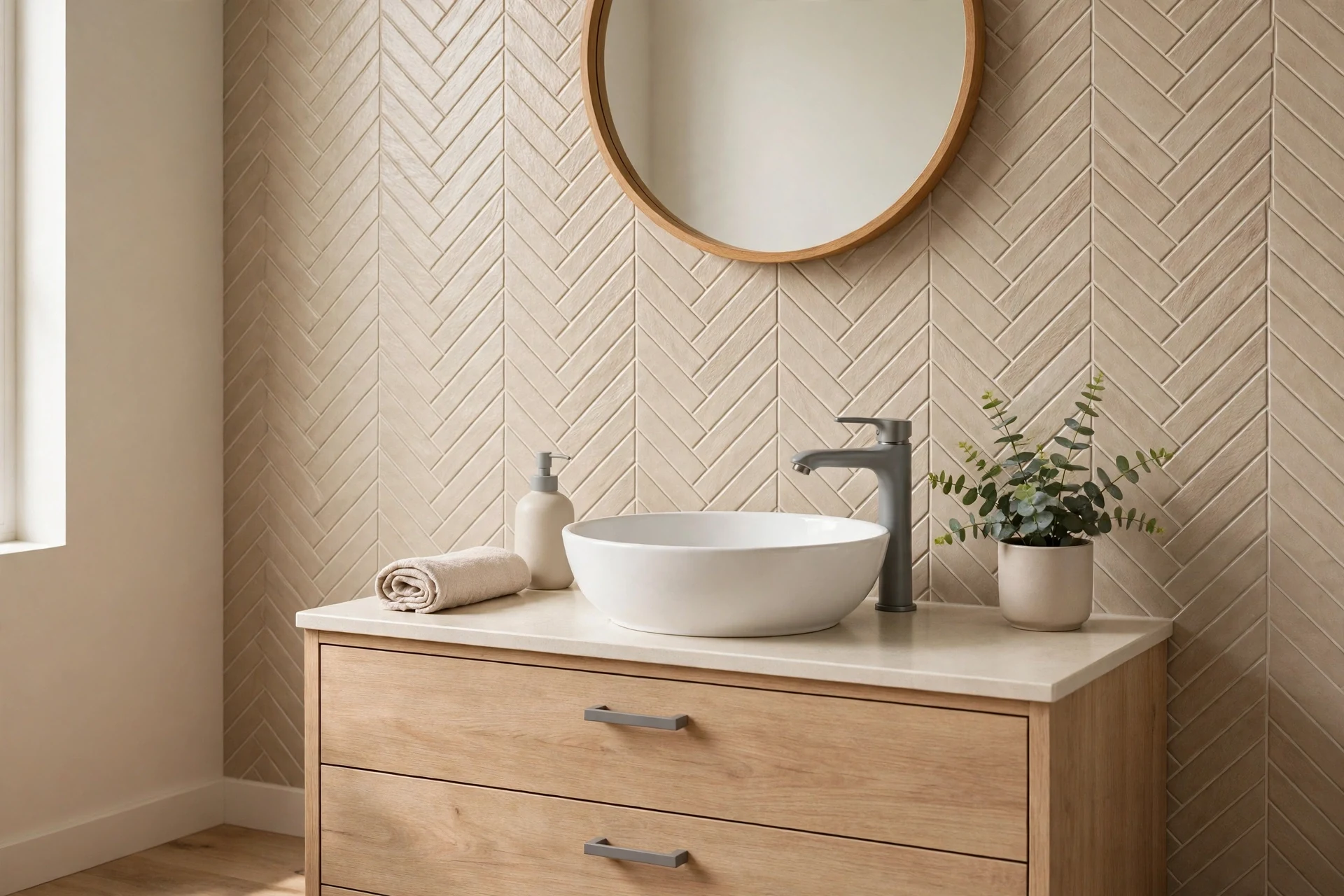
A herringbone layout turns the same peel-and-stick tile into a much more designed look. The zigzag pattern draws the eye along the wall, which helps a narrow vanity wall feel wider, and a beige or greige palette keeps the pattern from overwhelming a small room. Herringbone sheets need a little more patience at the edges than a straight subway layout, because every cut lands at an angle, so measure the wall twice and start from the center. This is one of the strongest peel and stick backsplash options for a rental: it reads as intentional tilework, yet it still peels off when the lease ends.
4. Waterproof Wallpaper in the Powder Room
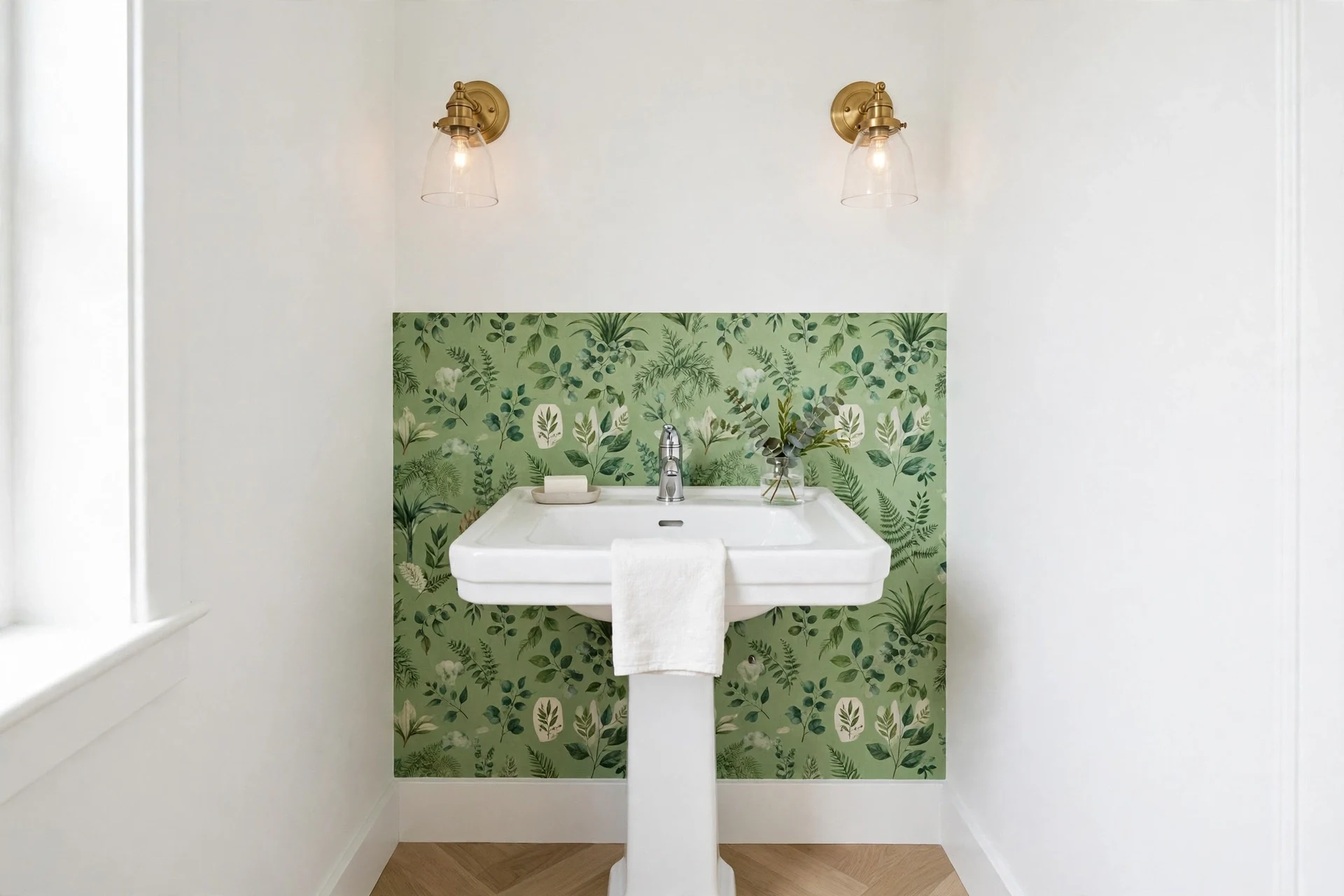
In a powder room with no shower, wallpaper can be the backsplash. A vinyl-coated, scrubbable wallpaper behind a pedestal sink adds pattern and color for the price of a single roll, which usually covers the whole wall with plenty to spare. Green botanical prints are a popular pick because they soften a white sink and brass sconces. The one rule is placement: wallpaper belongs where it never takes direct spray, so keep it to the half bath or the dry side of the vanity, and run a thin bead of clear silicone where the sink meets the wall so splashes cannot creep behind the seam. In a steamy full bathroom, choose tile instead.
5. Painted Two-Tone Backsplash
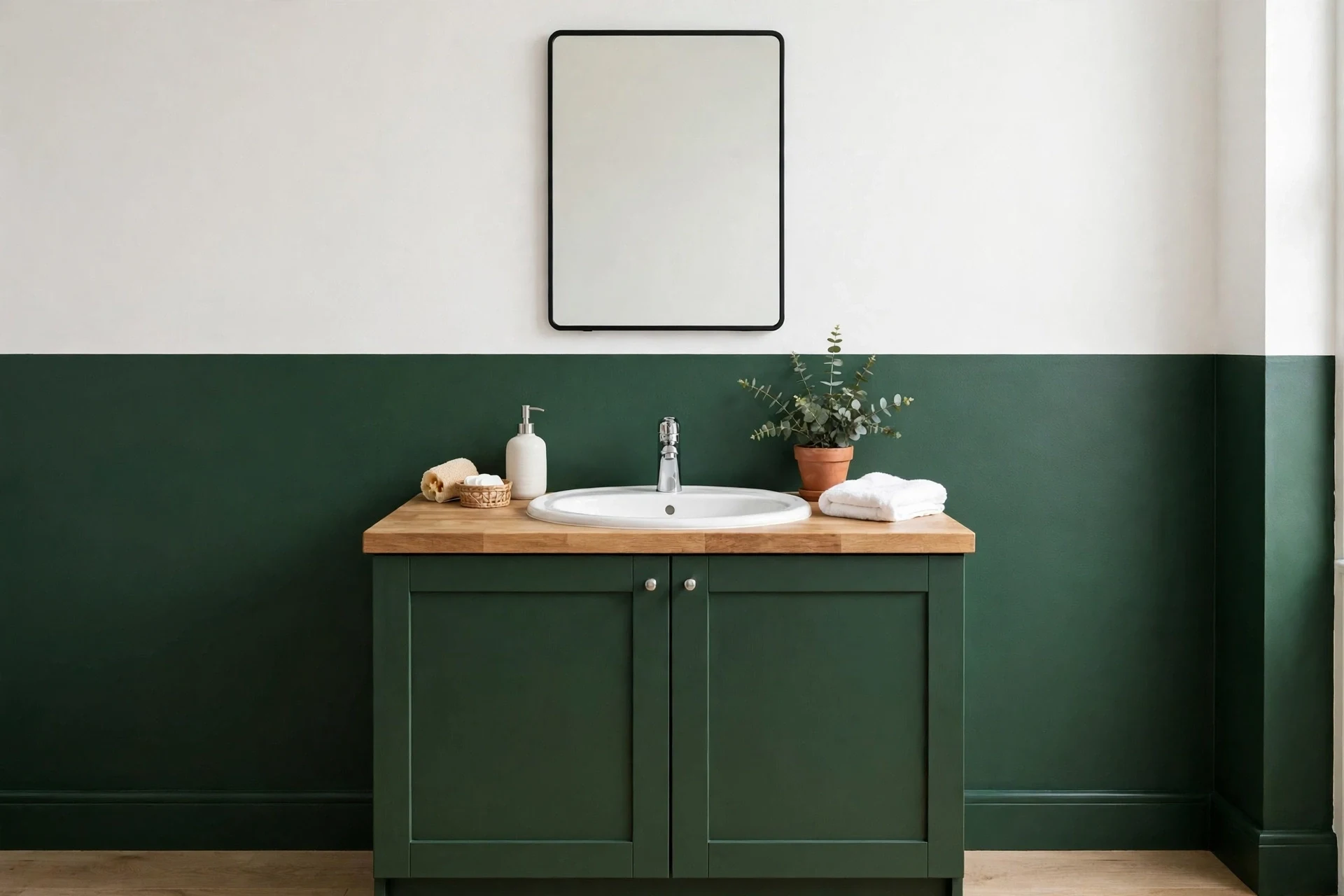
Paint is the cheapest backsplash of all, and a two-tone treatment makes it look deliberate rather than unfinished. Paint the lower half of the vanity wall a deep green or navy and leave the upper half white, and the painted band reads as a backsplash while costing almost nothing. Use a moisture-resistant bathroom paint and let it cure fully before the wall gets splashed. This look suits renters who have permission to paint but not to tile, and it is easy to refresh: a new color changes the whole bathroom in a weekend. Keep the line crisp with painter’s tape and a level, since a wobbly edge ruins the effect.
6. Painted Wood Plank Backsplash
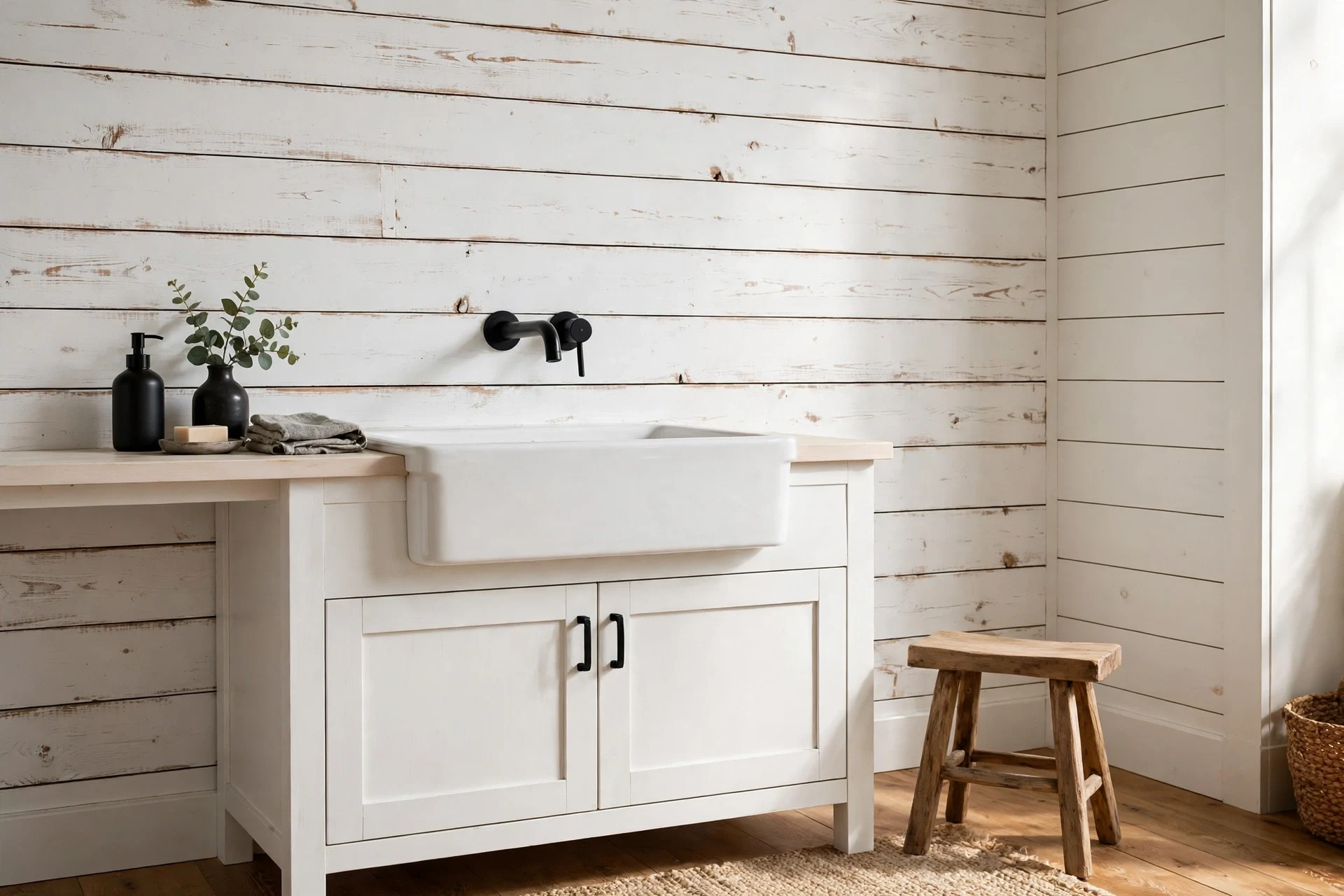
Horizontal painted wood planks bring farmhouse warmth to a bathroom for very little money. The planks go up as a simple panel behind the sink, painted white or a soft color, and they pair naturally with matte black fixtures and a wood vanity. Because wood and water are uneasy partners, seal every edge and the back of each board, and keep this look on the vanity wall rather than inside a shower. The plank lines add horizontal rhythm, which suits a narrow bathroom, and the whole panel can be removed and the wall touched up when you move. It is a good middle ground between paint and tile.
7. Shiplap Half-Wall Backsplash
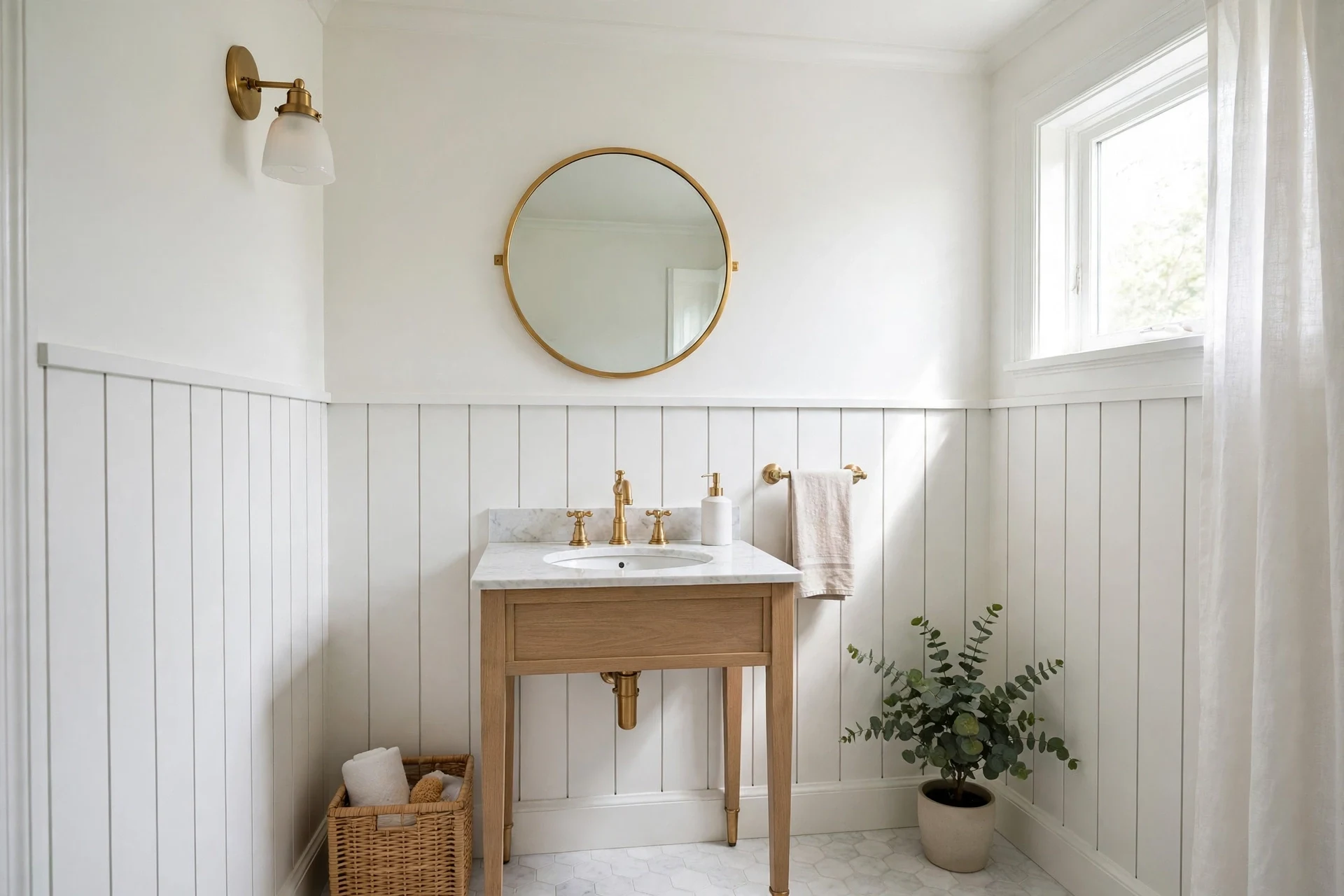
A shiplap half wall updates a small bathroom with a freestanding sink without a full renovation. The vertical or horizontal boards run partway up the wall behind the vanity, protecting the splash zone while leaving the upper wall open, which keeps a small room from feeling boxed in. White shiplap with brass accents is the classic pairing, and the boards are forgiving to install compared with tile. Seal the boards well, especially the bottom edge near the sink, and treat it as a vanity-wall look only: shiplap is not a shower material. In a powder room, a shiplap half wall can be the whole design statement.
8. Faux Concrete Backsplash
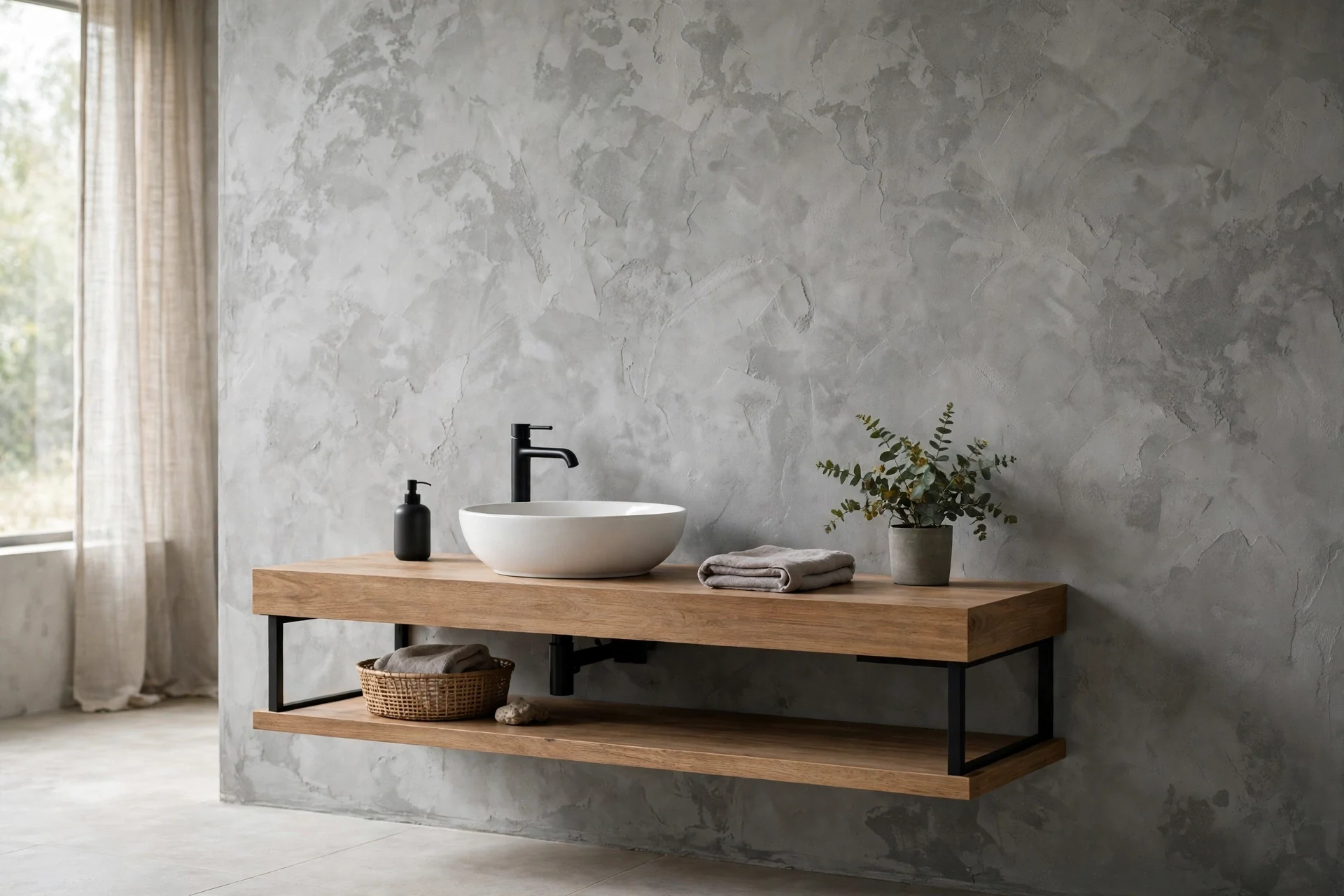
A hand-plastered faux concrete finish gives a modern vanity an industrial edge without pouring real concrete. The troweled grey surface sits well behind a floating wood vanity and a white vessel sink, and its subtle texture adds depth that flat paint cannot. Because the finish is a plaster-style coating, it needs a proper sealer to survive daily splashes, and it suits a contemporary bathroom better than a traditional one. The appeal is the contrast: rough, matte concrete against smooth porcelain and warm wood. If your bathroom leans modern and you want texture without pattern, this is the budget way to get it.
Classic tile ideas. The next twelve looks use real tile, which is the right call wherever water hits the wall directly, and they cover the patterns competitors show most often, from subway to hexagon.
9. Classic White Subway Tile
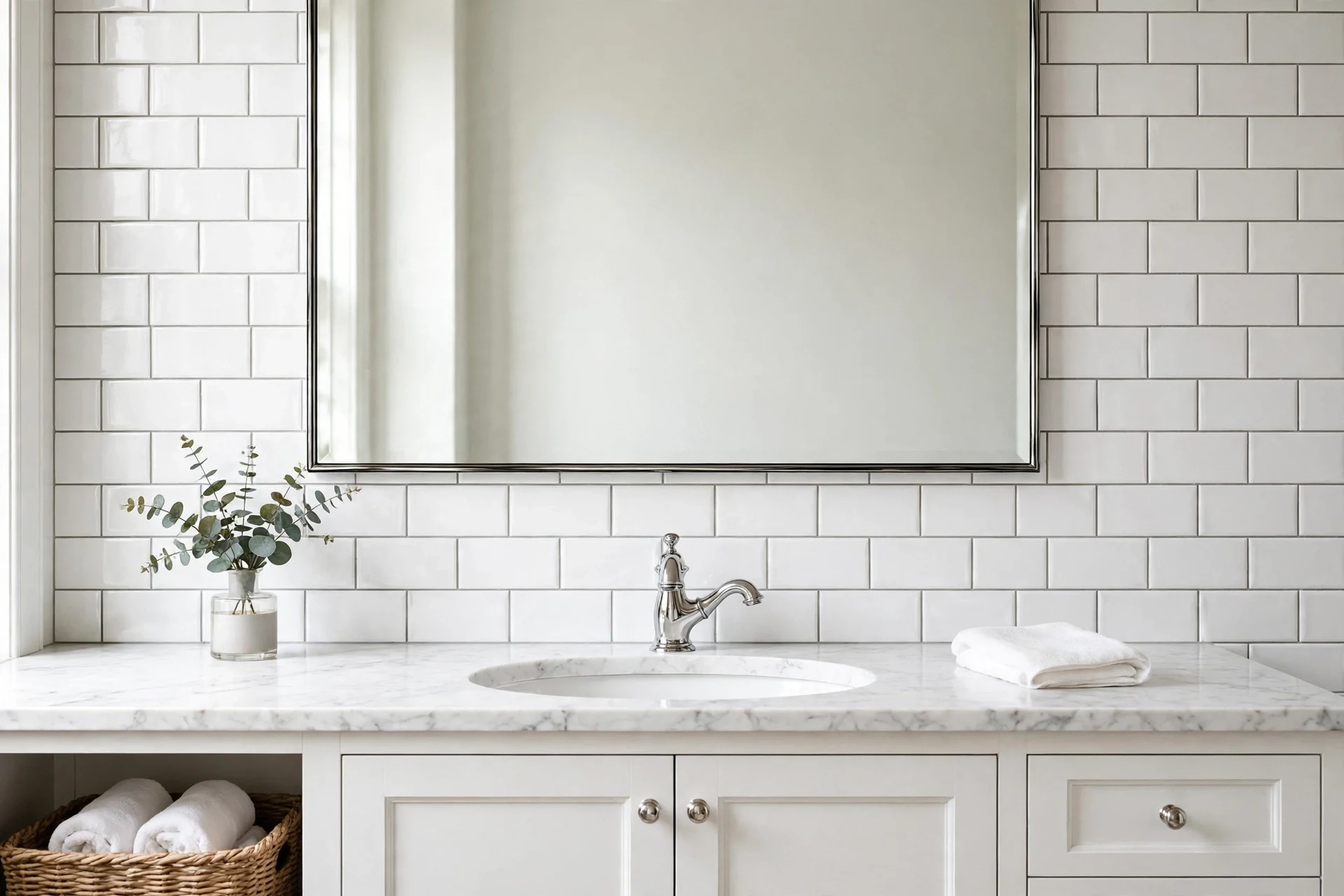
There is a reason subway tile appears in almost every backsplash roundup: it is minimal, bright, and hard to get wrong. White subway tiles in a running bond pattern suit any vanity style, from traditional to industrial, and they let the mirror, faucet, and lighting do the talking. For a small bathroom, white subway tile with matching white grout is especially forgiving, because the low contrast keeps the wall feeling like one calm surface. Change the mood by changing the grout: white grout disappears, while dark grout turns the same tile into a graphic pattern, which is the next idea.
10. White Subway Tile with Black Grout

Pairing white subway tile with black grout turns a quiet classic into an industrial farmhouse statement. The dark grout lines draw out the brick pattern so the backsplash becomes a feature instead of a background, and it pairs naturally with dark wood vanities and matte black fixtures. The trade-off is maintenance: dark grout shows soap residue and water spots more readily than white grout, so it needs a quick wipe to stay crisp. In a small bathroom, keep the black-grout area to the vanity wall only, so the bold pattern frames the sink without closing the room in.
11. All-White Subway Tile for a Small Bathroom
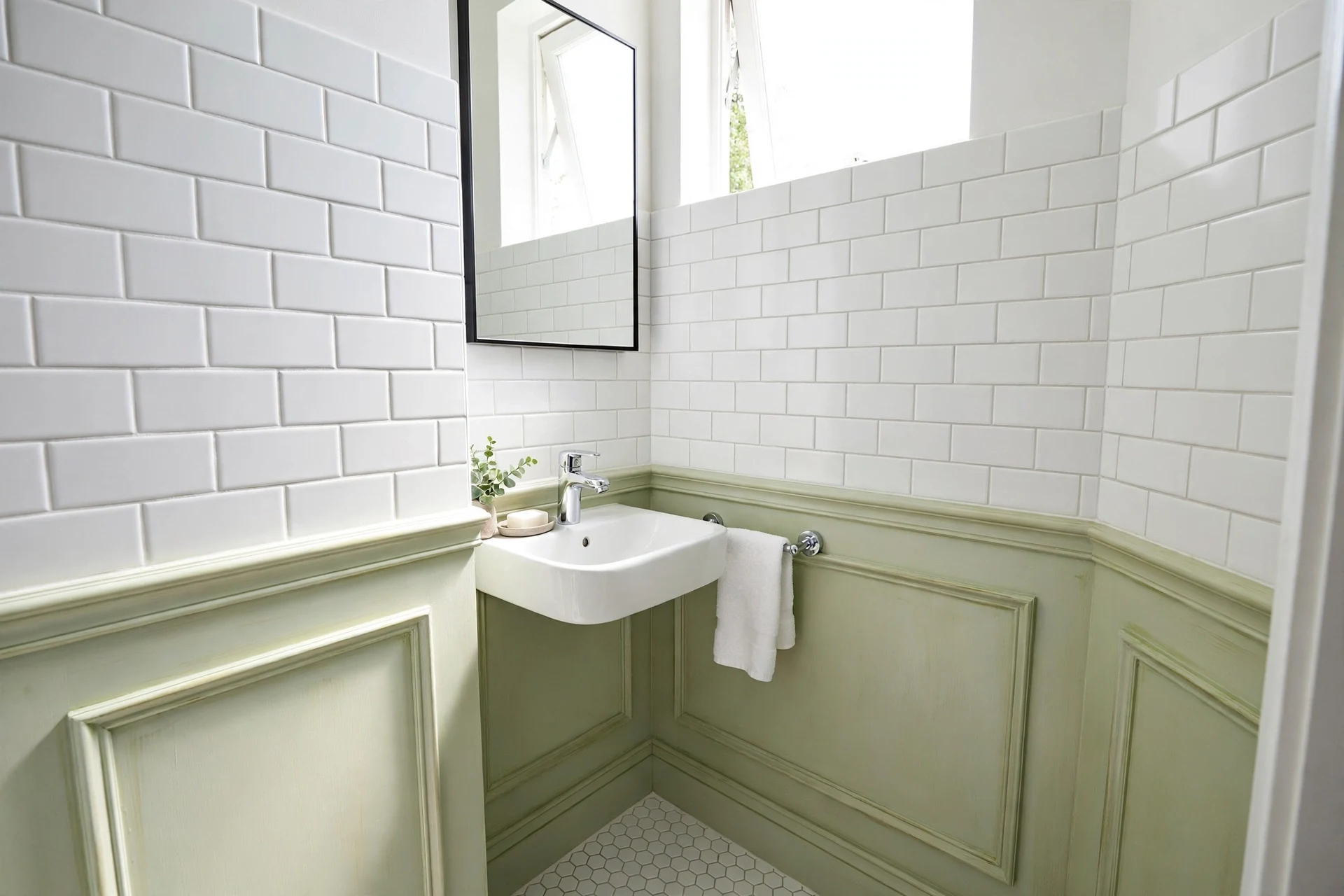
When the bathroom itself is tiny, an all-white subway tile wall with white grout works like an extension of the walls. The lack of contrast brightens the room and bounces light around, which is exactly what a windowless or narrow bathroom needs. Pair it with pale green wainscoting or a soft wall color below, and the tile wall becomes a fresh backdrop rather than a blank one. This is one of the most practical small bathroom backsplash ideas because it solves two problems at once: it protects the wall and it makes the room feel larger. Add a small bathroom corner shelf beside the mirror for storage that does not fight the calm palette.
12. Herringbone Tile
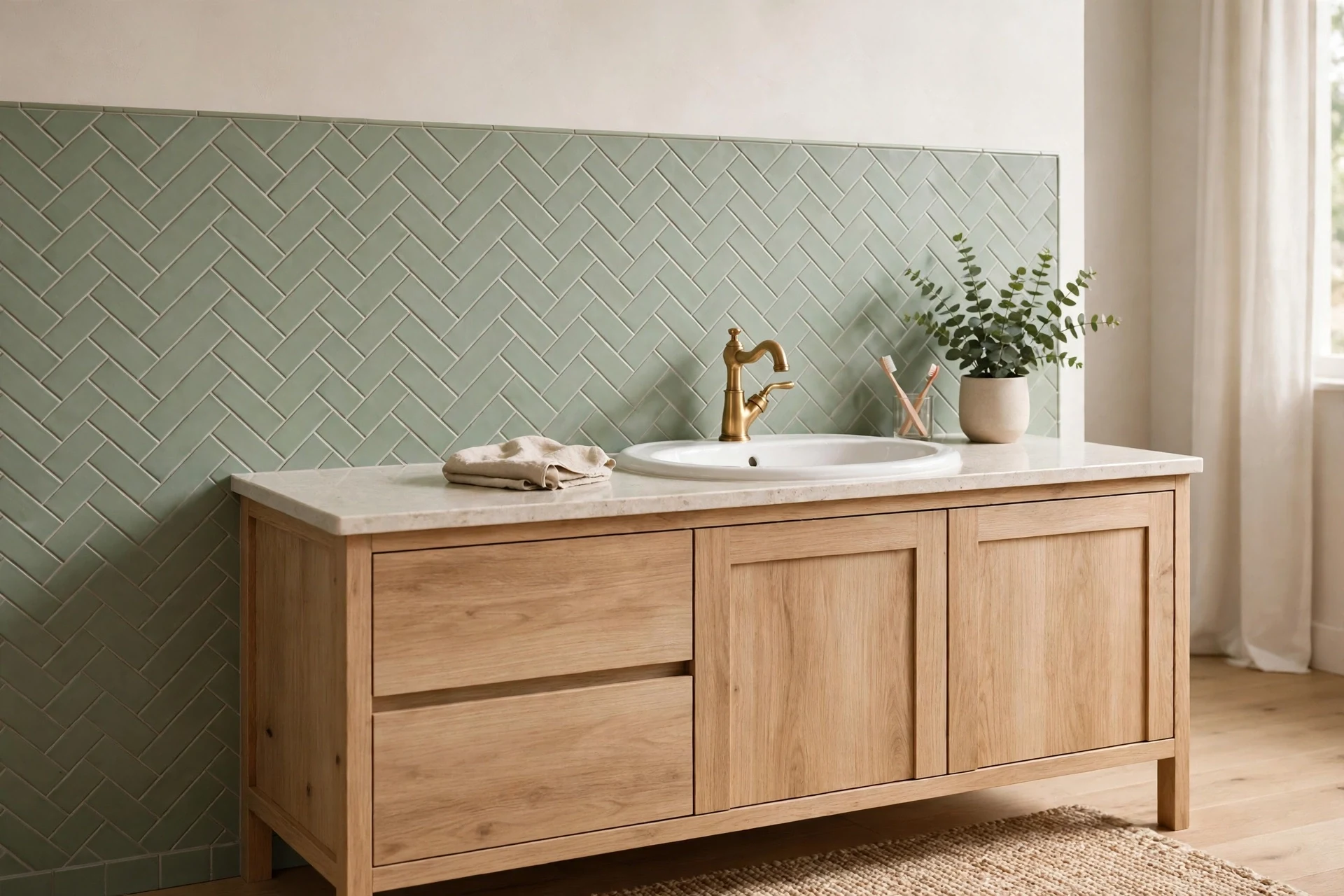
Herringbone is the pattern to choose when subway tile feels too plain but a bold print feels too much. The zigzag layout adds movement to the wall, and a soft green or greige tile keeps that movement gentle. Herringbone works in a straight grid-free layout that suits both modern and traditional bathrooms, and it pairs well with light wood vanities. Installation takes longer than a stacked layout, because every tile is cut at an angle, so this is a look to leave to a tiler unless you are patient. The payoff is a backsplash that looks custom even in a standard-size bathroom.
13. Chevron Glass Mosaic
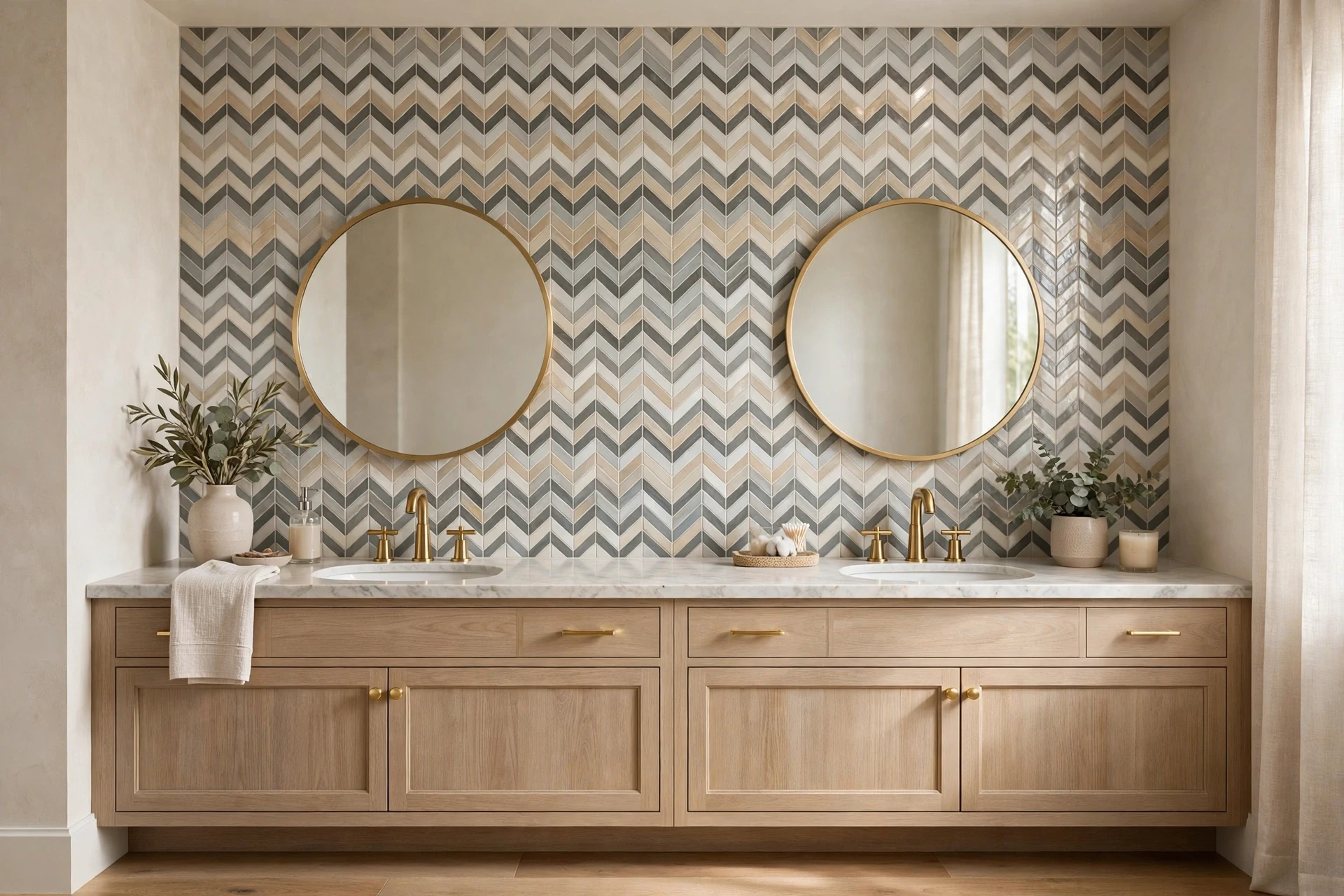
A chevron glass mosaic hangs on the wall like a piece of art, especially in grey, beige, and cream tones behind twin sinks. The V-shaped pattern is more formal than herringbone, and the glass surface catches light, which helps a bathroom with limited natural light. Glass mosaic comes on mesh-backed sheets, which makes installation faster than it looks, though the grout lines need sealing to stay clean. This look suits a bathroom that already leans glamorous: pair it with simple fixtures and let the chevron carry the design, rather than adding more pattern elsewhere.
14. Hex Penny Tile
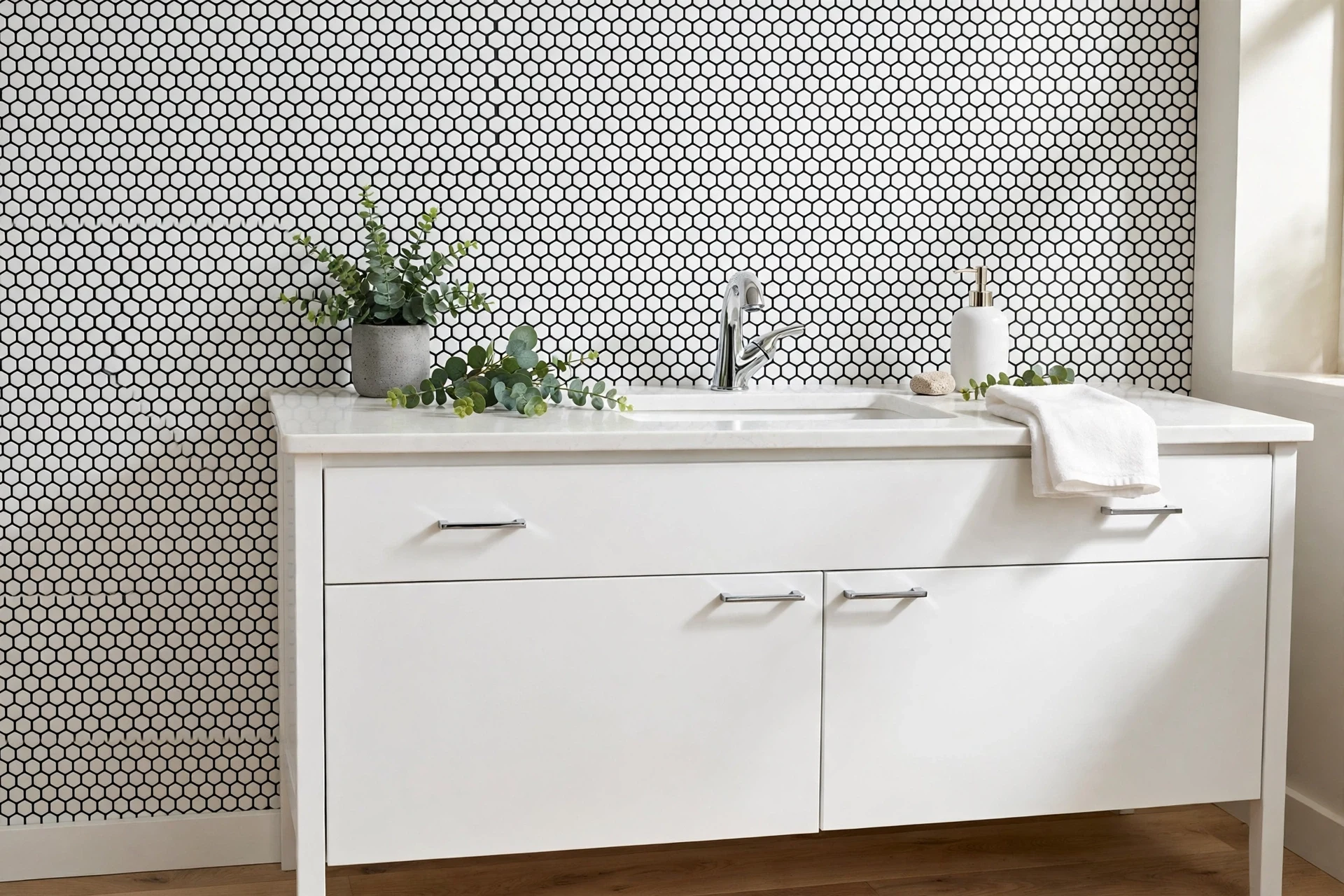
Tiny hexagonal penny tiles bring playful energy to a bathroom, and white penny tiles with black grout are the classic version. The small scale means the pattern reads as texture from a distance and as detail up close, which is why a full wall of penny tile works even in a small bathroom: it adds interest without a large, loud motif. Penny tile also bends around curves and fits awkward walls better than large tiles, since the mesh sheets flex. Keep the grout dark for contrast or white for a softer look, and seal it well, because small tiles mean many grout lines to keep clean.
15. White Hexagon Tile
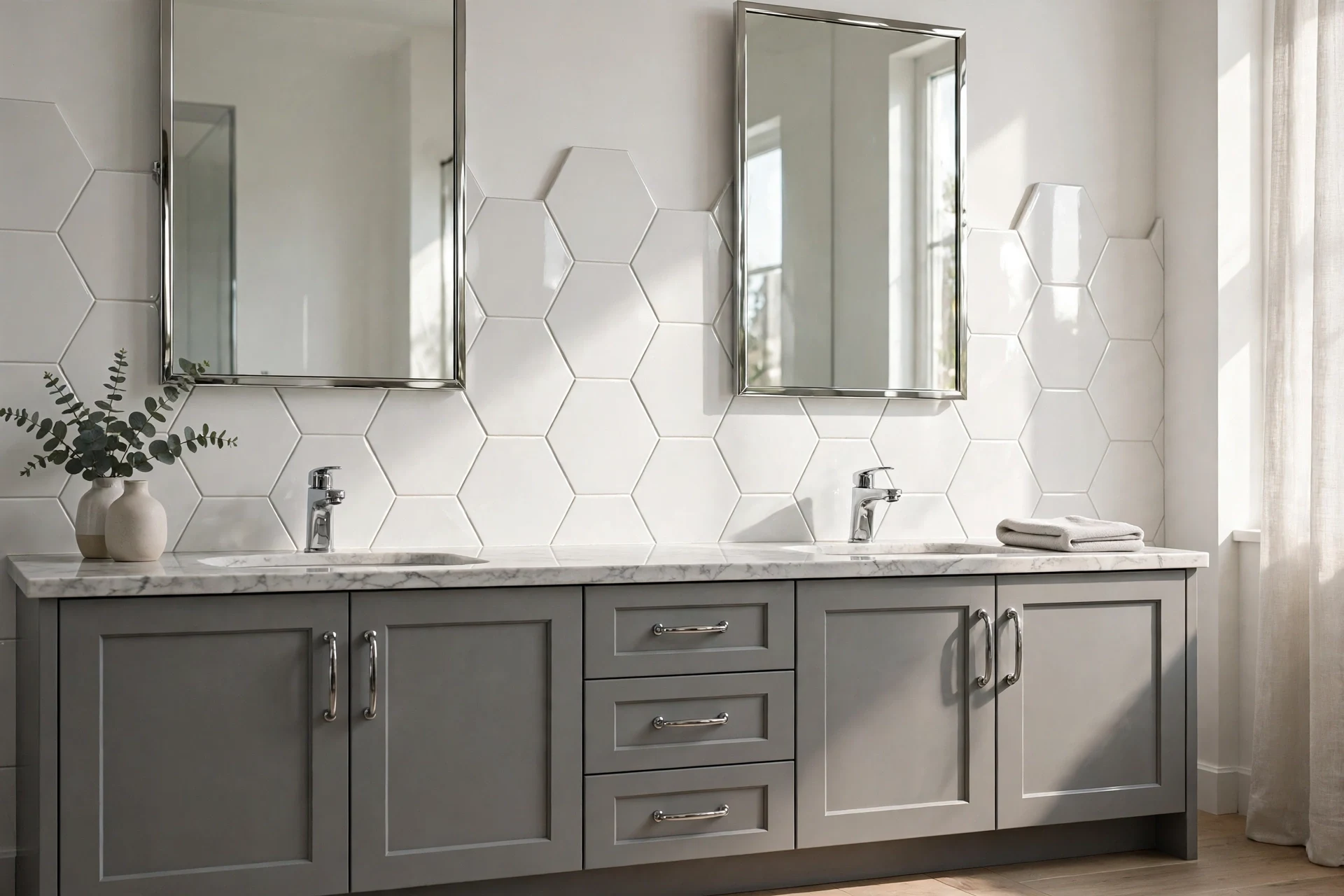
Large white hexagon tiles are the calmer cousin of penny tile. The hexagonal shape still adds geometry, but the bigger size and white-on-white palette keep the wall quiet, which suits a minimal or spa-style bathroom. The tile edges catch light differently across the wall, so the backsplash has subtle movement even without color. White hexagon tile works behind a double vanity as well as a single sink, and it pairs with grey cabinets and chrome fixtures without competing. If you want pattern that does not shout, this is the version to choose.
16. Mosaic Glass Tile
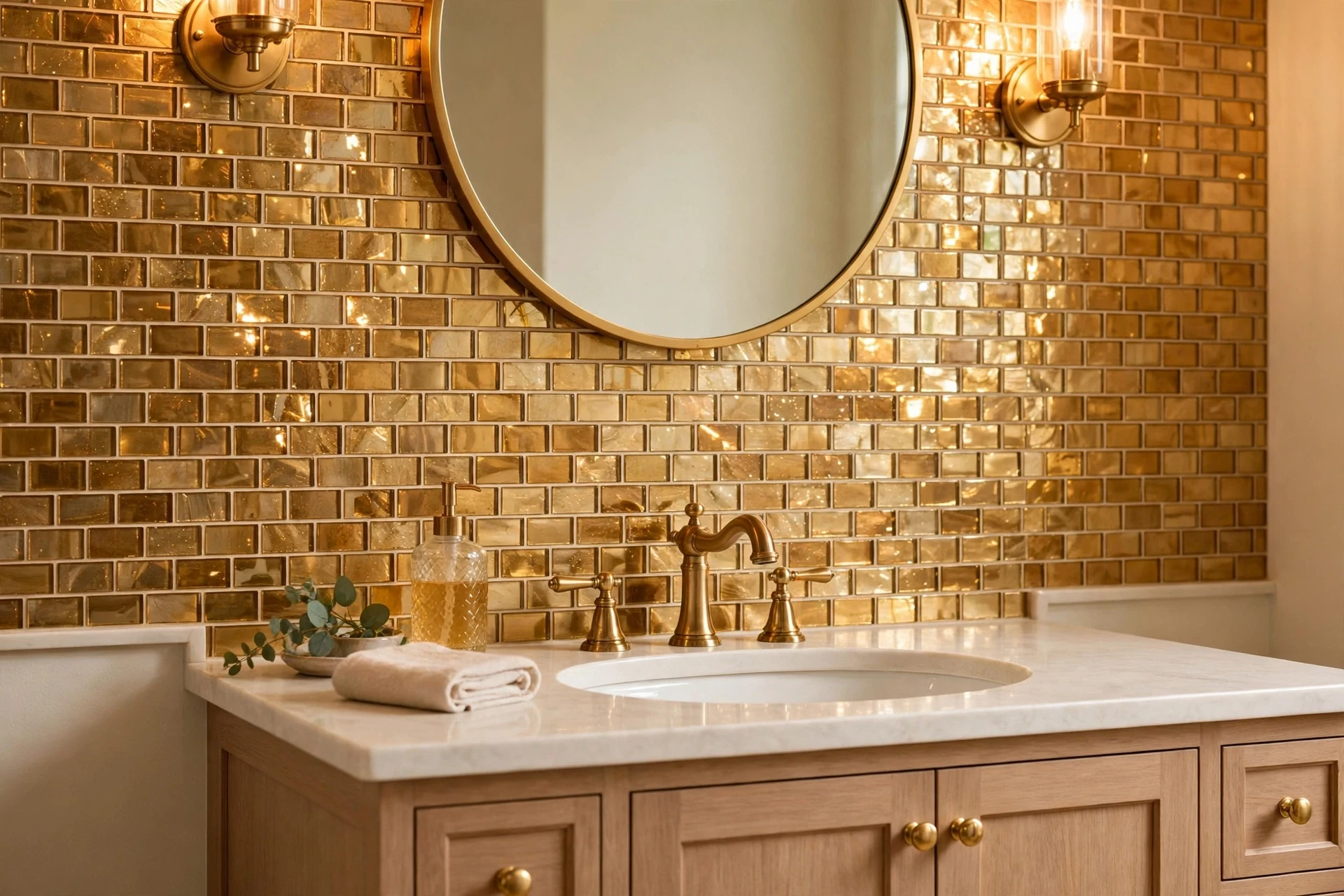
Golden-hued mosaic glass tile turns a plain vanity wall into a warm focal point. The small glass pieces reflect light, which flatters both the room and the mirror, and the warm tone suits brass fixtures and wood vanities. Mosaic sheets make this one of the easier real-tile options to install, since the pattern arrives pre-arranged on mesh. Glass tile needs a white thinset behind it so the color stays true, and it is best kept to the vanity wall: in a shower, larger porcelain tiles are more practical. Use mosaic glass where you want glow rather than drama.
17. Bold Patterned and Geometric Tile
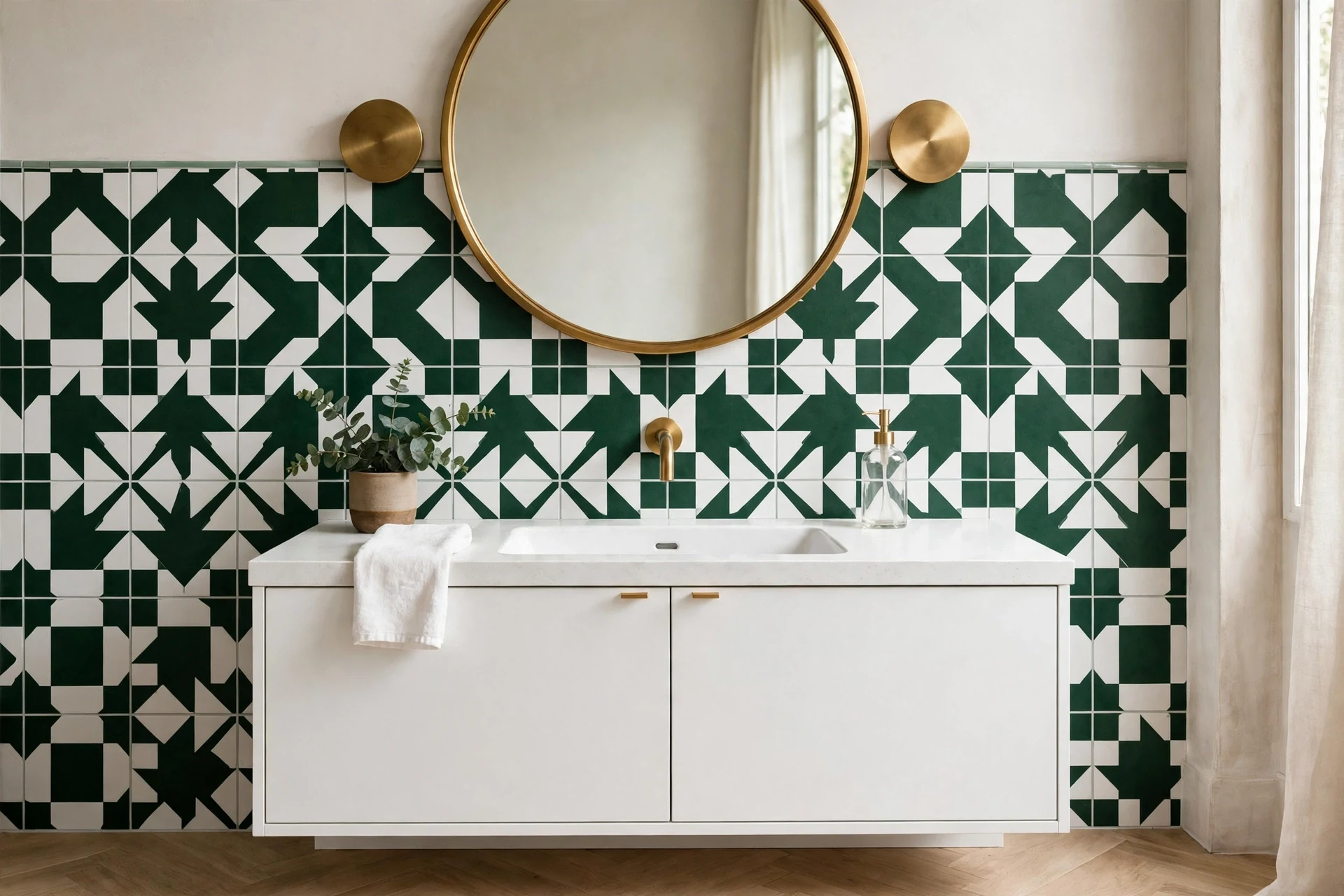
Bold patterned tile is the fastest way to make a vanity wall the focal point of the bathroom. Geometric prints in forest green and white, or black and white, turn a plain sink wall into a designed feature, and they work best when everything else in the room stays simple: a plain mirror, a quiet countertop, and one metal finish. Patterned tile suits a bathroom that needs personality more than it needs calm, and it is a good pick for a powder room, where a strong print gets admired without being lived with all day. Keep the pattern to one wall so the room stays balanced.
18. Black-and-White Patterned Tile
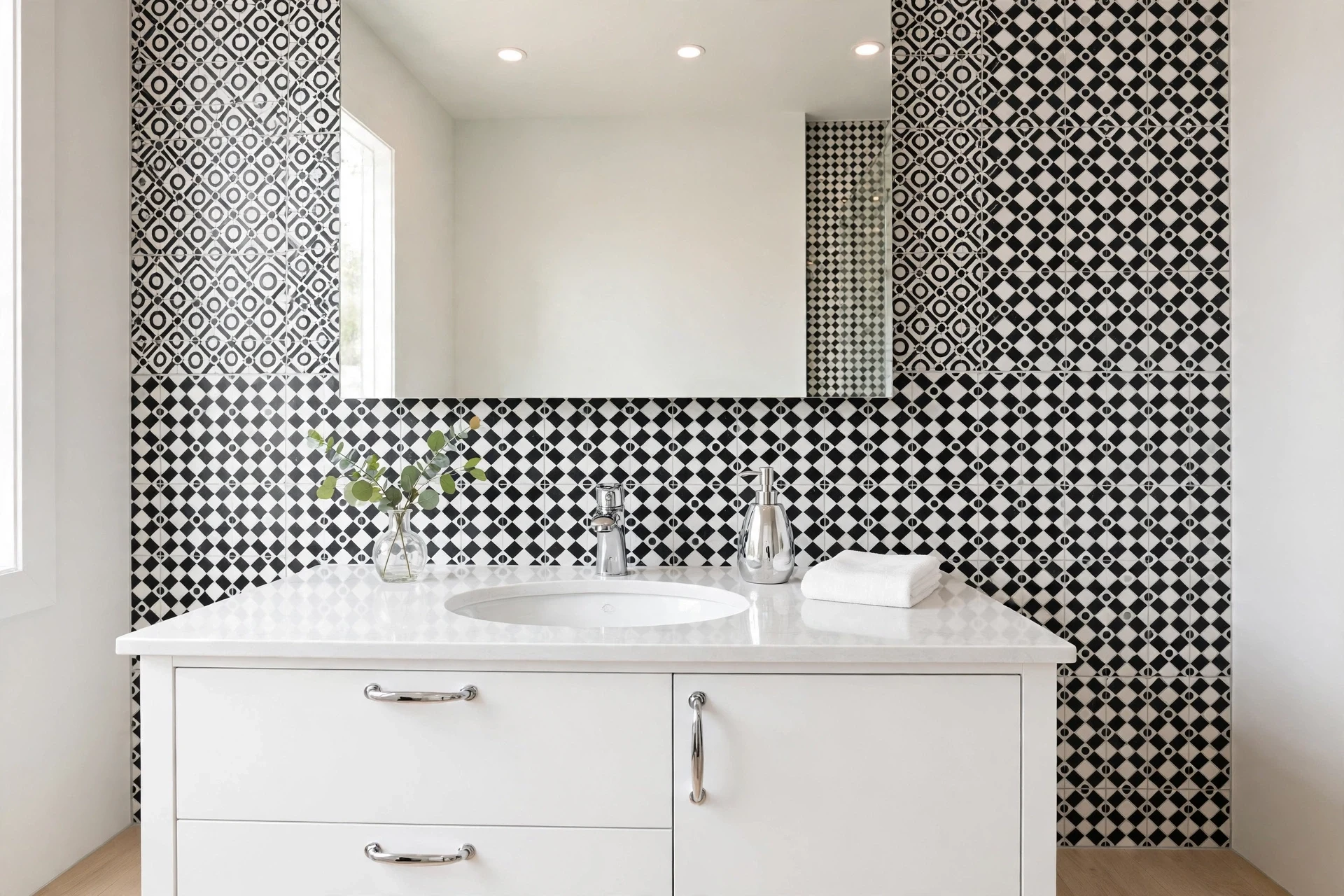
A black-and-white tile pattern of circles and diamonds is the most versatile bold look. It reads as classic rather than trendy, so it survives style changes, and it works with both chrome and brass fixtures. The monochrome palette also makes decorating easy: towels, soap dishes, and art can be any color without clashing. This pattern suits a bathroom that already has strong elements, like a dark vanity or a patterned floor, because black and white ties them together instead of adding a third color story. Seal the grout well, since the contrast shows dirt faster than a single-color tile.
19. Vertical Stacked Tile
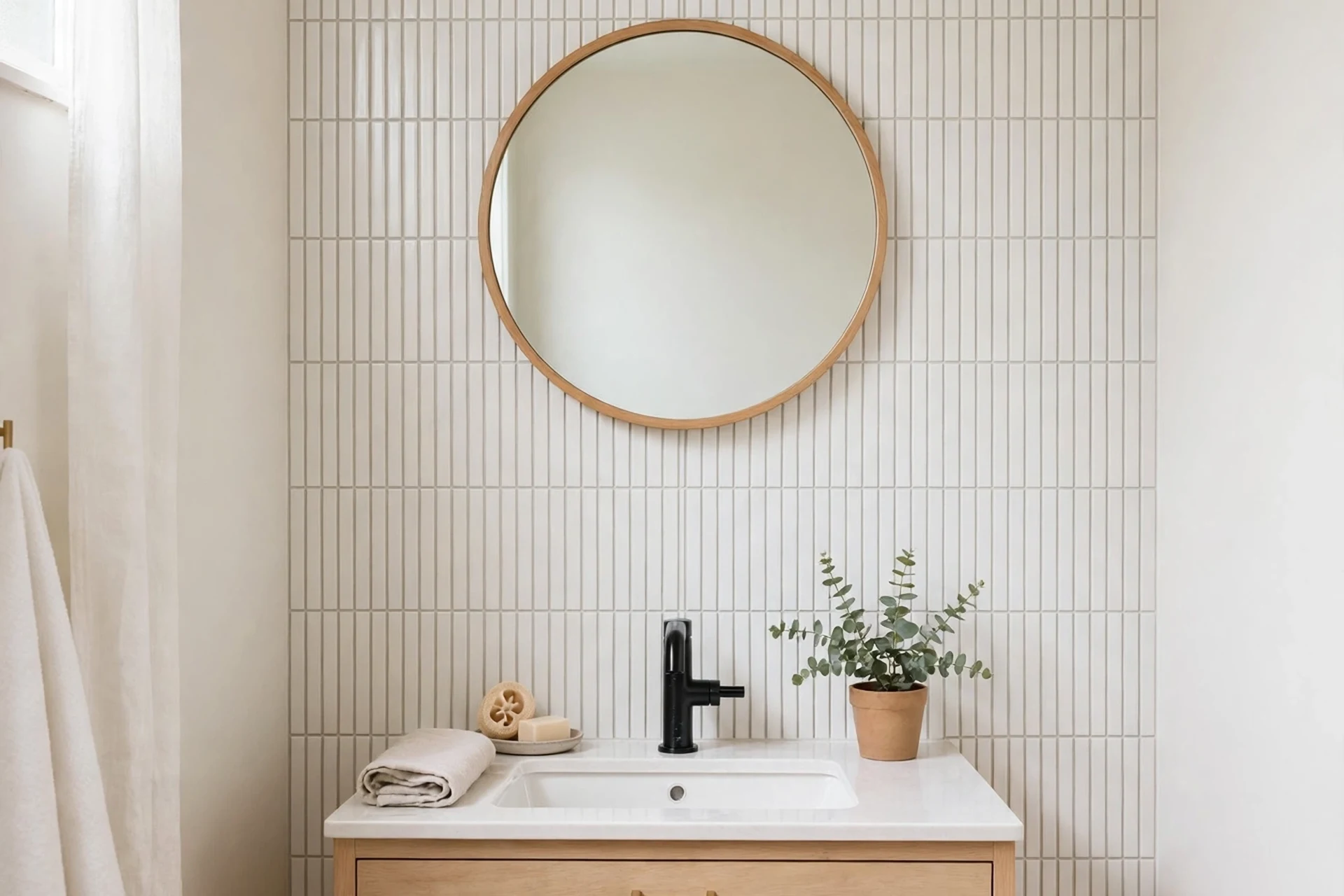
Slim tiles stacked vertically draw the eye upward, which makes a low ceiling feel taller and a narrow wall feel less cramped. An off-white vertical stack is the quietest version: it adds architectural rhythm without color or pattern, and it suits a small bathroom because the vertical lines do the work that a bold print would otherwise do. Vertical stacking also works well when the backsplash runs up to the mirror or the ceiling, since the lines lead naturally to the top edge. If your bathroom feels short or boxy, this layout is one of the simplest optical fixes available.
20. Matte Black Tile
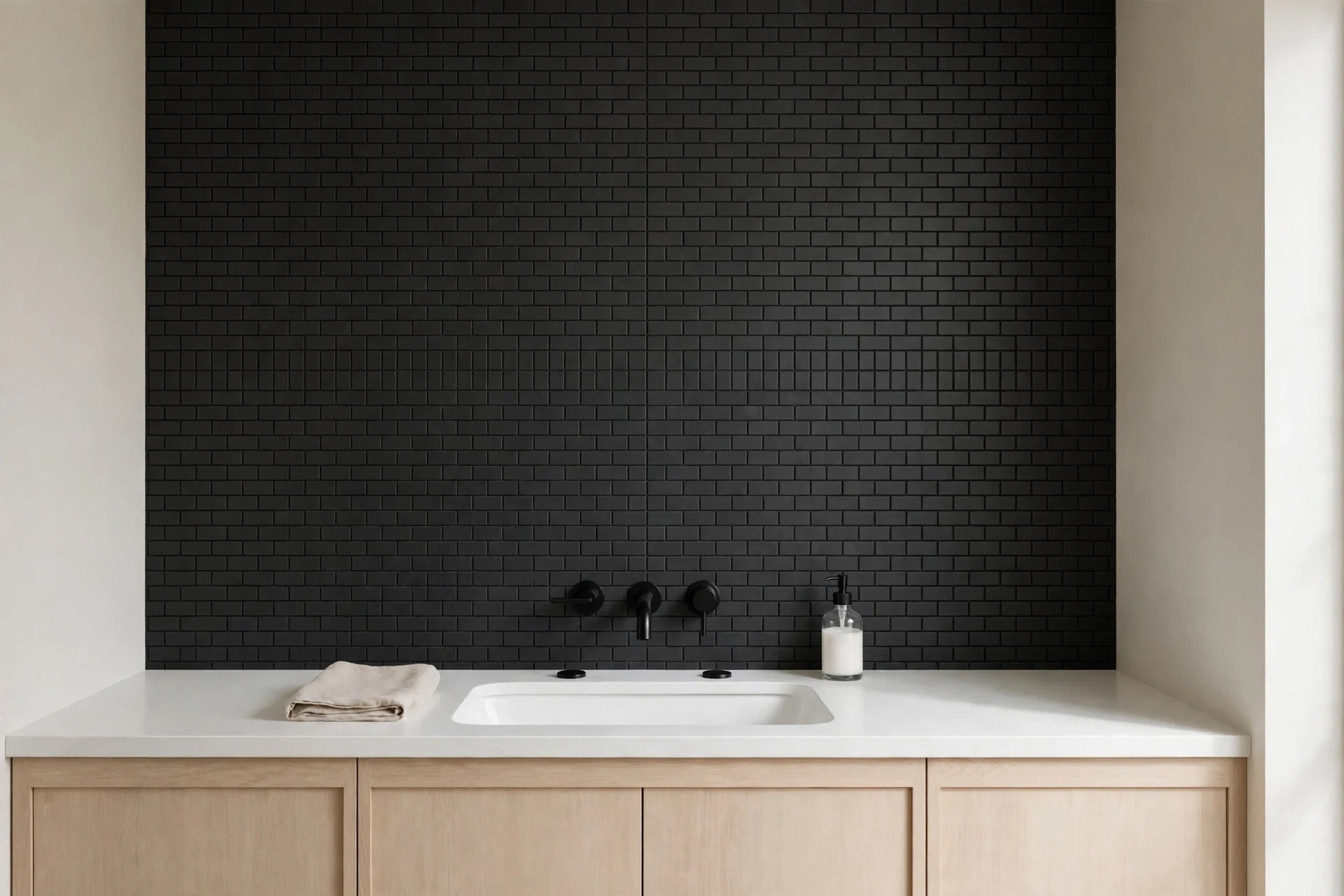
Small matte black tiles with matching black grout create a subtly textured neutral backsplash that grounds a bathroom. The matte finish absorbs light rather than reflecting it, which gives a contemporary bathroom a calm, grounded feel, and the dark tone pairs well with white sinks and wood vanities. Matte black shows water spots and soap film more than glossy tile, so it needs a regular wipe to stay even. Use it on the vanity wall as an accent rather than across every wall, and balance it with light surfaces elsewhere so the room does not go dark.
21. Soft Green Tile
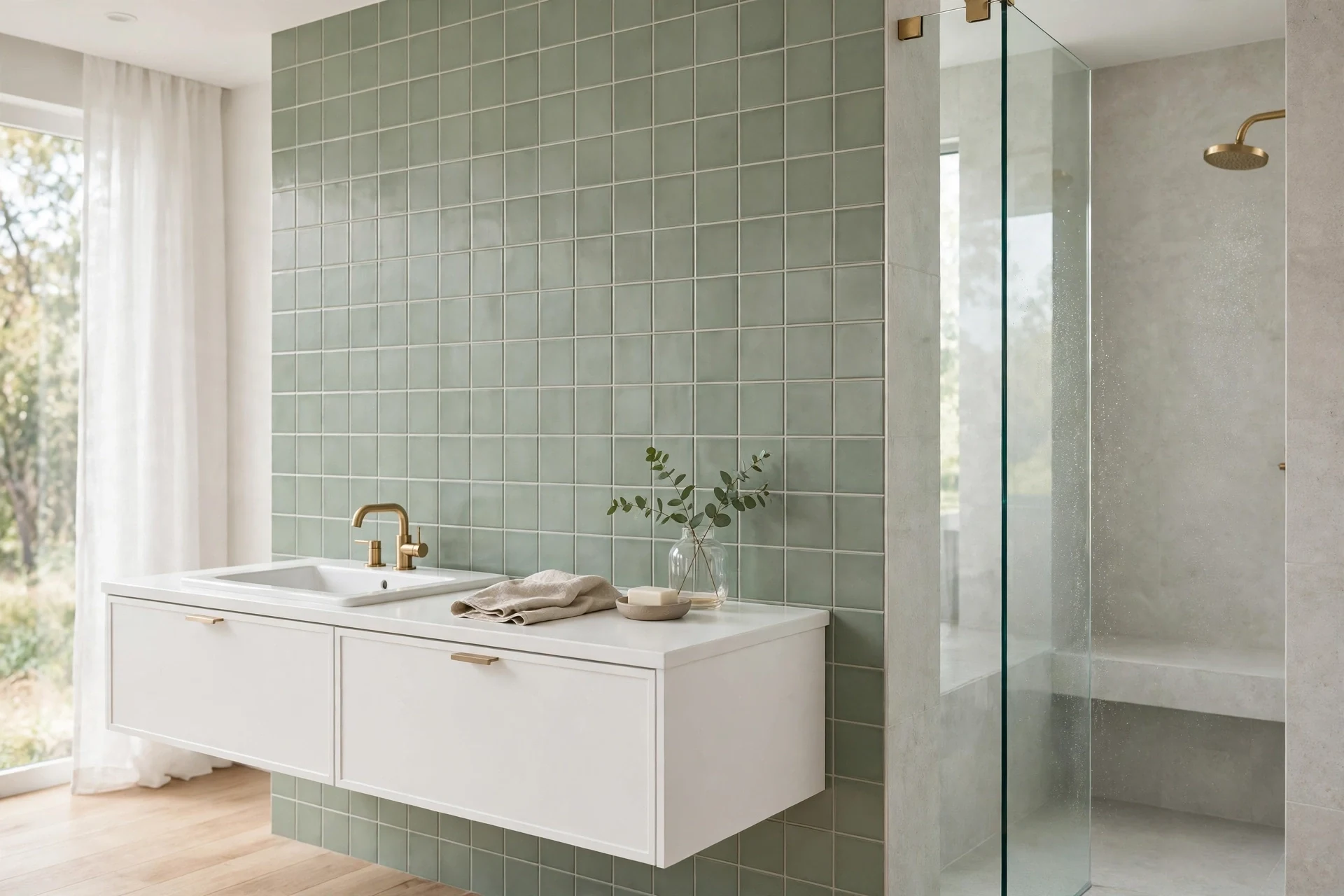
Muted green tiles in a clean grid bring just enough color to wake up a bathroom without overwhelming it. Soft green sits between classic and current: it feels fresh, it pairs with wood vanities and brass fixtures, and it does not date as fast as a brighter color. A green tile backsplash also connects naturally to plants and natural materials, which suits a spa-style bathroom. Keep the grout close to the tile color for a calm look, or choose white grout to draw out the grid. This is a good pick when white tile feels too plain but a bold pattern feels too much.
Statement ideas. The last three looks are the high-end options competitors show most often: stone, scallop, and mirror. They cost more, but they turn the vanity wall into the room’s centerpiece.
22. Marble Slab Backsplash
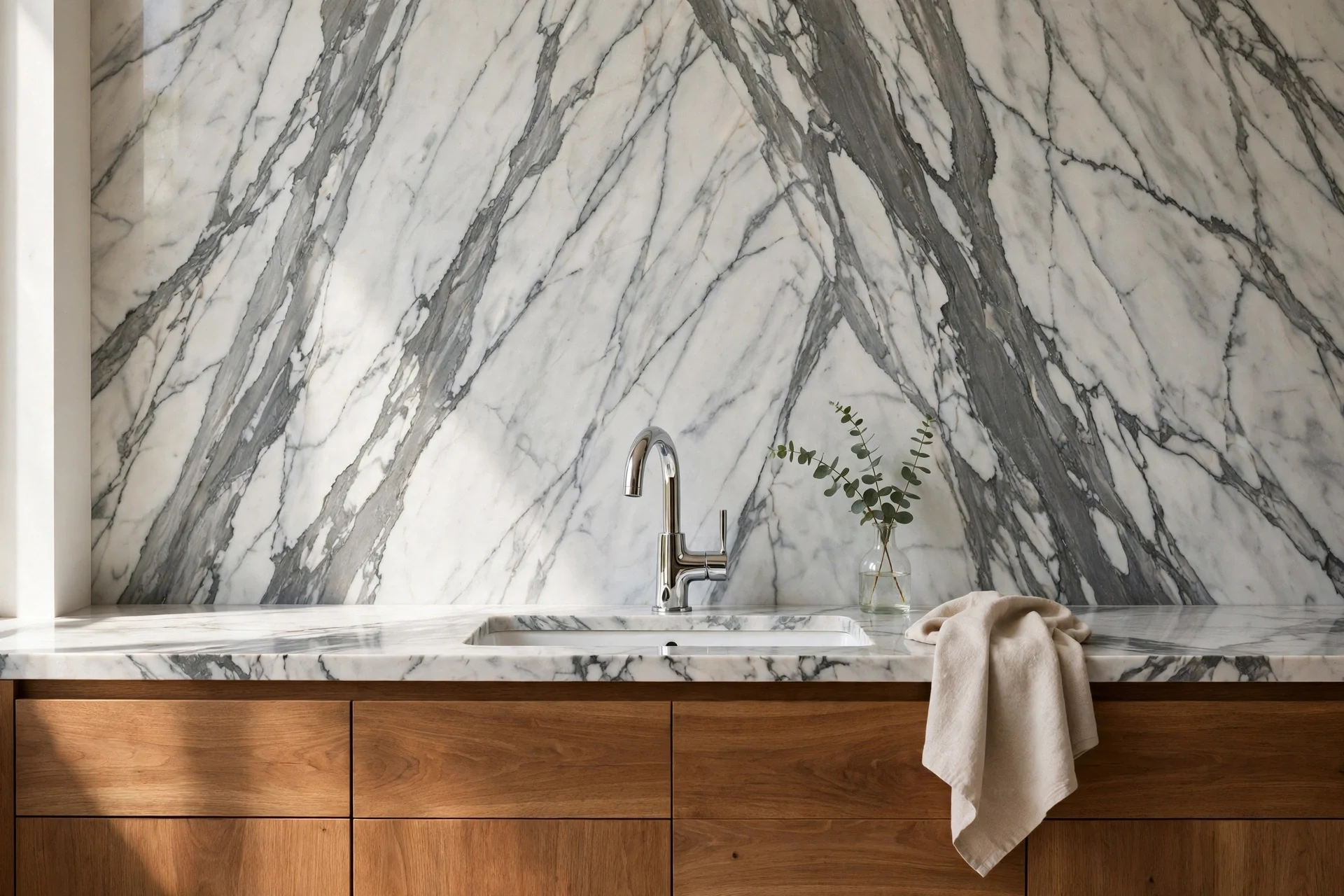
A full marble slab backsplash, running from the countertop up the wall in one unbroken piece, is the most luxurious look in this list. The dramatic veining becomes the room’s artwork, and because there are no grout lines, the wall is easy to wipe clean. Marble needs sealing and it can stain, so it suits a bathroom where the vanity wall gets splashes rather than soaking. Pair it with a warm wood vanity and polished chrome to keep the look balanced: the stone is already doing plenty. If a full slab is out of budget, a short marble strip behind the sink gives a hint of the same look for much less.
23. Scallop Marble Tile
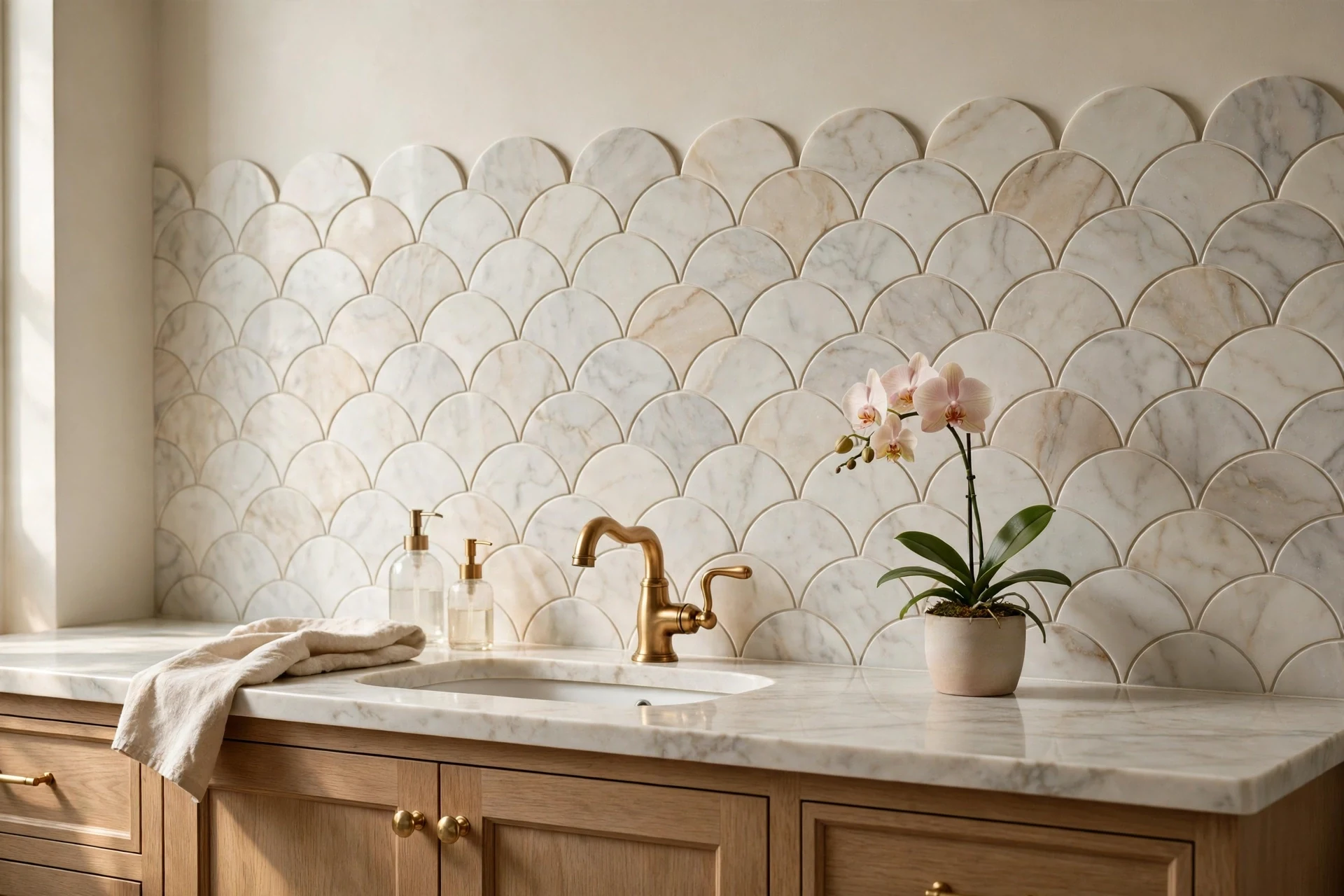
Scallop-shaped marble tiles, sometimes called fish-scale tiles, soften a bathroom with gentle curves that catch the light. The curved edges make the backsplash feel crafted rather than tiled, especially paired with warm brass fixtures and a small plant on the vanity. Scallop tile works in soft, neutral palettes where its shape, not its color, carries the design. It is a good choice for a bathroom that leans romantic or traditional, and it scales well: a small vanity wall needs only a few square feet, so even marble scallops stay affordable on a single wall.
24. Mirrored Backsplash
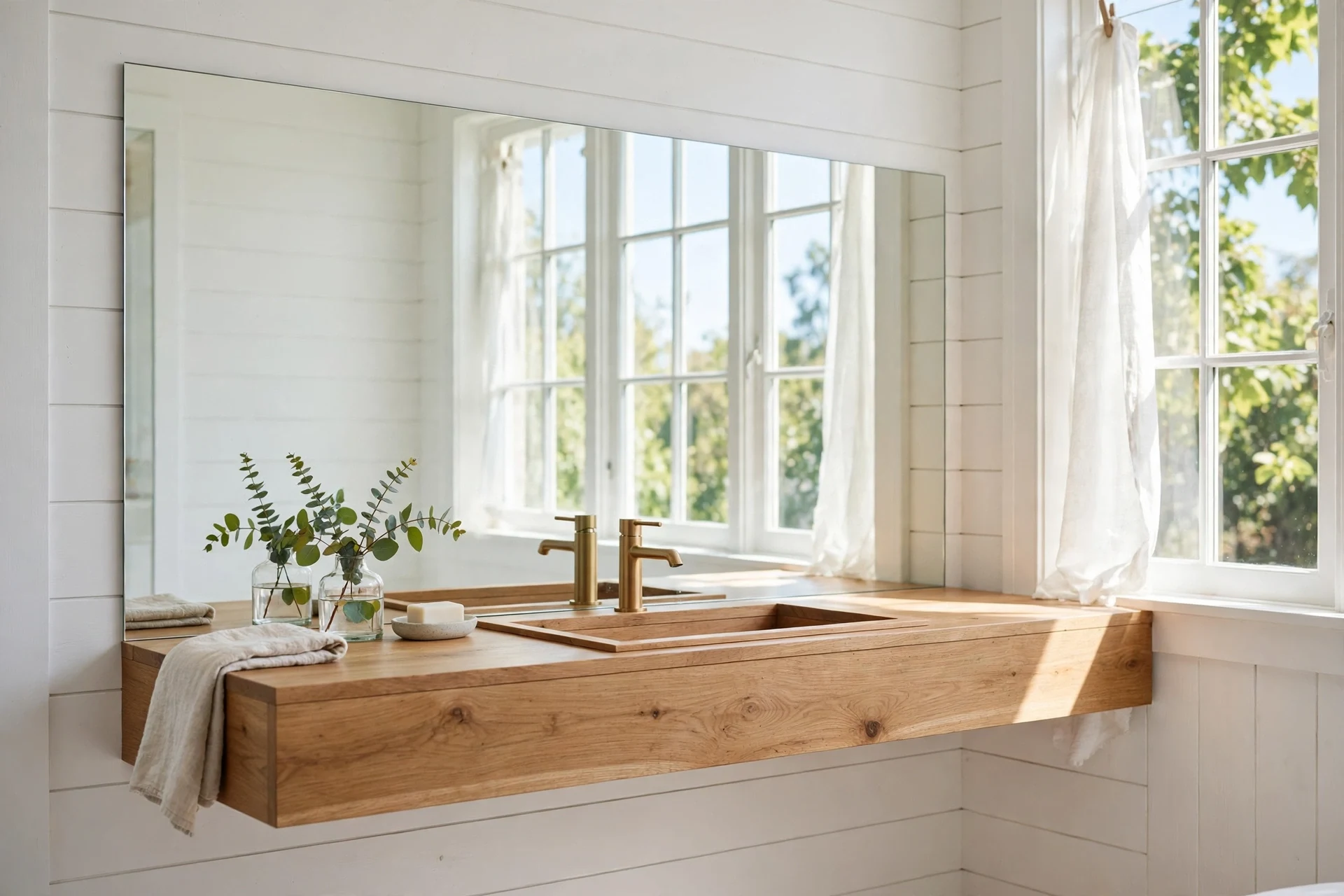
An integrated slab of mirror used as a backsplash bounces light around the bathroom and makes a small room feel twice as big. It works best in a bright bathroom with a window, since the mirror doubles whatever light exists, and it pairs with a floating wood vanity and white paneled walls for an airy feel. The trade-off is cleaning: a mirror backsplash shows every splash and fingerprint, so it needs a quick wipe after use. It is also the most reflective option here, which is why it earns the last spot: in a dark or windowless bathroom, a mirror backsplash helps more than any tile color can.
Whichever look you choose, start with the wall’s water exposure, then pick the material that fits it. You can browse more ideas in our Bathroom Decor category.