The best bathroom cabinet storage is a system planned from the inside out: daily items at eye level, backups and cleaning supplies lower down, and every category grouped so nothing hides behind a tall bottle. Mirrored cabinets, tall linen towers, and over-toilet cabinets add the most storage without a remodel, while drawer dividers, pull-out shelves, and door-back hooks make the cabinets you already own hold far more. These 22 bathroom cabinet storage ideas run from the cabinet itself to the organizers inside it, so you can start with one change or plan a whole wall.
One distinction first: this post is about cabinet storage ideas — cabinet types and the organizing systems inside them. If you want product picks for the space under one sink, our guide to under-sink organizers covers organizer products for that spot. Everything below is about choosing and organizing cabinets across the whole bathroom.
1. Mirrored Medicine Cabinet With LED Lighting
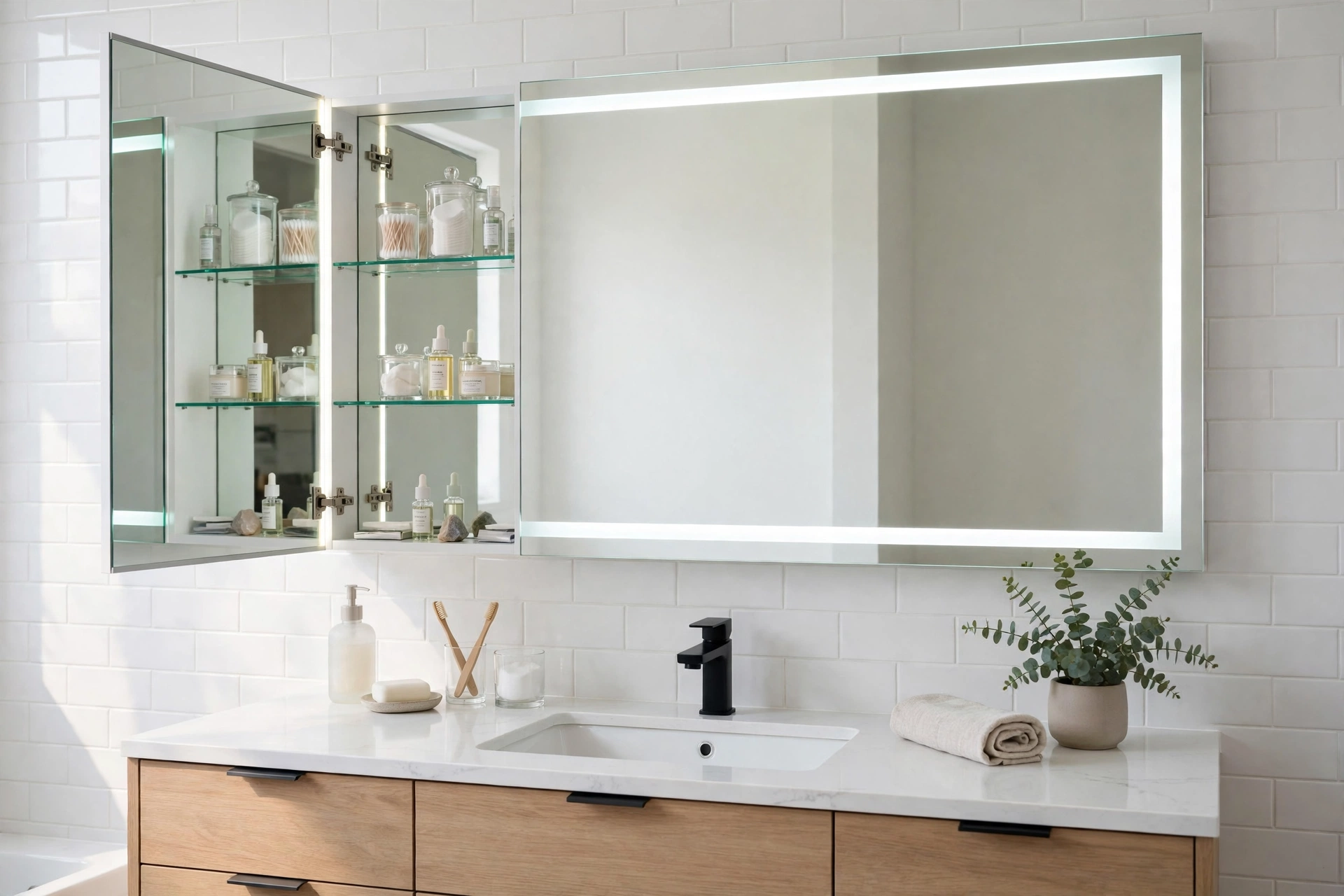
A mirrored cabinet is the highest-value storage addition in a bathroom that still has a flat mirror, because it replaces the mirror with the same reflective surface and adds storage in the same wall footprint. A cabinet roughly 6 to 8 inches deep holds toiletries, skincare, and grooming essentials on three or four internal shelves, and adjustable shelves matter more than extra depth — fixed shelves waste the space above short bottles. LED strips around the perimeter put light at face height, which is the most useful position for grooming. Mount it centered on the basin with the bottom edge above the splash zone, and keep the most-used items on the middle shelf, where your hand lands without thinking.
2. Double Mirrored Cabinets Over a Double Vanity
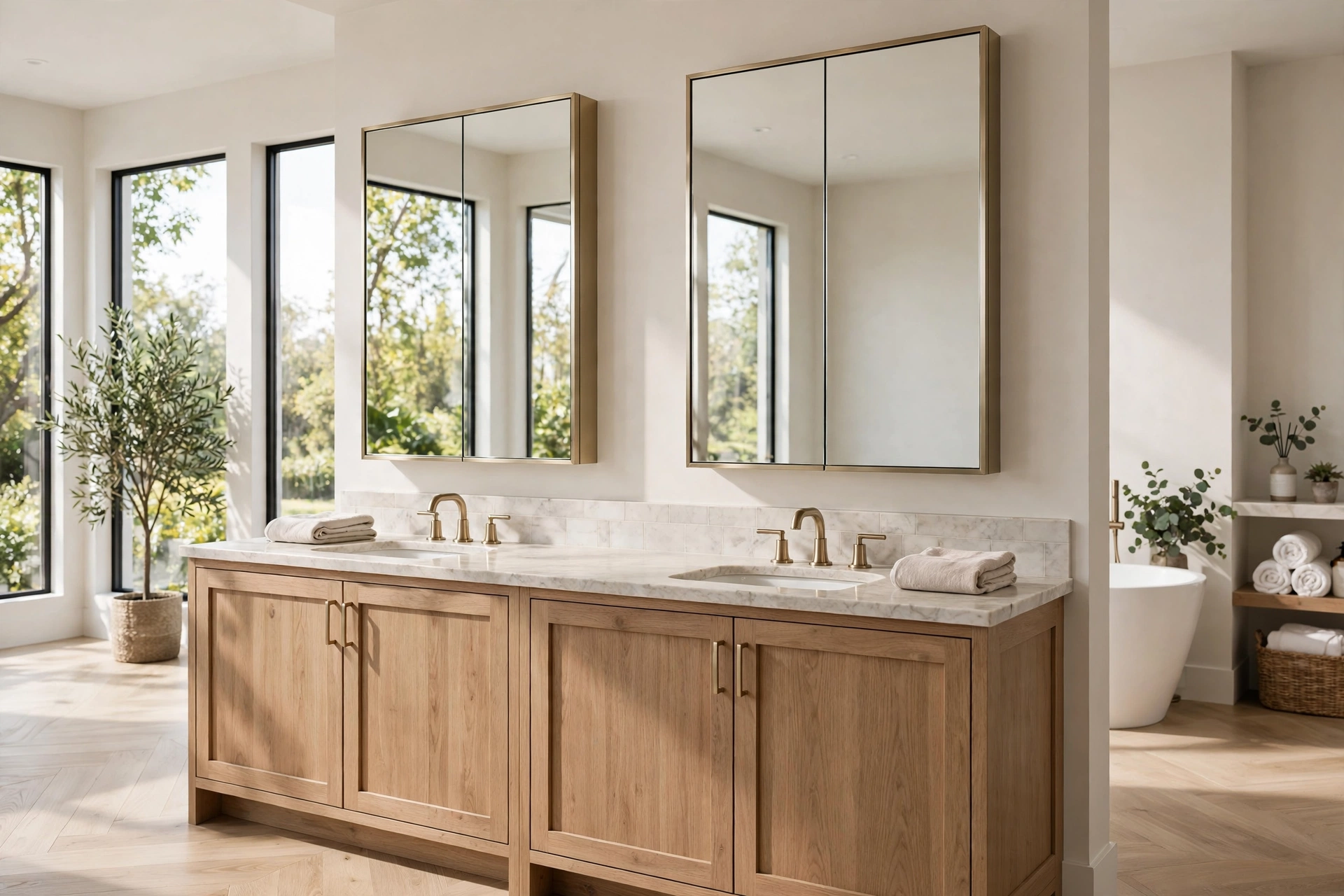
Two people sharing a double vanity should not share one crowded cabinet. Two individual mirrored cabinets, one above each basin, give each person dedicated storage and end the daily negotiation over shelf space. A single wide cabinet spanning both basins looks cleaner, but it forces shared shelves and usually ends up half-owned by one person. With two cabinets, each side can set its own shelf heights — tall bottles on one side, short jars on the other — and wiping one mirror never disturbs the other person’s arrangement.
3. Recessed Medicine Cabinet Set Into the Wall
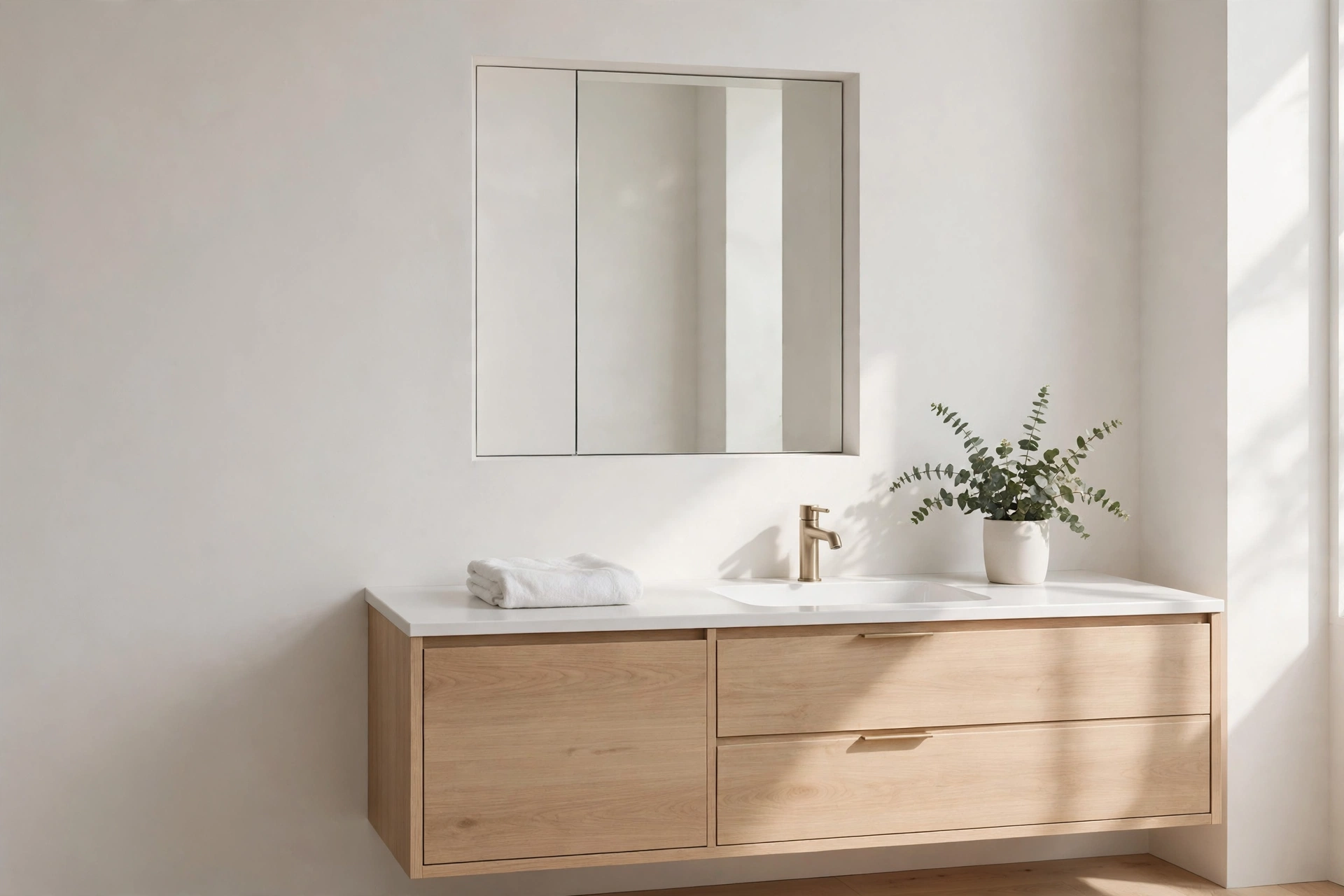
A recessed medicine cabinet sits inside the wall cavity, so the mirror face ends up nearly flush with the wall and the bathroom keeps its visual calm. This is the right choice when a surface-mounted cabinet would stick out too far over a narrow sink or into a tight walkway. It is a bigger job than hanging a surface unit — the wall needs a cavity, and plumbing or wiring in that stud bay can rule it out — so check what is inside the wall before you commit to the idea. Where it works, it stores the same daily essentials as any medicine cabinet while looking like it was always part of the room.
4. Full-Height Tall Linen Cabinet
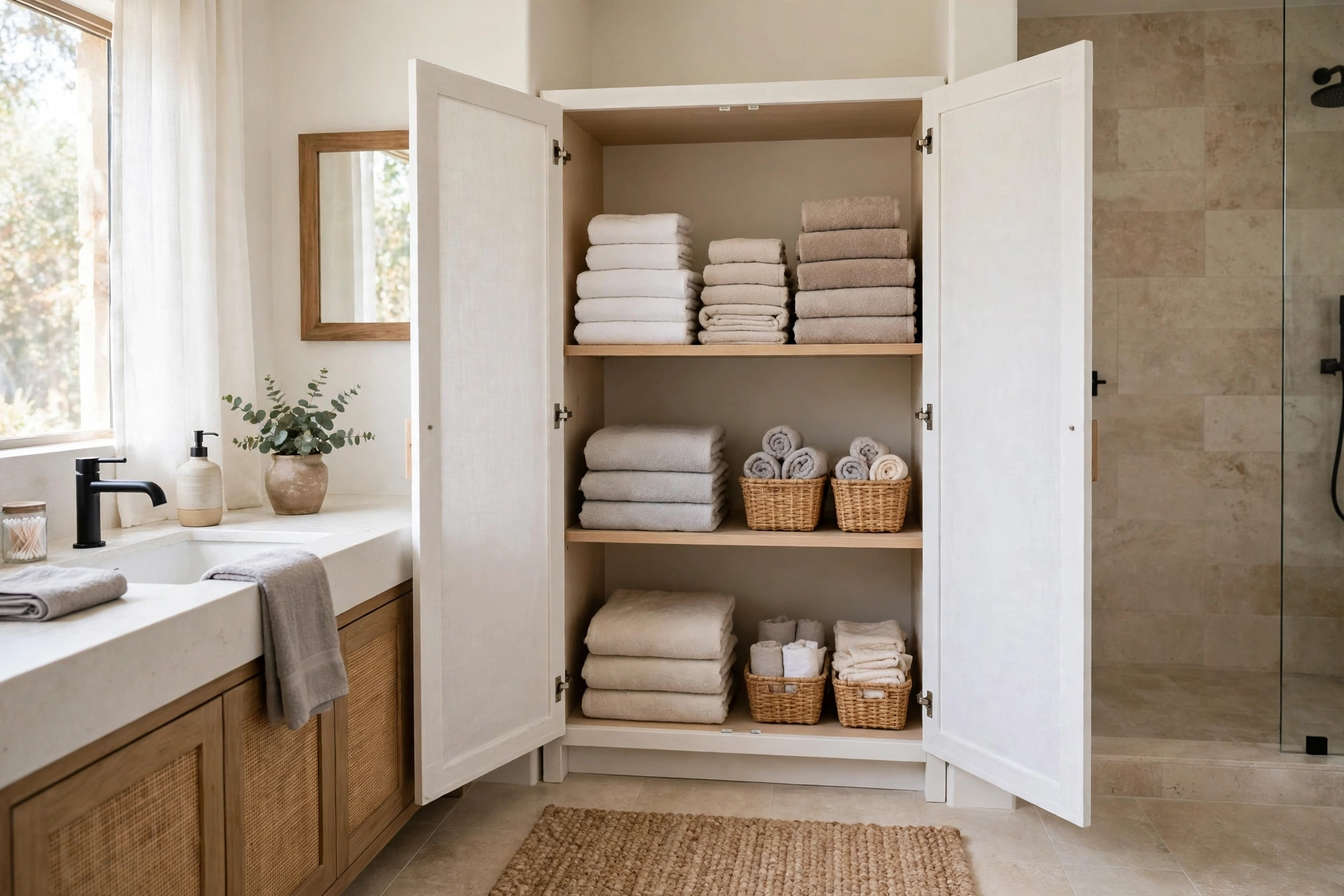
When wall width allows, a full-height cabinet uses vertical space for towels, toiletries, and backup supplies without taking much floor area. The trick is assigning each section a job: towels on the middle shelves where they are easy to reach, toiletries in baskets above, and bulky backups or cleaning supplies at the bottom. Adjustable shelves are worth insisting on, because towel stacks and tall bottles change with the seasons and fixed shelves waste the gap above short items. A tall bathroom cabinet also keeps the counter clear, which is half the battle in a small bathroom.
5. Slim Freestanding Cabinet Beside the Vanity
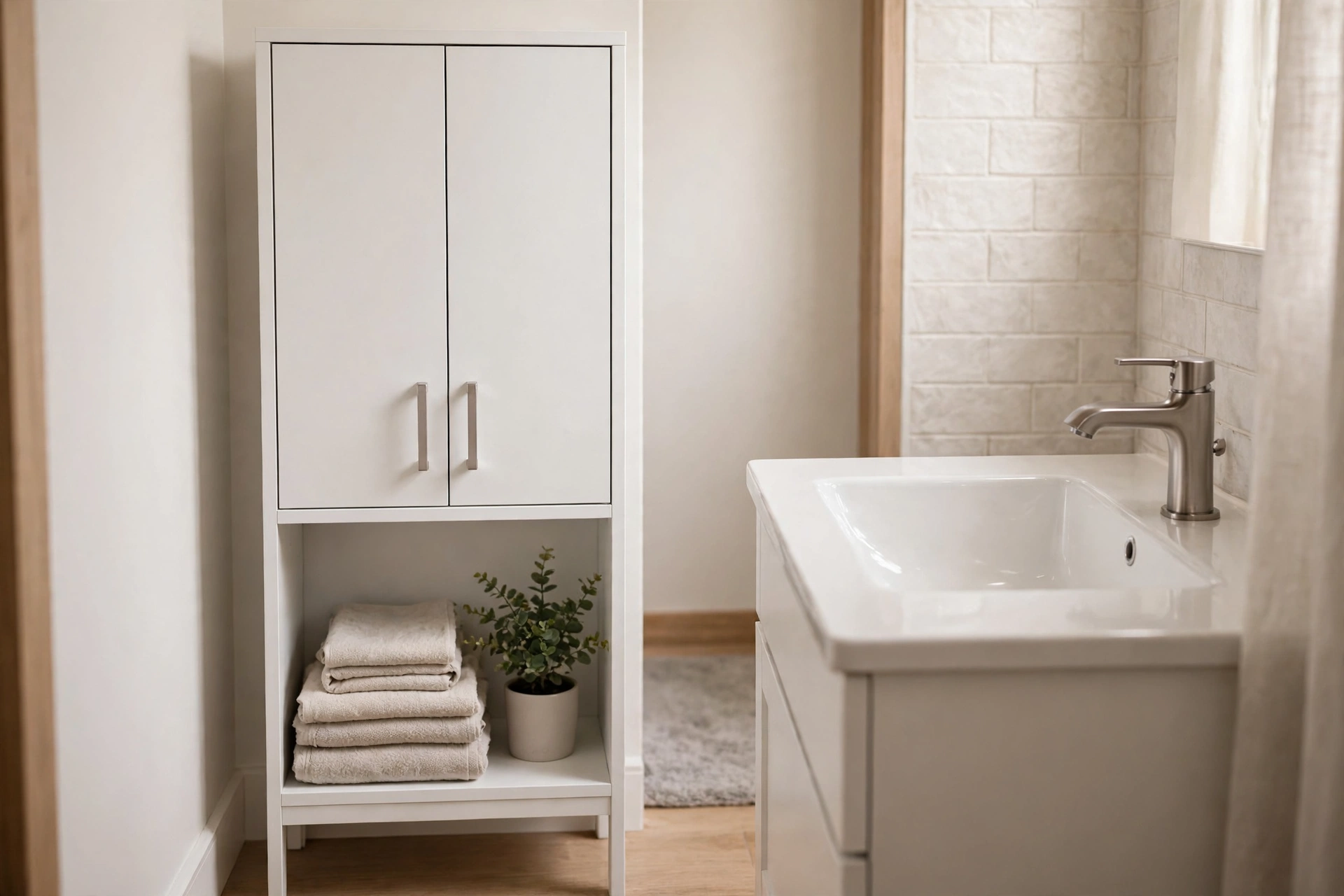
The narrow gap beside a vanity looks useless until a slim freestanding cabinet turns it into a storage zone. Choose a unit with closed doors and at least one open shelf: the hidden sections hold toiletries, spare toilet paper, and cleaning products, while the open shelf takes folded hand towels or a small basket. Slim cabinets work because they use vertical space instead of floor space, which makes them especially useful in small bathrooms. Measure the gap first — a cabinet that is even half an inch too wide is a return trip, not a storage solution.
6. Narrow Pull-Out Cabinet for the Gap Between Fixtures
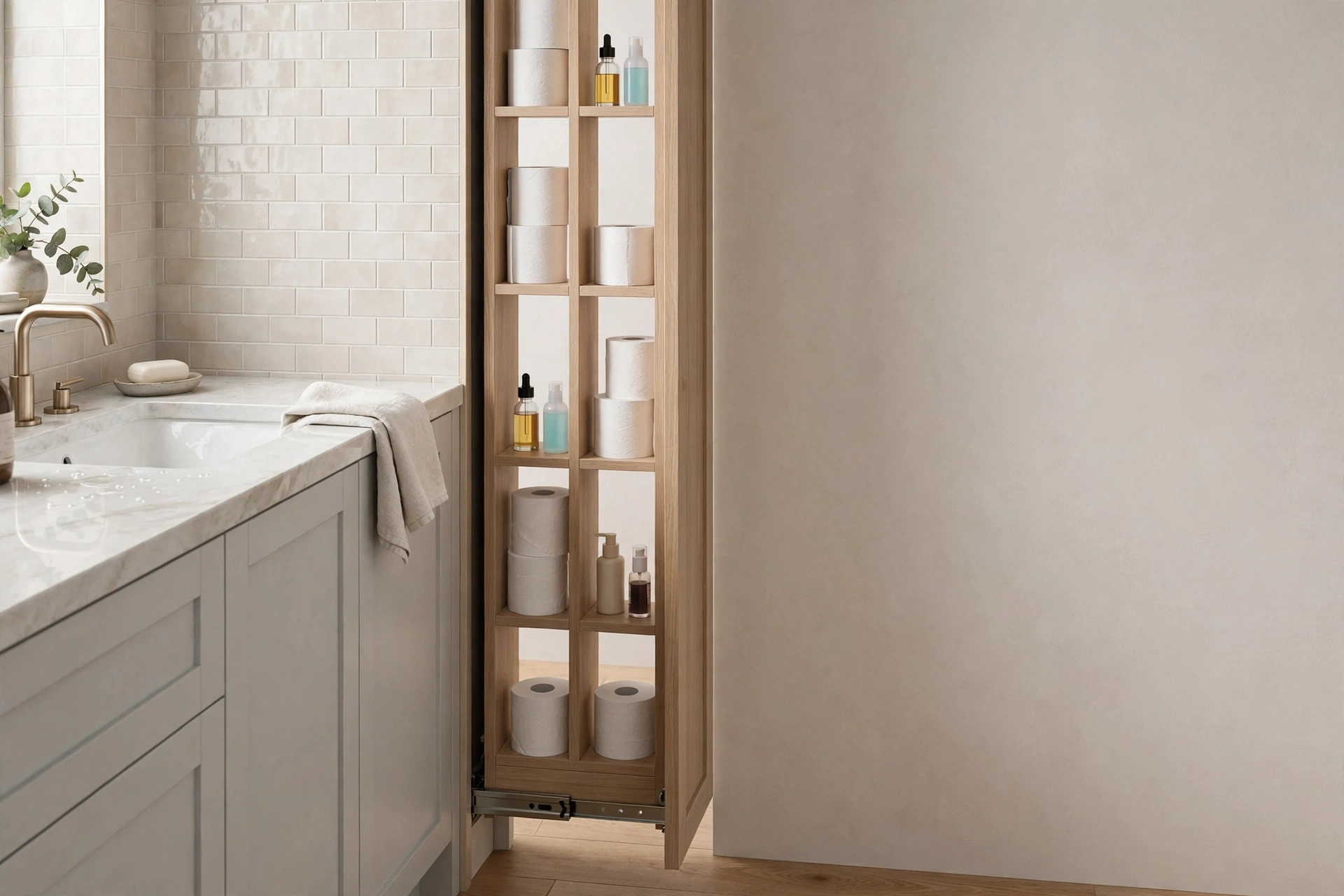
That strange little gap between the vanity and the next fixture is not wasted space; it is a pull-out cabinet waiting to happen. A slim unit with pull-out shelves or compact compartments fits where no standard cabinet can and holds toilet paper, cleaning products, spare toiletries, or small towels. Pull-out shelves matter here more than anywhere else, because they let you reach items at the back without emptying the whole cabinet. This is one of the cheapest bathroom cabinet storage ideas on this list, and it works without any renovation at all.
7. Floating Vanity Cabinet With Deep Drawers
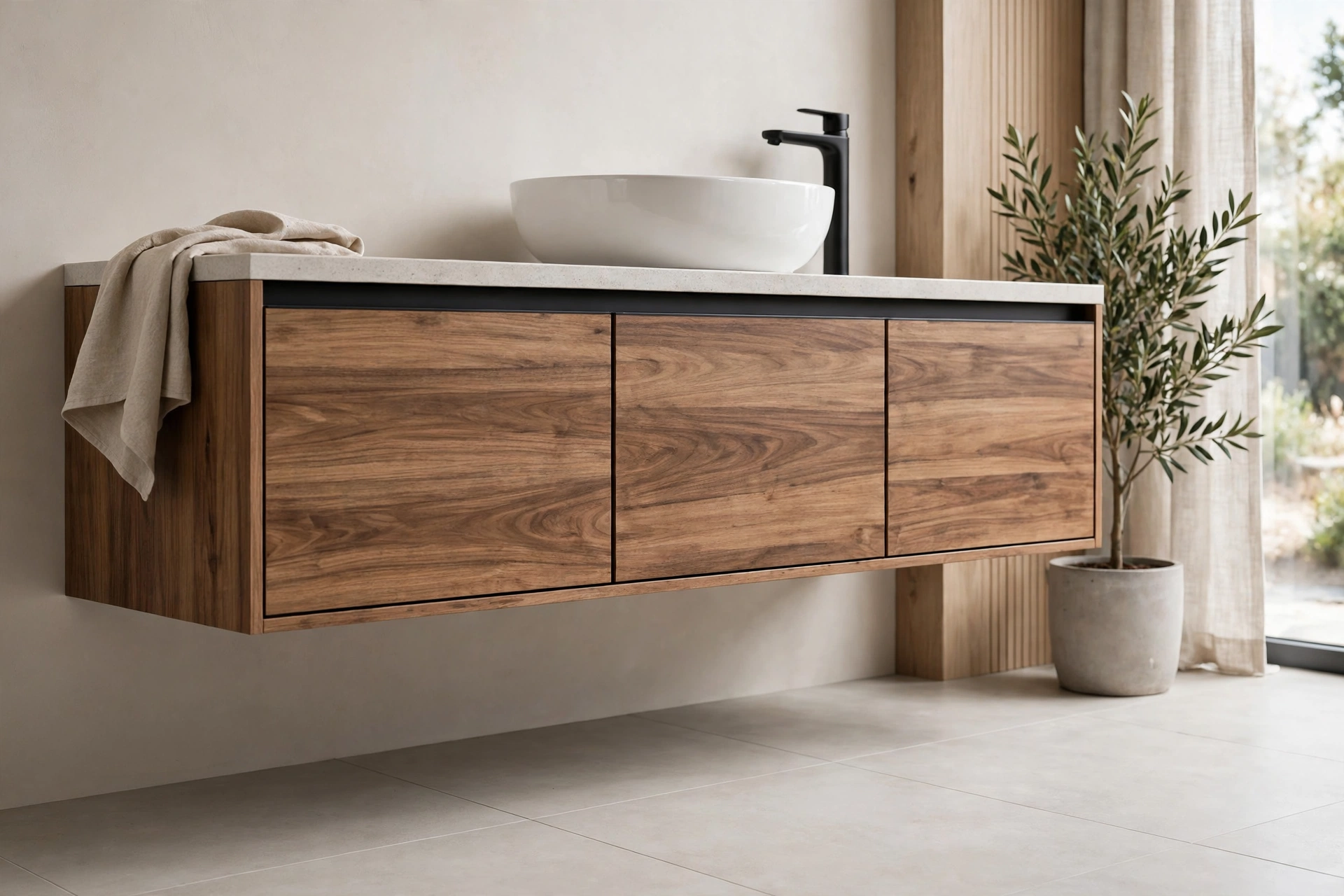
A wall-mounted floating vanity keeps the cabinet visually lighter and leaves floor area visible underneath, which makes a compact bathroom feel larger. The real advantage is in the drawers: deep drawers make smaller products easier to organize and retrieve than a single deep cupboard, where everything migrates to the back. Plan the drawer depths around your actual bottles — a drawer that is too shallow for your tallest pump bottle is a daily annoyance. The open floor beneath also makes cleaning easier, since you can sweep or mop without moving a bulky cabinet.
8. U-Shaped Drawer That Works Around the Plumbing
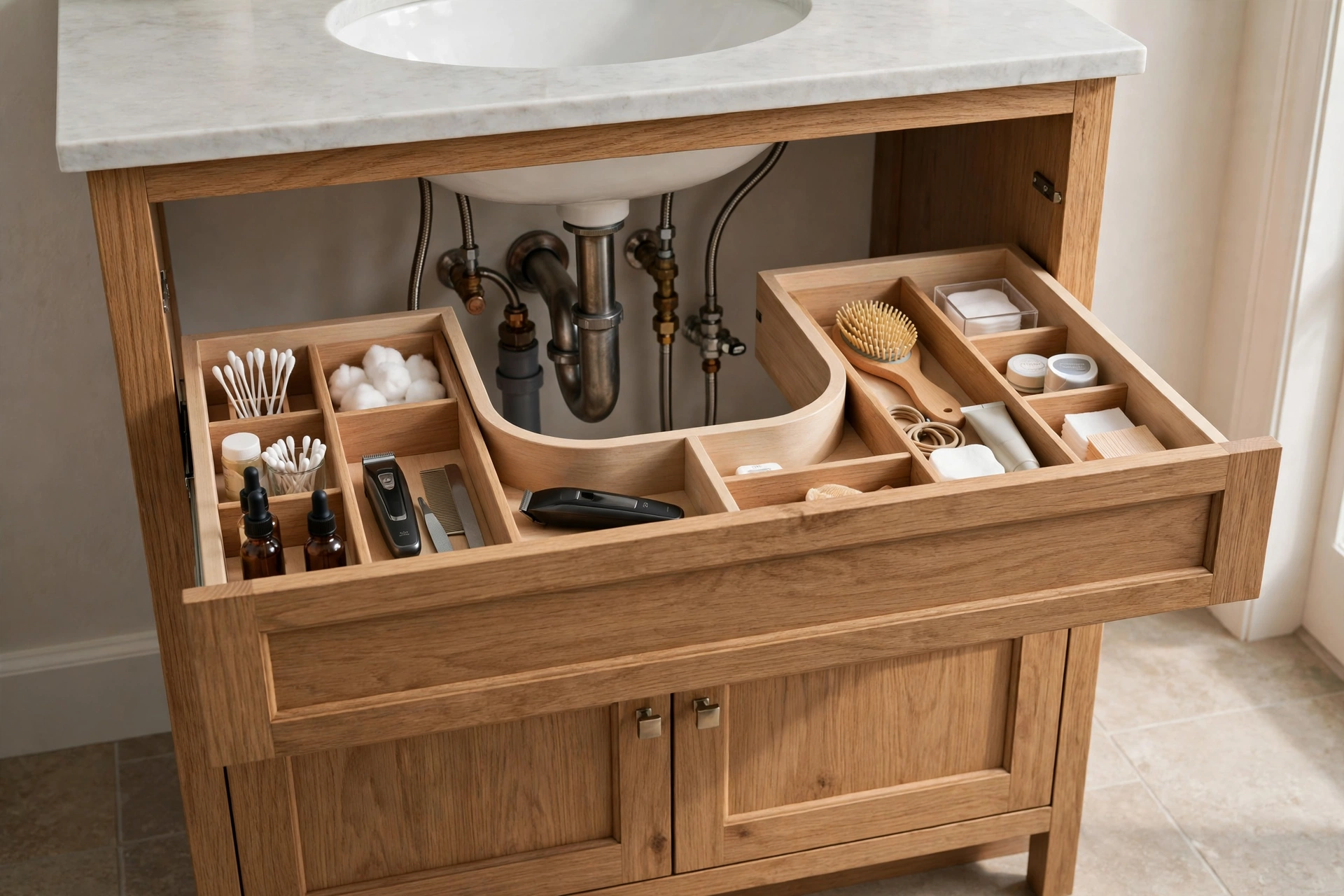
The space around sink plumbing defeats most vanity storage, but a U-shaped drawer is cut to fit around the pipes instead of pretending they are not there. It turns the awkward zone beneath the basin into a shallow drawer for soap, paper products, and small spares, right where you use them. Before you plan one, note where the trap and supply lines actually sit — the drawer depth has to clear them with room to spare. Paired with a deeper drawer below for towels, this is how a small vanity cabinet holds as much as a much larger one.
9. Over-the-Toilet Wall Cabinet
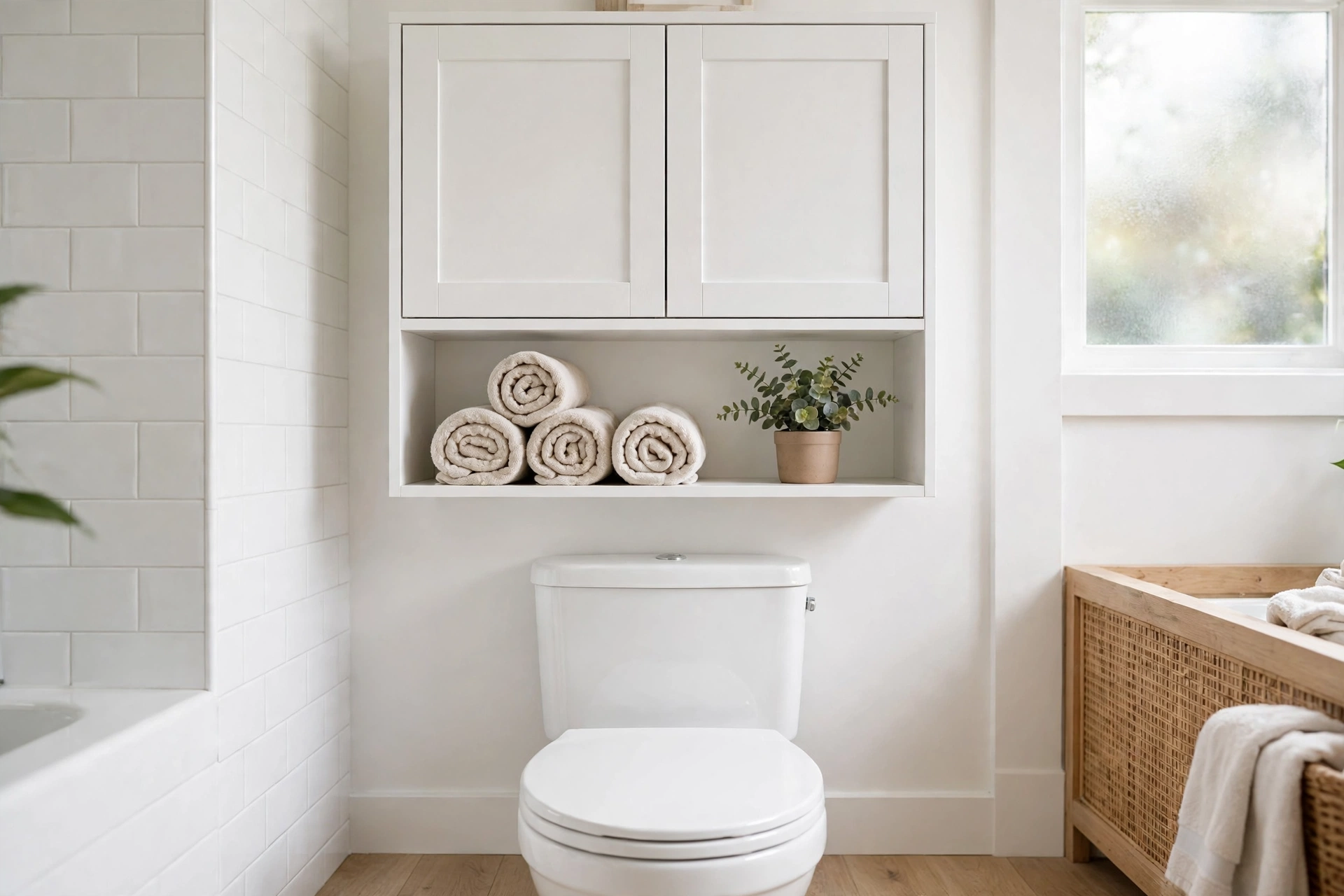
The wall above the toilet is usually the most underused wall in the bathroom, and it sits away from the main wet zone, so humidity is lower there too. An over-the-toilet storage cabinet adds real volume without using any floor area: enclosed doors for supplies and a small open section for towels or a plant. Keep the bottom of the cabinet high enough that it never feels close when seated, and leave clearance so the tank lid can still lift off for maintenance. For more ideas on this wall, see our guide to over-the-toilet storage.
10. Built-In Recessed Niche in the Shower Wall
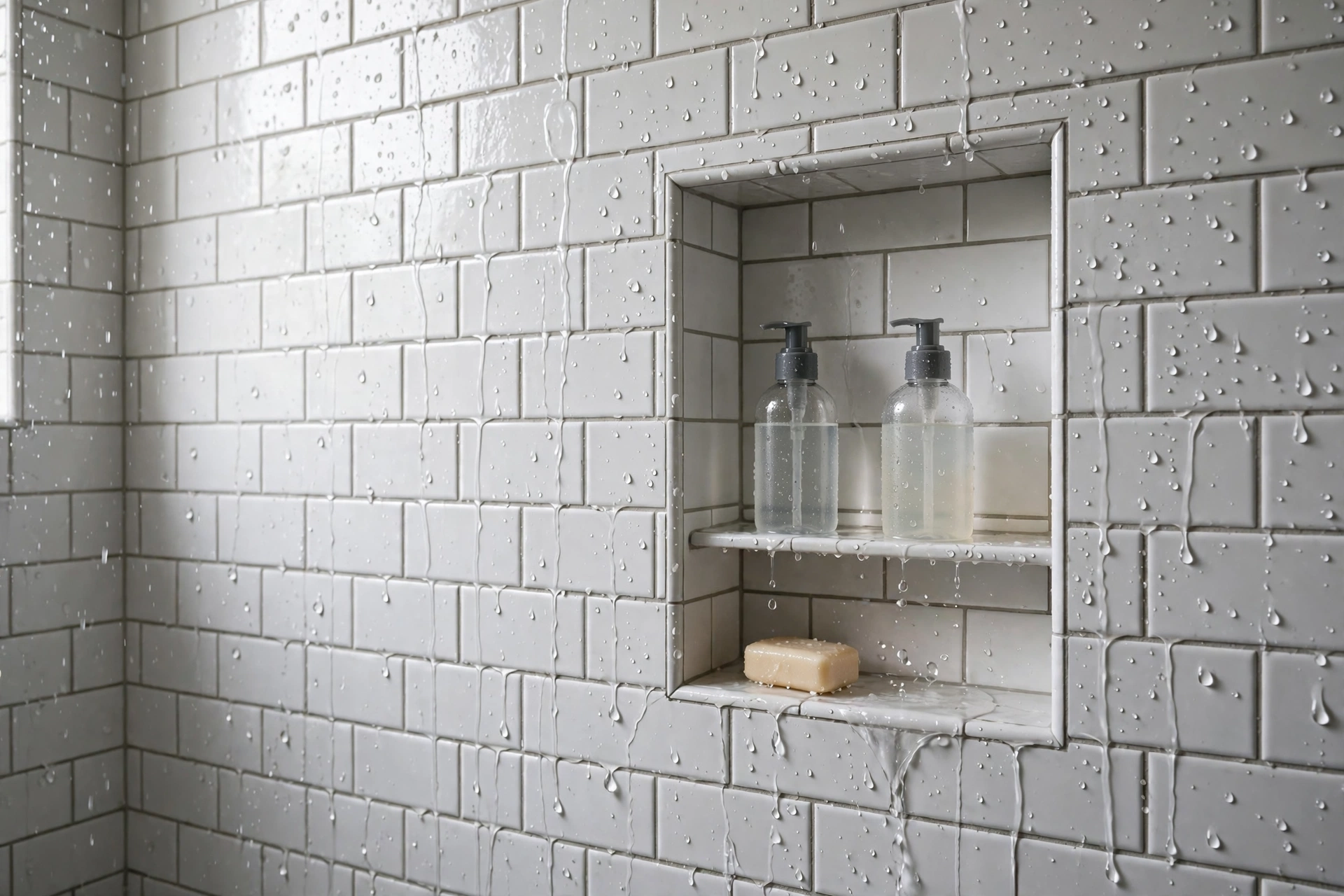
A recessed niche is a cabinet without a door: a box set into the shower wall, tiled to match, that stores bottles without projecting into the shower at all. It is the cleanest-looking shower storage there is, but it is a remodel-level project — it needs a wall cavity, waterproofing, and tiling done properly, or it becomes a leak. If you are already re-tiling a shower, adding a niche costs little extra and removes the need for any add-on shelf or caddy later. Size it for your tallest bottle plus a little headroom, and slope the base slightly so water drains instead of pooling.
11. Corner Cabinet for an Awkward Corner
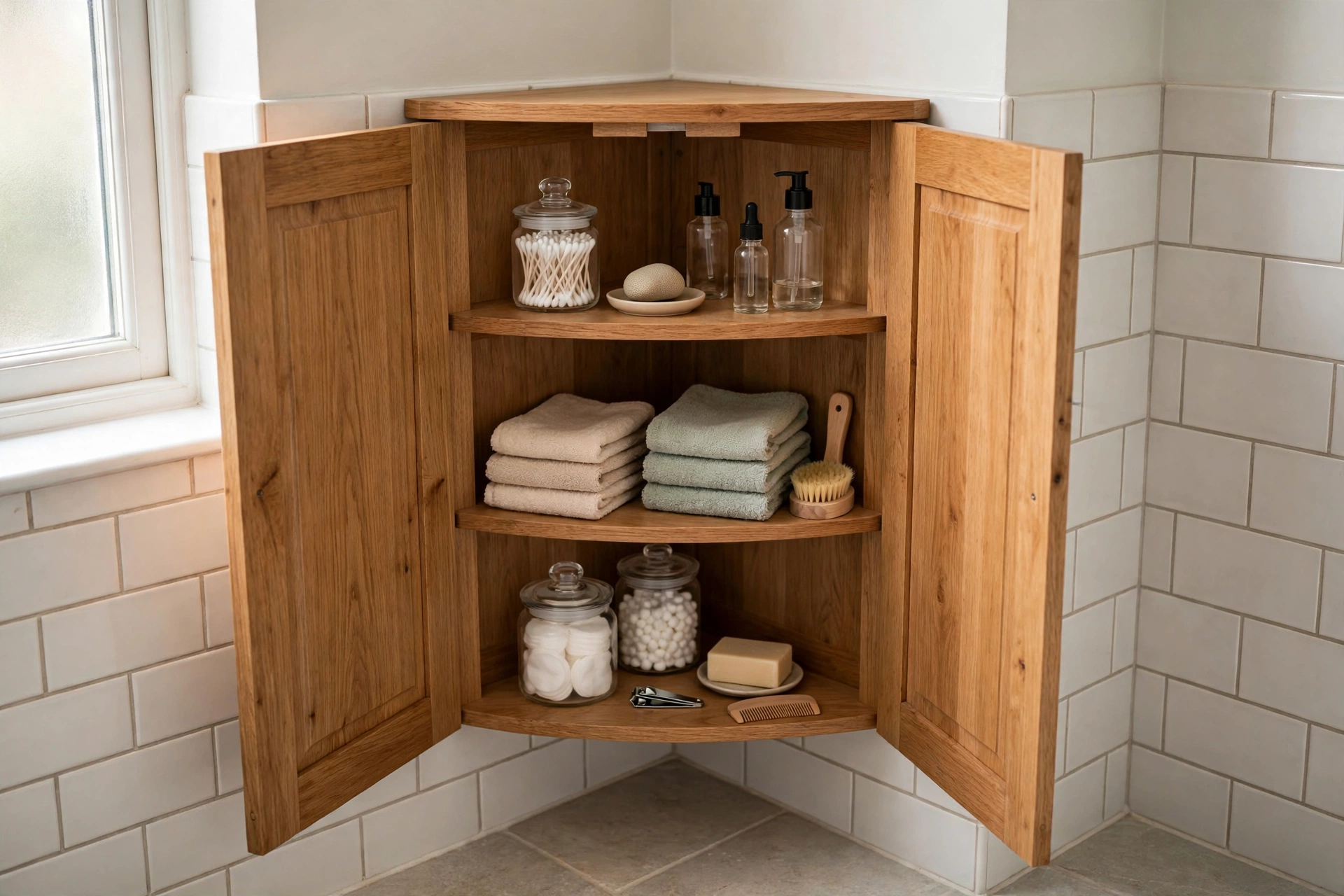
Corners become wasted space in most bathrooms, but a cabinet designed for the corner’s actual geometry turns one into useful storage. Look for a compact unit with an angled or triangular shape, and use the interior shelves for toiletries, folded washcloths, spare toilet paper, or small baskets. If the cabinet has an open shelf, keep the display simple — too many accessories make a small corner feel crowded instead of organized. This idea makes particular sense in bathrooms with awkward layouts: instead of fighting the corner, give it a job.
12. Wall-Mounted Cabinet That Keeps the Floor Clear
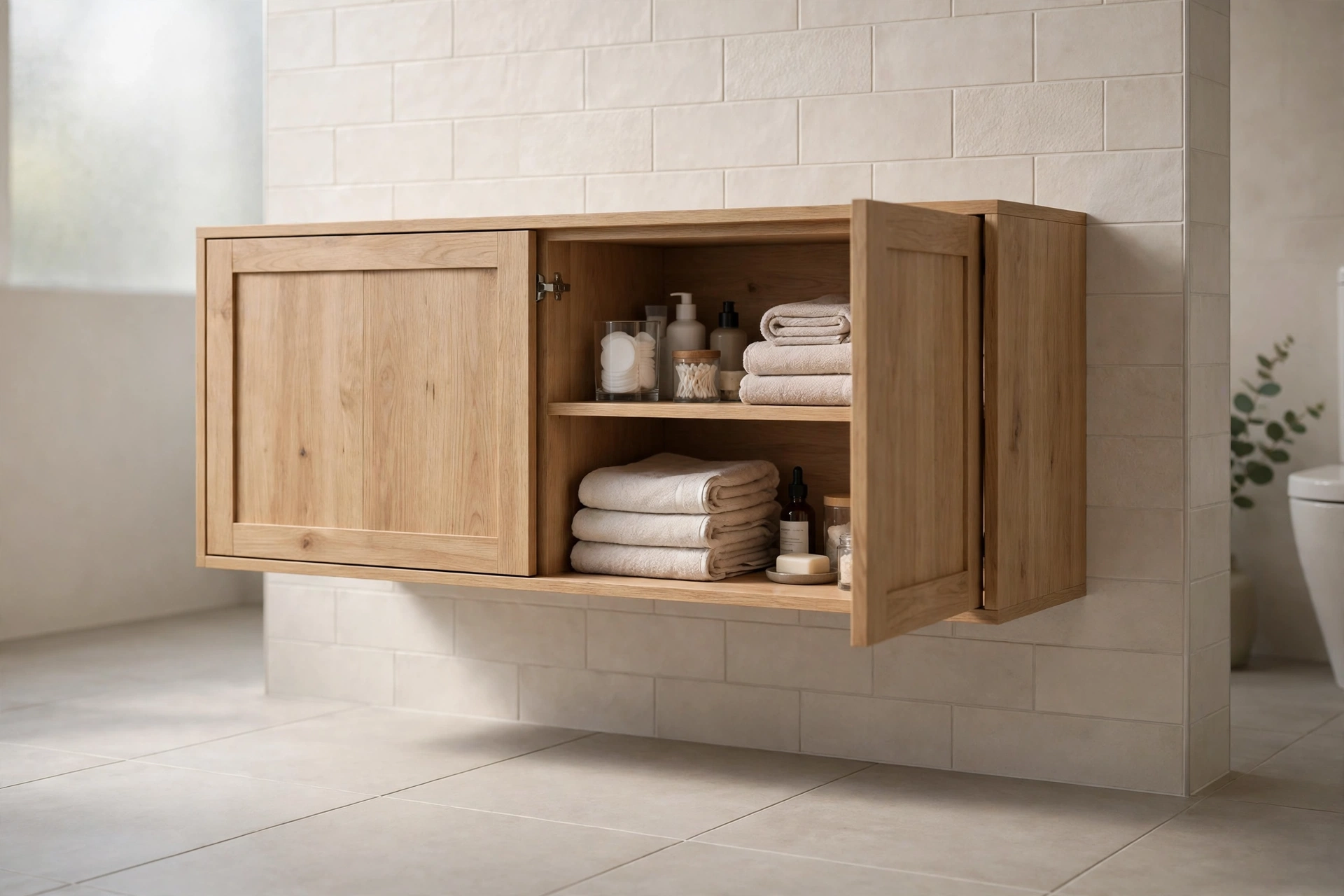
In a small bathroom, every storage element should ideally be wall-mounted, because floor-standing units take up floor space, collect dust at the base, and make cleaning harder. A wall-mounted cabinet above the basin or beside the mirror preserves floor visibility and keeps the room feeling open. It also puts storage at hand height instead of ankle height, which matters when you reach for something half-awake. Choose a depth that does not crowd the walkway — around 6 to 8 inches is plenty for toiletries — and fix it into studs or proper anchors, since a loaded wall cabinet is heavier than it looks.
13. Glass-Door Cabinet for Display and Storage
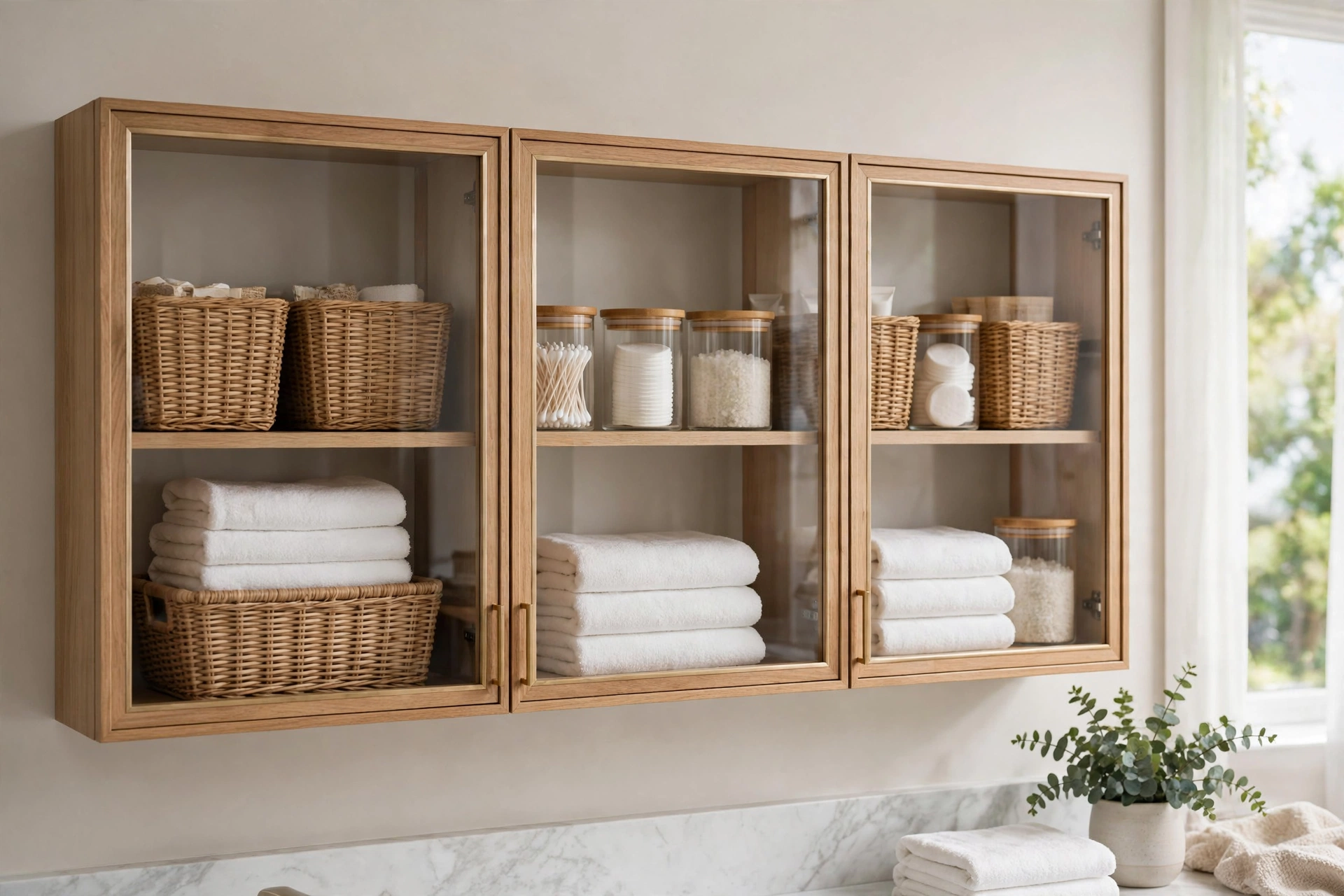
A glass-door cabinet works when you want storage that feels lighter and more decorative than solid doors. Matching baskets, folded towels, jars, and neatly grouped toiletries look intentional behind glass, and you can see supplies without opening every door. The trade-off is honesty: glass doors reward staying organized and punish chaos, so keep similar items together, avoid overfilling, and leave a little empty space on each shelf. This is the cabinet to choose when you enjoy the line between bathroom organization and decor.
14. Open Shelf Plus Closed Cabinet Combination
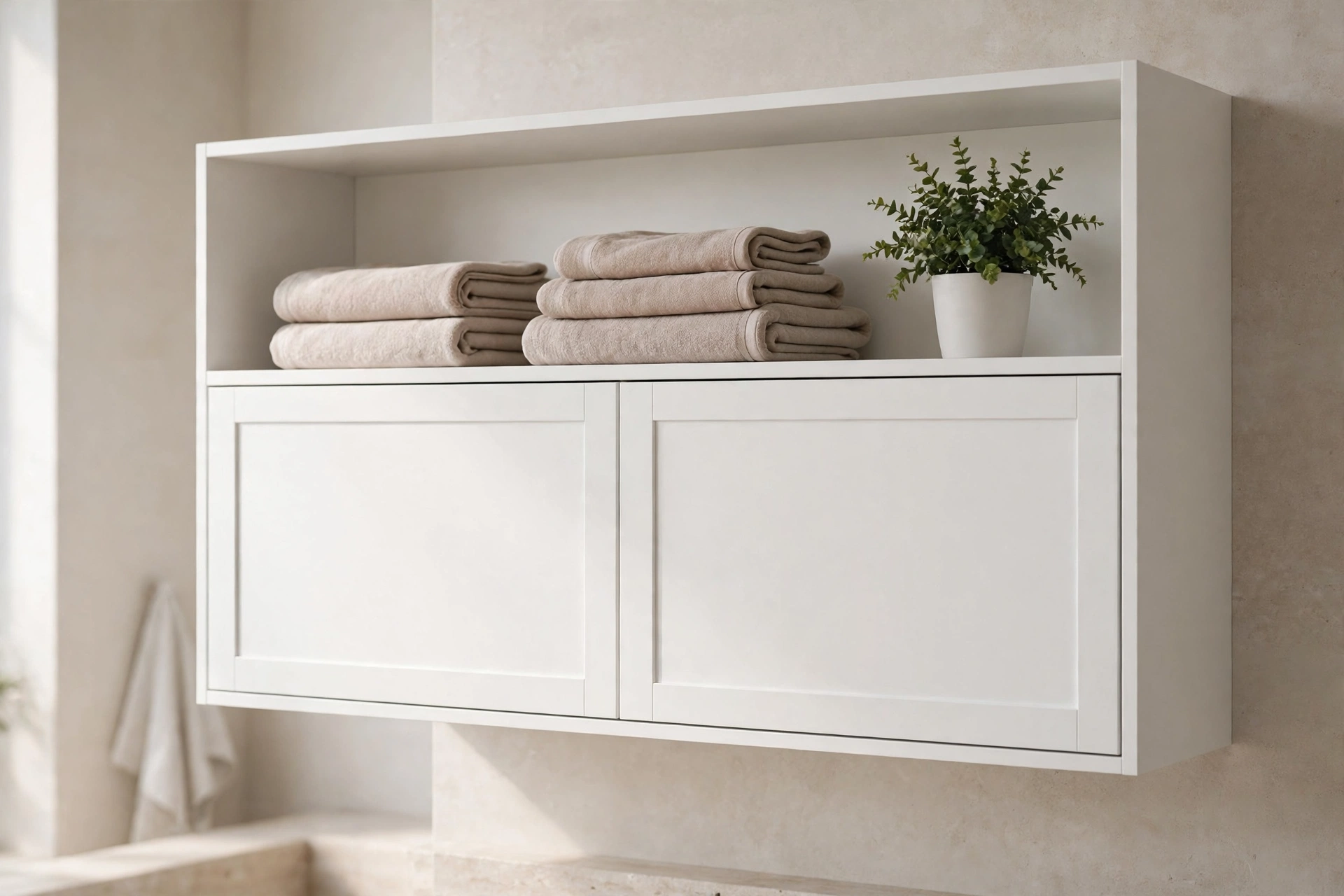
The most practical cabinet setups mix concealment and display: closed doors for clutter, one open shelf for the things that deserve to be seen. Put folded towels, a small plant, or a matching set of jars on the open shelf, and keep medicines, cleaning products, and backup supplies behind the doors. The rule that keeps this combination working is restraint — one open shelf stays calm, while three open shelves turn everyday products into permanent visual clutter. For the open-shelf side of the bathroom, our corner floating shelf ideas show how far a single ledge can go.
15. Multi-Compartment Cabinet Zoned by Frequency of Use
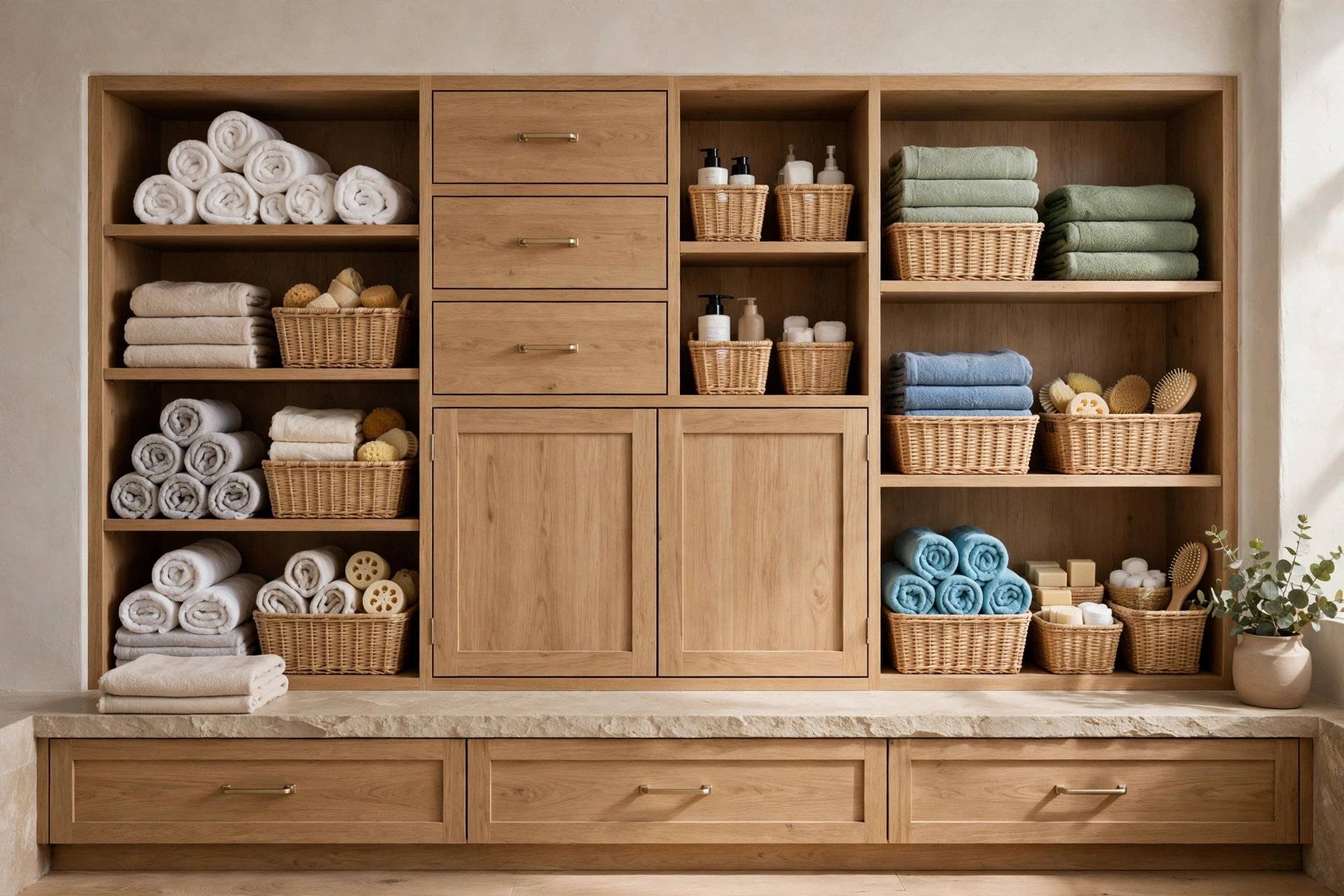
A cabinet with drawers, cupboards, and open shelves in one unit lets you zone storage by how often you use things, which is the system that actually stays tidy. Daily items go in easy-to-reach drawers, weekly items on middle shelves, backup supplies in deeper sections, and cleaning products in a dedicated lower zone. The key is assigning every category a specific place before you load anything — once the system exists, putting things away takes much less effort than deciding where they belong every time. Label the zones if several people share the bathroom; a system nobody can read is a system nobody follows.
16. Clear Containers and Shelf Risers Inside the Medicine Cabinet
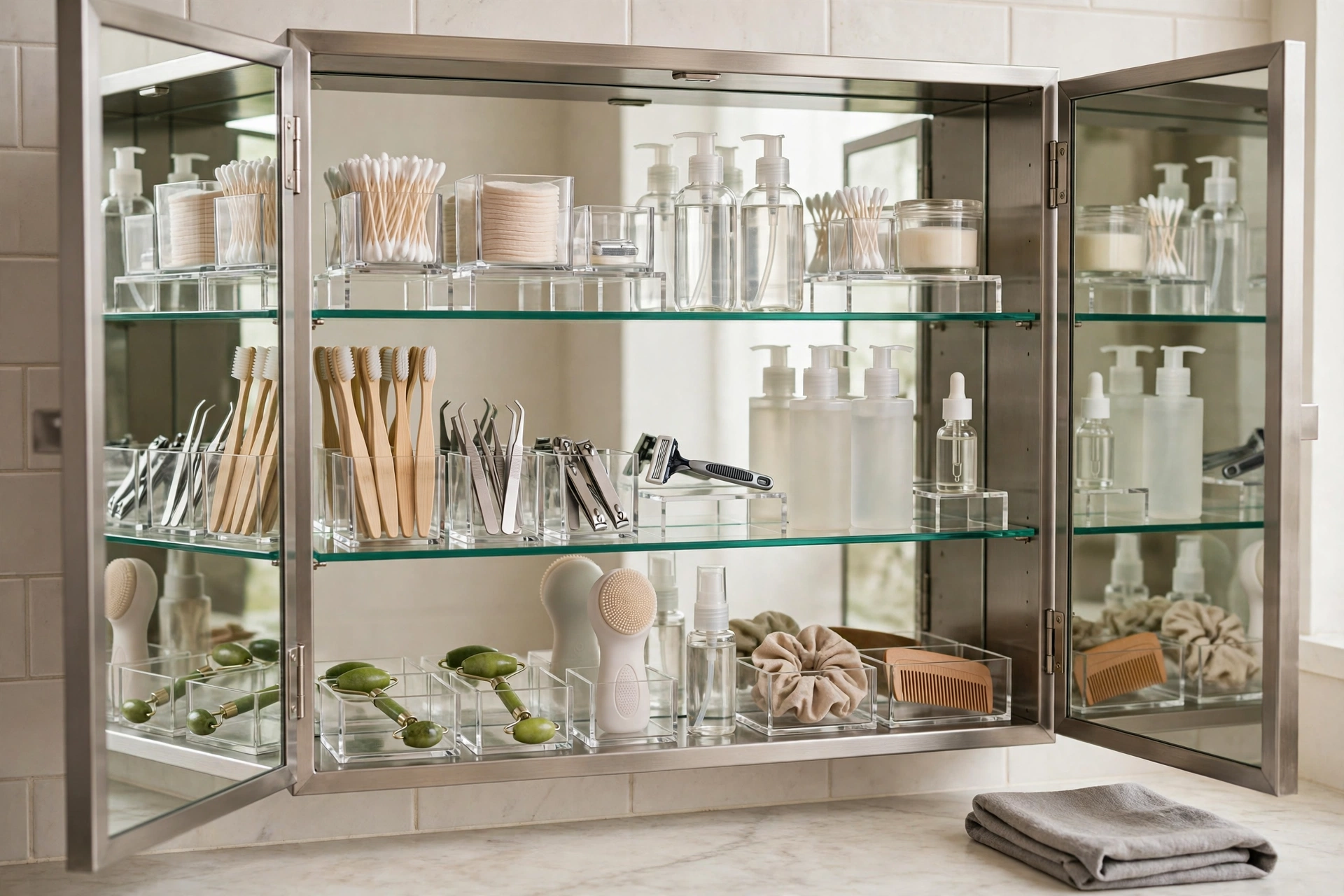
The inside of a medicine cabinet usually fails before the cabinet does: small bottles hide behind tall ones, and the back row becomes a graveyard. Clear containers fix the visibility problem — acrylic, plastic, or glass bins let you see everything at a glance — and shelf risers give short items a second level so they stop disappearing behind taller bottles. Group by routine rather than by product type: morning skincare in one container, evening items in another, first aid in a third. This is one of the cheapest bathroom cabinet organizer ideas here, and it works in a cabinet you already own.
17. Door-Back Storage: Magnetic Board and Hooks
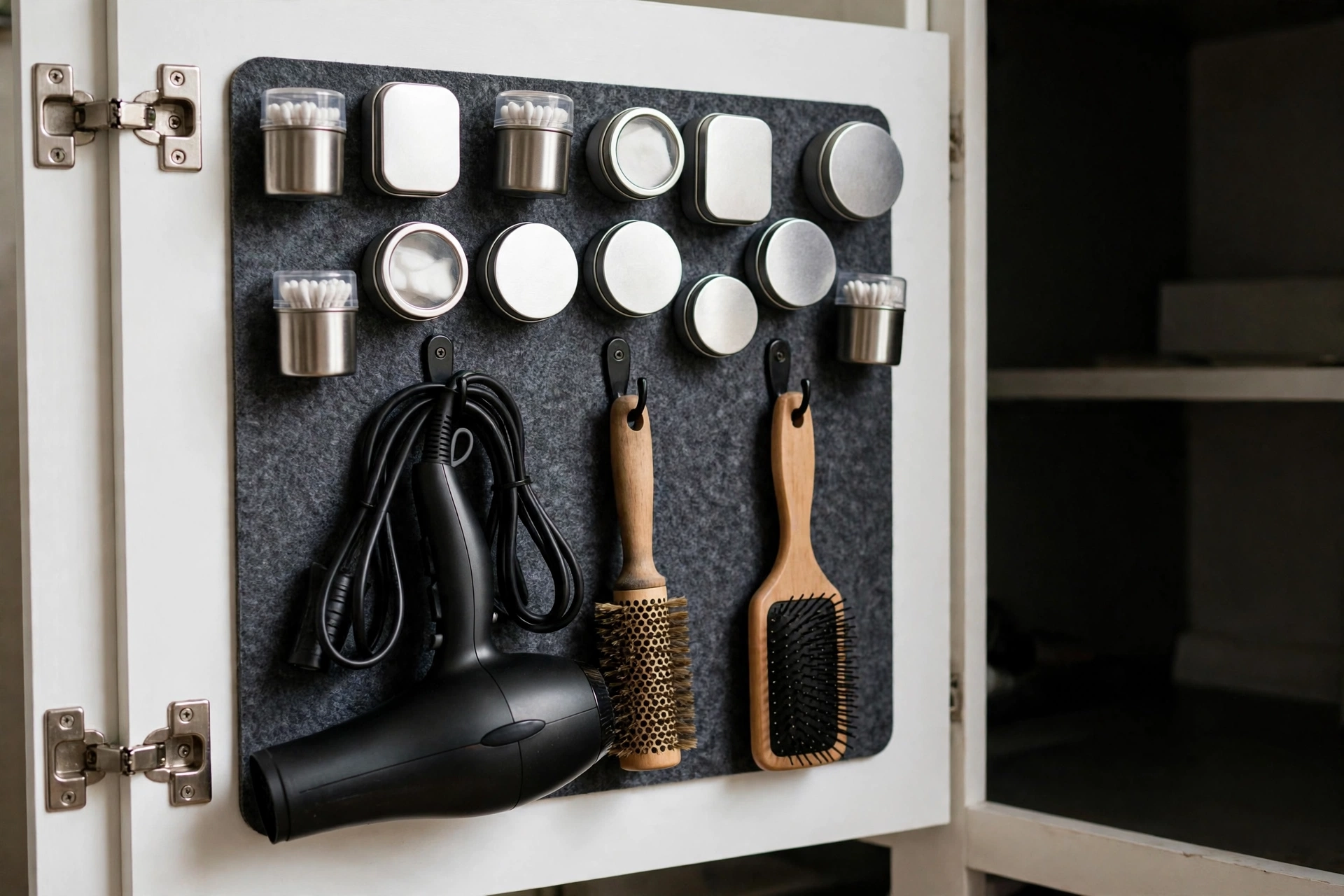
The back of a cabinet door is free storage most bathrooms ignore. A magnetic board mounted inside the door holds small grooming tools, makeup, and slim magnetic containers, while small adhesive hooks hang a hair dryer, brushes, and other tools that otherwise tangle in a drawer. This keeps the shelves for bottles and the door for tools, and it puts the most-used items at hand the moment the door opens. Keep the load light and the hooks low-profile so the door still closes flush — a door that will not shut is worse than a drawer that is slightly messy.
18. Pull-Out Two-Tier Shelves in Deep Cabinets
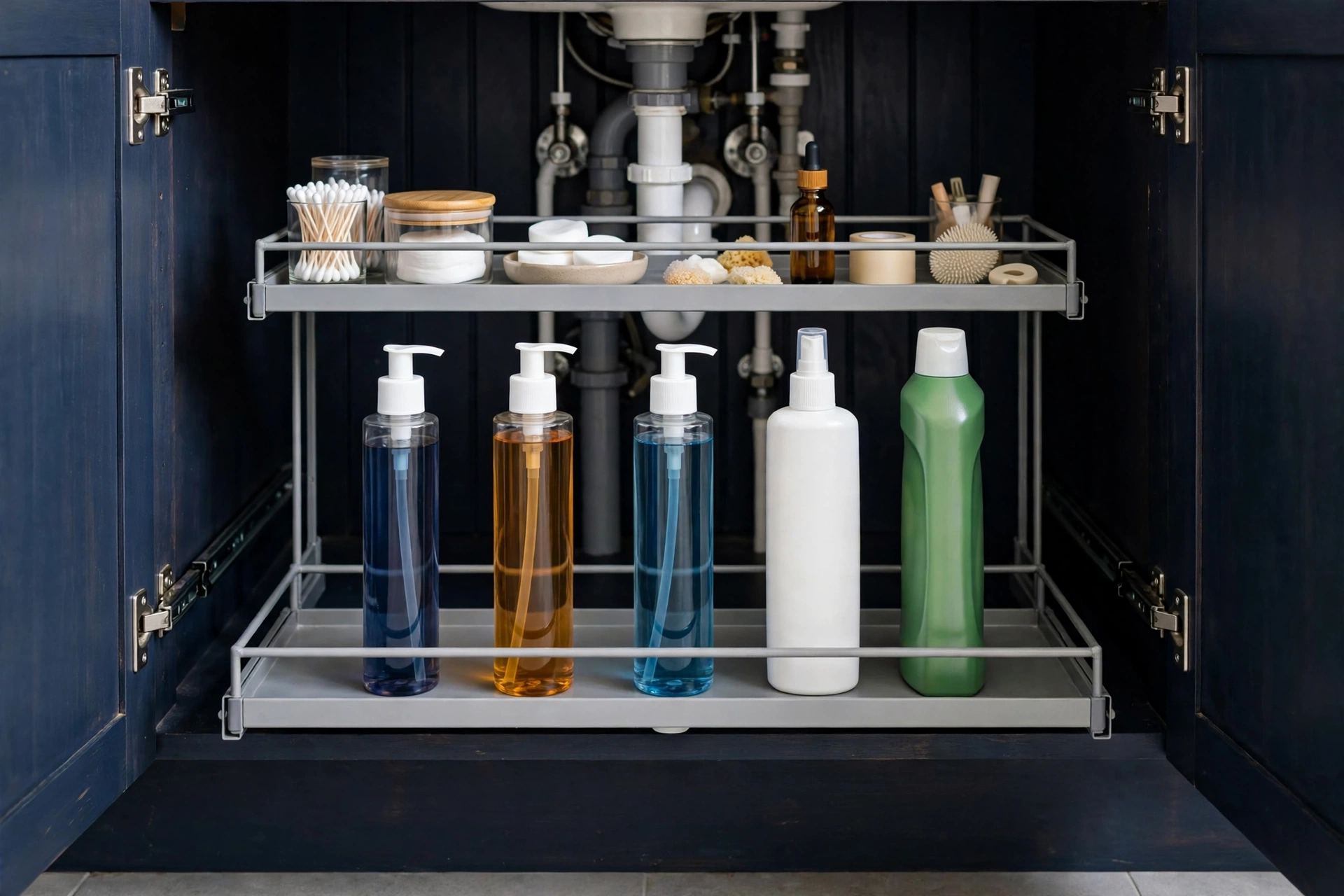
Deep cabinets are where bathroom storage goes to disappear, and a two-tier pull-out shelf is the fix. The narrow top shelf rides above the plumbing or above shorter items, while the bottom shelf holds taller bottles, and the whole unit slides out so nothing hides at the back. Under-cabinet lighting helps here too — a small adhesive light inside a deep cabinet turns a dark corner into visible storage. If your cabinet is deep enough to lose things in, pull-outs will change how it feels more than a new cabinet would.
19. Drawer Dividers for Small Items
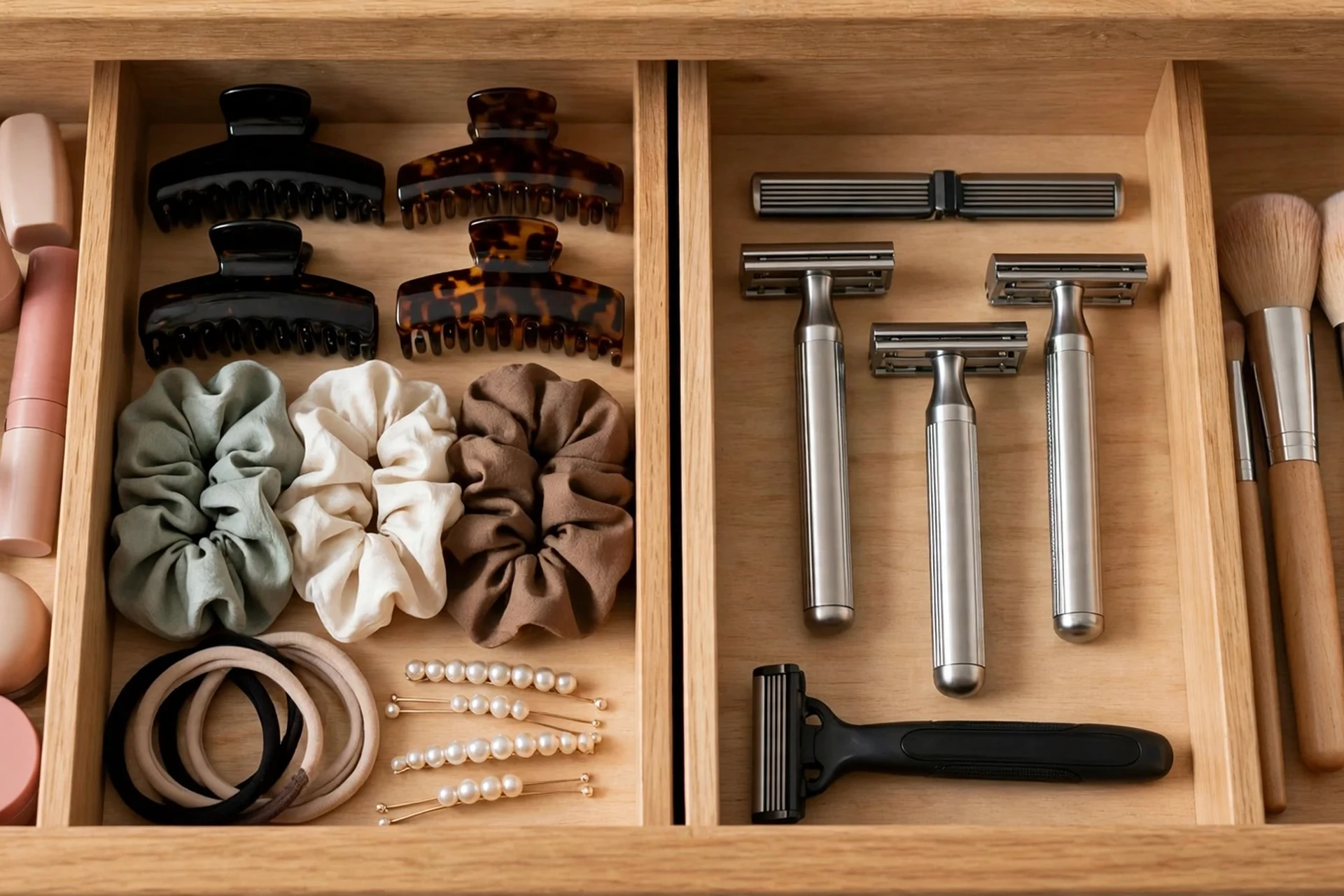
Small bathroom products become a single sliding pile in an undivided drawer. Dividers and internal organizers give cosmetics, hair accessories, razors, and brushes their own compartments, so a drawer opens onto order instead of a jumble. A practical layout is one drawer per category: everyday grooming on top, hair accessories next, skincare below, and towels or backups in the cabinet beneath. Measure your drawer interiors before buying dividers — a divider set that is a quarter inch too long is useless, and adjustable dividers forgive drawers that are not quite standard.
20. Linen Cabinet Zones and Labels for the Whole Family
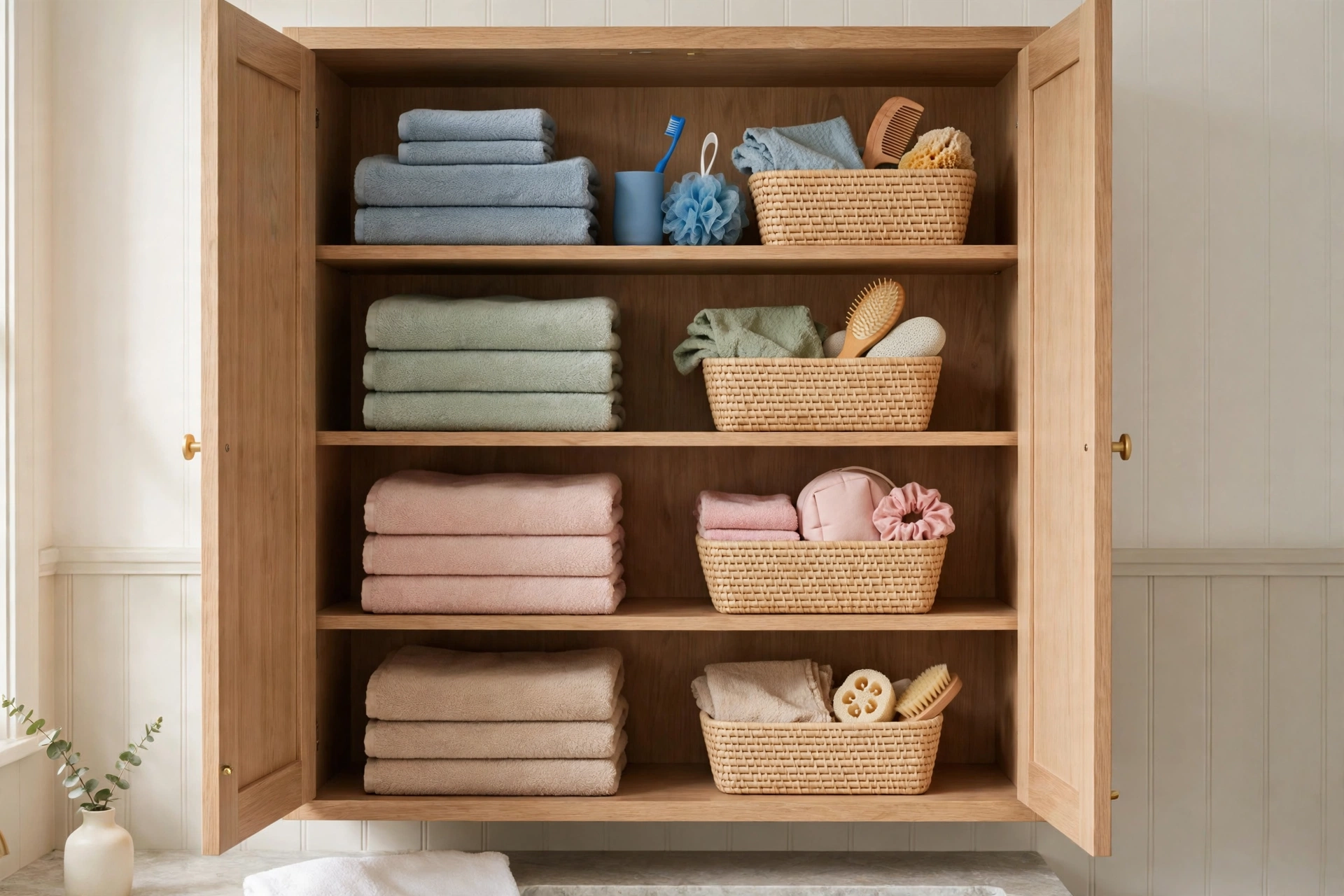
A linen cabinet earns its keep when it stops being one big towel pile and becomes zones: bath towels together, hand towels together, washcloths together, and backup supplies on their own shelf. Fold everything the same way and stack similar sizes together, or roll towels on open shelves — rolls look neat and let you grab one without disturbing the rest. When several people share the bathroom, labels or a basket per person end the mystery of whose towel is whose. One dedicated linen cabinet, zoned properly, is what keeps towels off chairs, counters, and random corners.
21. Hidden Laundry and Hamper Cabinet
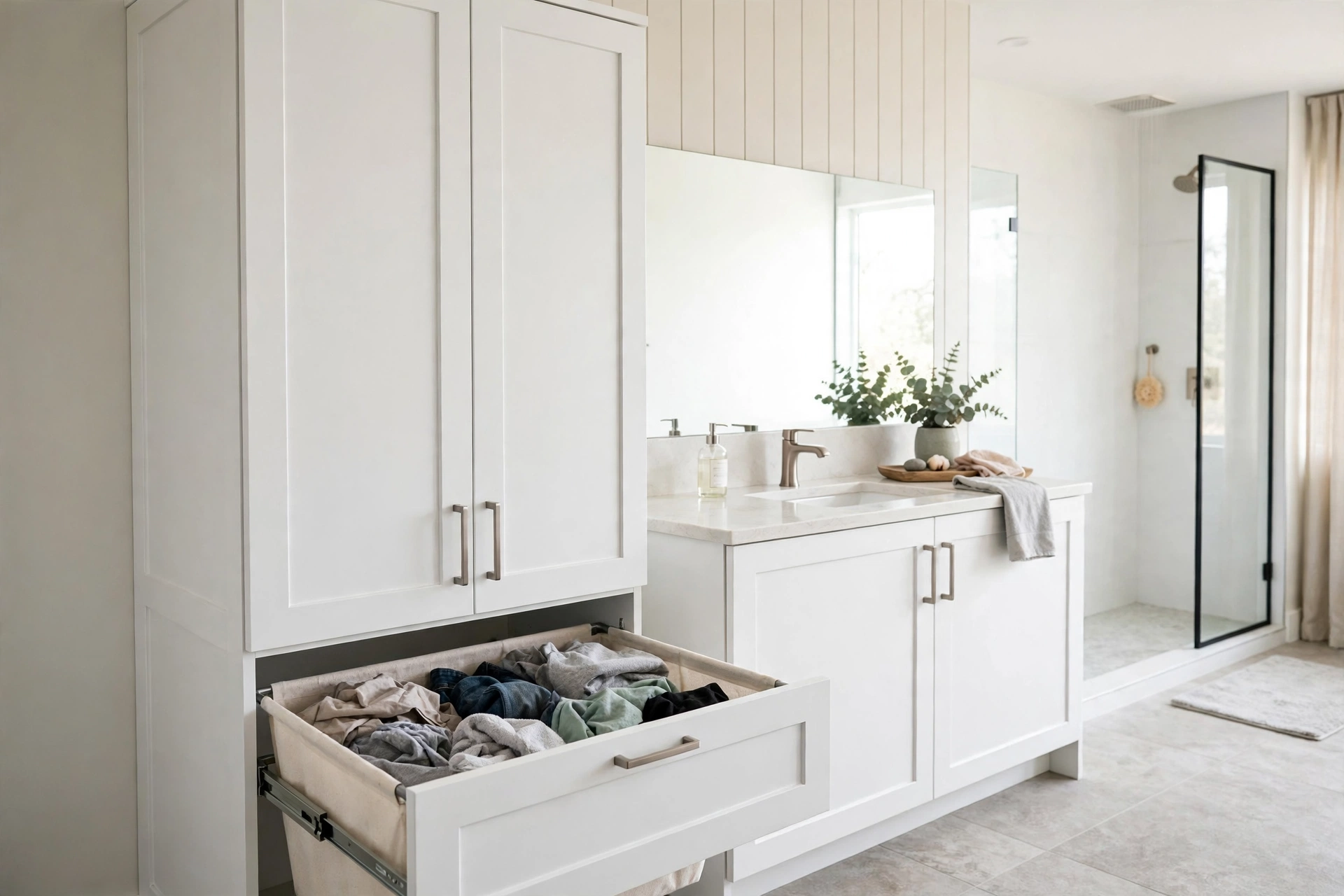
Laundry is the clutter that never looks like storage, which is why a dedicated hamper cabinet works so well. A cabinet with a pull-out hamper or a tilt-out bin keeps dirty clothes contained and out of sight, and it stops the bathroom from looking cluttered even on laundry day. Put it near the vanity or the linen cabinet so the trip from towel to hamper is short, and choose a bin that lifts out for carrying to the wash. This is a small cabinet doing an outsized job: it removes an entire category of mess from the room.
22. Under-Sink Cabinet Zones Planned Around the Pipes
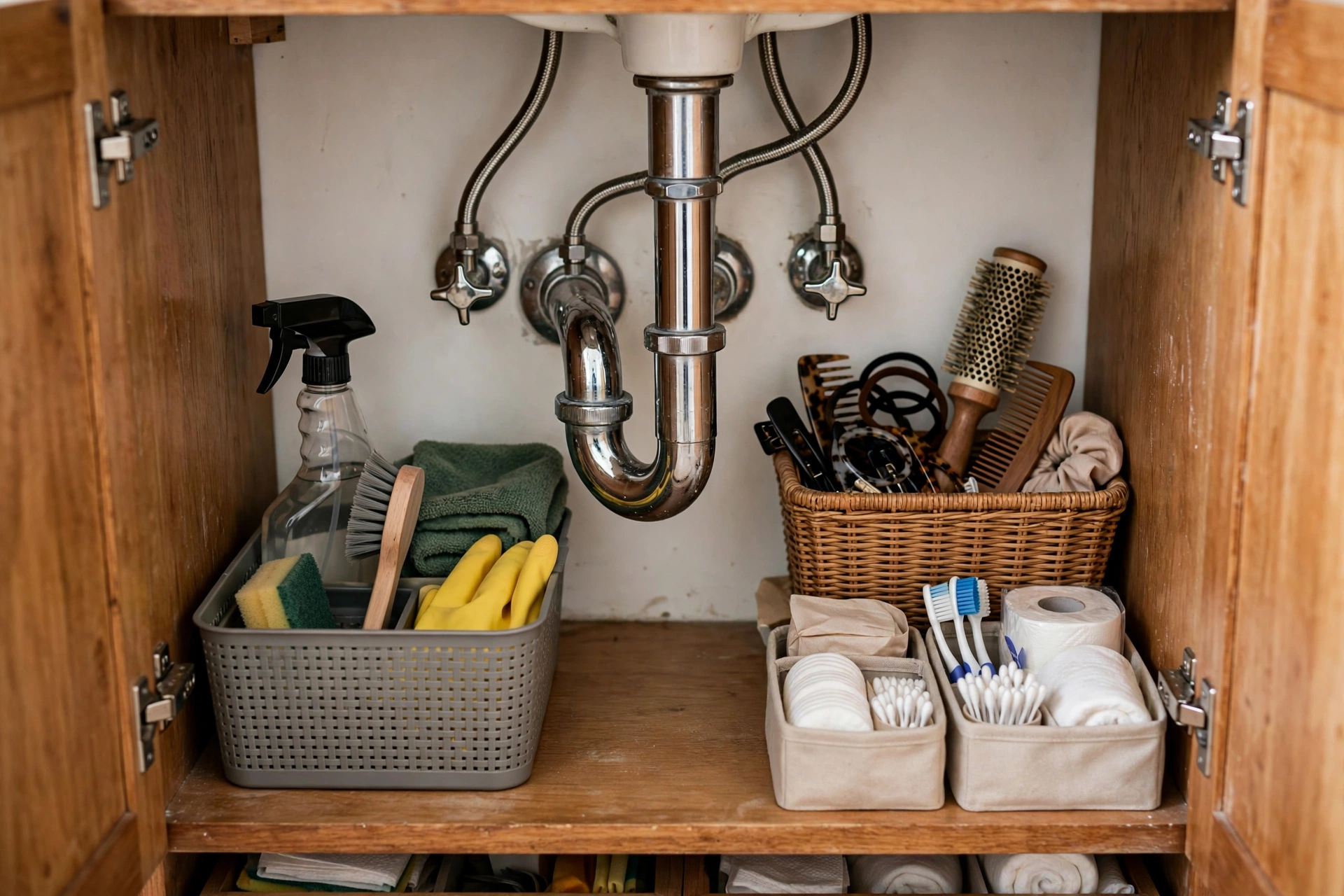
The cabinet under the sink holds the most in the bathroom and is usually organized the worst, because the pipes get in the way. Plan zones around them instead of fighting them: daily items in a small bin at the front, cleaning supplies in a caddy on one side where they can be grabbed as a group, hair products on the other, and spare toiletries at the back. Small bins and pull-out organizers keep each zone intact, and grouping by category means you pull out one bin instead of digging through everything. Our guide to under-sink organizers covers the product side of this spot in detail.
Plan Your Cabinets From the Inside Out
The ideas above work best in one order: list what the bathroom actually needs to store, separate daily items from occasional ones, measure the available wall and floor space, check plumbing and electrical positions, and plan door and drawer clearances before you buy anything. A cabinet chosen for its looks that cannot hold your tallest bottle or open without hitting the toilet is a storage problem, not a solution. Start with the mirrored cabinet and one inside-cabinet organizer — those two changes alone fix most bathrooms — then add a tall or over-toilet cabinet when you need real volume.
Browse more cabinet ideas in our Cabinets section, and for the rest of the room, our bathroom organization ideas cover shelves, hooks, and open storage.