Yes — over-the-door hooks can damage doors, but the damage is usually surface-level and preventable. Unpadded metal brackets scratch paint along the top edge and scuff the door face as the door swings, while padded hooks used with light loads rarely leave a mark. The risk climbs with heavy loads, hollow-core doors, and hooks that wobble every time the door moves — so we explain the damage signs to check for, which doors are most at risk, and the padding fixes that stop the damage before it starts.
Over-the-door hooks are popular for exactly the reason that makes them risky: a bare metal bracket grips the door itself. Every open, close, and bump drags that bracket a fraction of a millimetre against paint or veneer. One swing does nothing visible. Months of swings, plus the weight of wet towels, add up to the wear marks renters and homeowners find when the hook finally comes off. The good news is that the same contact points that cause the damage are the ones you can pad in about ten minutes.
What the Damage Actually Looks Like
Competitor guides agree on the same short list of damage types, and they all trace back to two forces: steady rubbing where metal touches the door, and repeated knocking when a loaded hook swings. Here is how each type shows up, so you can recognise it early while it is still easy to fix.
| Damage type | Where it shows | What causes it |
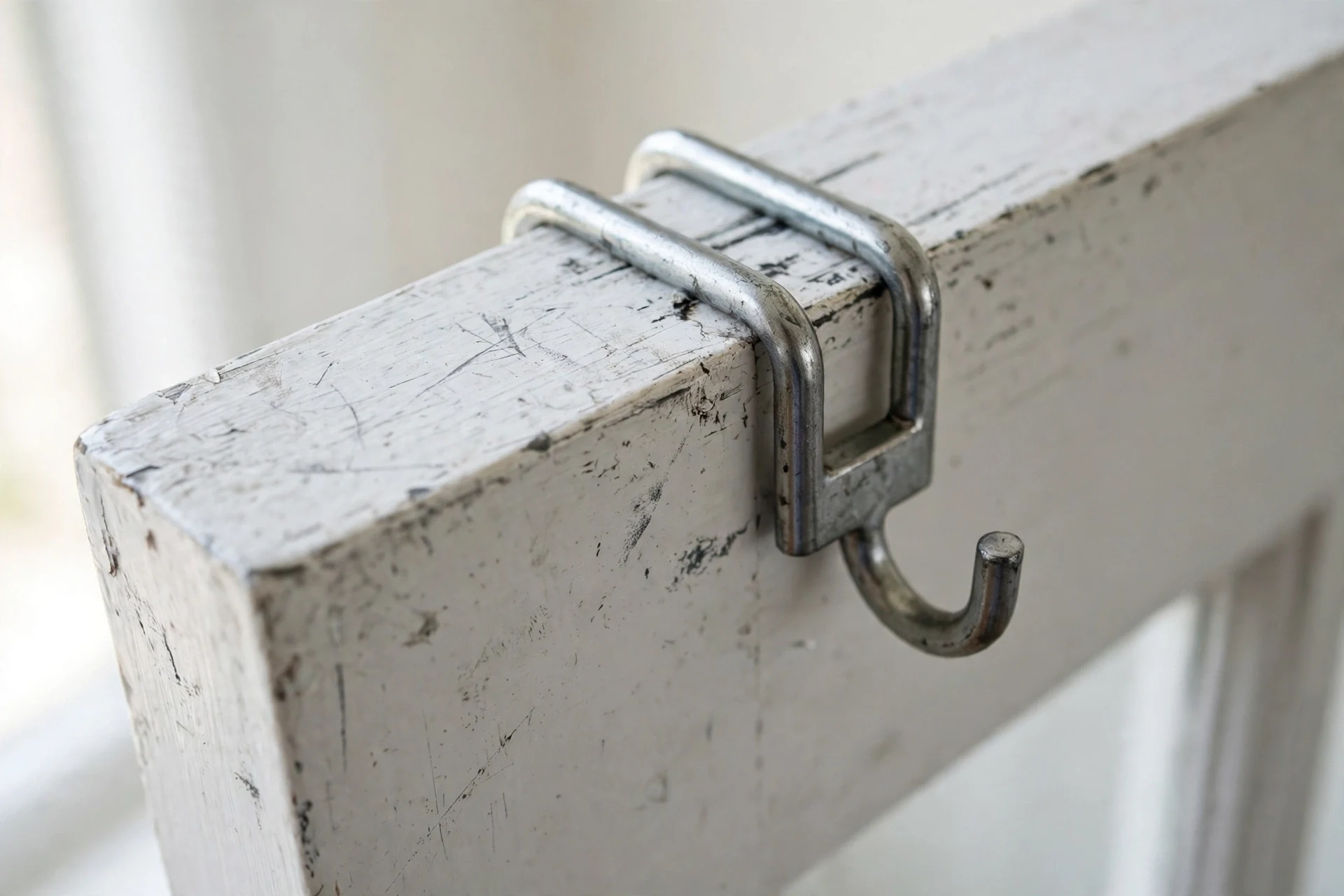
| Top-edge scuffs | Paint worn off the thin top edge of the door | Bare bracket grinding the top edge every time the door moves |
| Face scratches and dents | Vertical marks or small dents on the door panel | The hook’s back plate rubbing or knocking the door face |
| Paint wear from swinging | Faded or rubbed patches behind a swinging load | Wet towels or organisers swaying against the finish |
| Door will not close properly | Door sticks, rubs the frame, or will not latch | A bracket thicker than the gap between door and frame |
| Hinge sag and door drag | Door slowly drops and scrapes the floor or frame | Heavy, long-term loads stressing the hinges |
5 Warning Signs to Check For
Run this check once a month, and again whenever you take a hook down. Catching wear at the first sign keeps a touch-up job small instead of turning it into a repaint.
1. Faint Lines on the Top Edge
Stand on a step and look along the top edge of the door. Thin bright lines in the paint, or a strip where the colour looks thinner than the rest of the door, are the earliest sign of bracket rub. This is the most common damage type because the bracket sits directly on that edge.
2. Scuffs Behind the Hook Plate
Lift the hook slightly and inspect the panel underneath the back plate. Dull patches, short scratches, or tiny dents here mean the plate is moving against the door face — usually because the hook is loose, overloaded, or missing its padding.
3. The Door Closes Differently
If the door suddenly needs a push to latch, or it rubs the frame where it did not before, the bracket may be too thick for the gap, or the door may be sagging under a heavy load. Either way, the hook should come off until the fit is checked — forcing a sticking door only grinds the bracket harder against the frame.
4. Swing Marks Below the Hook
Look for a rubbed or faded patch below the hook, roughly where a hanging towel swings. This wear comes from movement rather than pressure: a load that sways every time someone walks past the door acts like a slow eraser on the finish.
5. Hinges That Creak or Drop
A door that gradually sits lower, scrapes the floor, or has hinges that creak under load is telling you the total weight is too much. Hinge sag builds slowly, so compare the gap at the top of the door with the gap at the bottom — if they no longer match, unload the hook first and reassess.
Which Doors Are Most at Risk
Not every door faces the same risk. The door’s construction decides whether a hook leaves a faint mark, a dent, or a structural problem.
Hollow-core doors are the most vulnerable to dents. They have a thin outer skin over a lightweight honeycomb core, so there is very little material to resist a pressing bracket or a heavy load. Surface scuffs happen easily, and heavy organisers can stress the hinges and pull the door out of square. Keep loads on hollow-core doors light — towels and robes, not a fully loaded storage rack.
Solid wood and solid-core doors resist dents far better, but their paint and finish still scratch. A heavy load is less likely to warp the slab, yet an unpadded bracket will still wear the top edge over time. Padding matters on solid doors too; it is just the dent risk that drops.
Painted and gloss finishes show damage first because every scuff breaks the colour. Stained wood hides light wear better, but deep scratches still cut through the finish. Metal and fibreglass doors are the most resistant to scratches and dents, though their paint can still chip where a bracket grinds repeatedly. For metal doors, a magnetic hook is often the gentler option because it avoids the over-the-top bracket entirely.
Rental doors deserve extra care for a different reason: the damage only becomes a problem at move-out, when a scuffed top edge can cost part of a deposit. Renters should pad every contact point from day one and photograph the door before the hook goes on, so pre-existing wear is on record.
How Much Weight Is Too Much?
There is no single safe number, because the limit depends on the hook’s own rating, the door’s construction, and the hinges. The rule that covers all three is simple: follow the hook manufacturer’s weight rating, and treat it as a maximum, not a target. Towels and robes sit comfortably within most over-the-door hooks’ ratings. A rack loaded with bottles, books, or cleaning supplies usually does not — and that is where hinge sag and door drag begin.
Weight also matters for fit. A heavily loaded hook pulls forward and outward, which makes the bracket rock against the top edge with every swing. Spreading the load across several hooks, keeping the heaviest items lowest, and removing the hook when it is not needed all reduce that rocking. If you need to hang something heavy every day, a wall-mounted hook or a freestanding rack is a better match than an over-the-door hook — see our guide to over-the-door towel hooks for the towel-sized use case these hooks handle best, and our hook height guide for placement that keeps loads balanced.
How to Protect Your Door in 10 Minutes
Protection works by doing two things: putting a soft barrier between metal and door, and stopping the hook from moving. Do both, and most damage never starts.
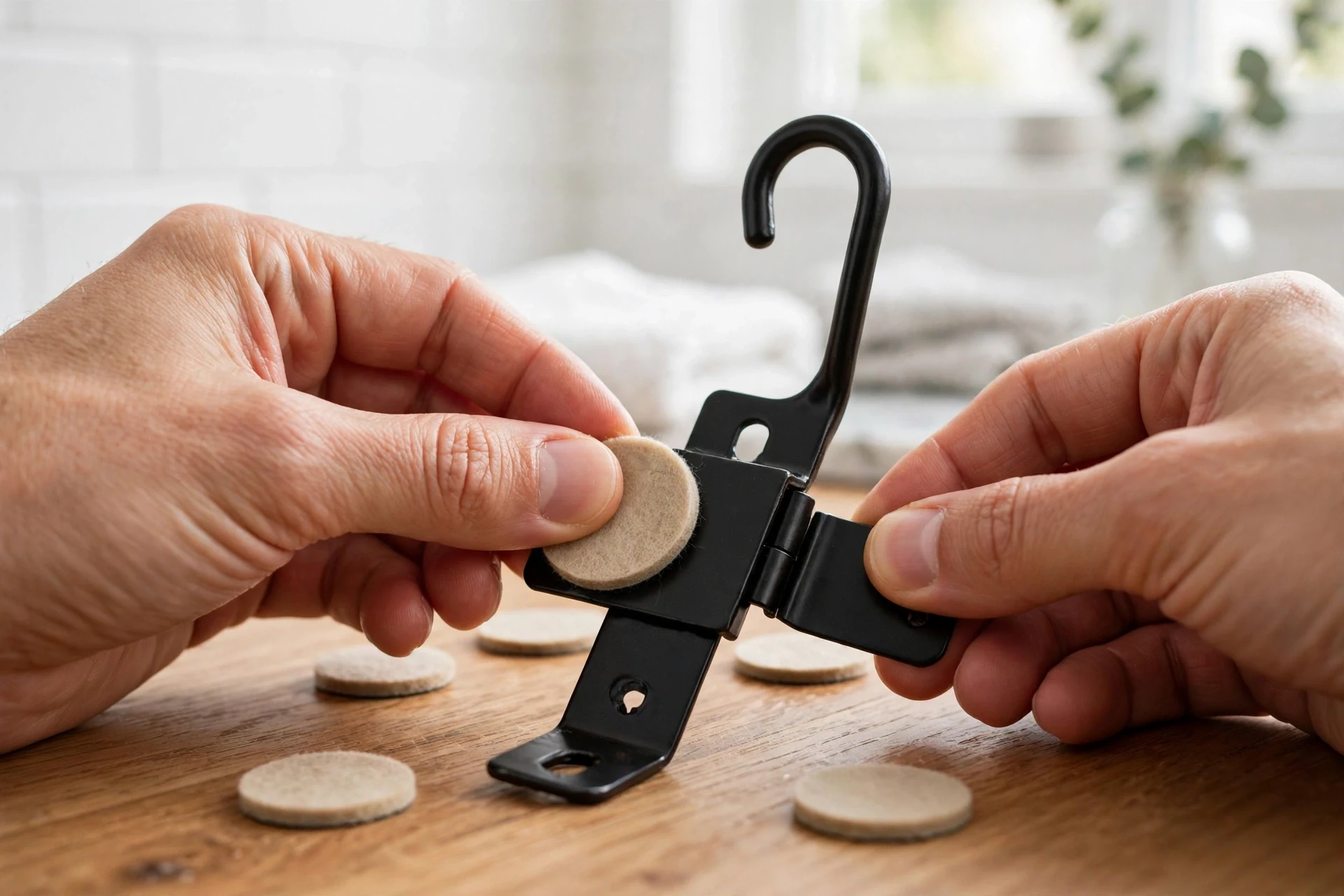
1. Felt pads on the back plate. Stick two or three small felt furniture pads on the back of the hook where it rests against the door face. Felt has a low friction surface, so the plate glides instead of grinding when the door moves.
2. Foam strip inside the bracket. Cut a strip of closed-cell foam weather stripping to fit the inner surfaces of the bracket that sit over the top edge. This cushions the exact spot where the worst scuffing starts, and it dampens vibration.
3. Clear vinyl bumpers on the lower lip. Two small dome-shaped bumpers on the bottom edge of the hook plate hold the metal a hair away from the door face, so the edge itself never digs in.
4. Anchor the hook so it cannot sway. A small removable mounting strip on the lower back of the plate stops side-to-side movement, which is what turns a padded hook from good protection into near-total protection. For a temporary test, a strip of low-tack painter’s tape on the door under the hook works as a sacrificial layer that absorbs the first rubs and peels off without pulling paint.
5. Check the fit before you load it. Close the door slowly with the empty hook in place. It should close and latch exactly as it did without the hook. If it sticks or needs force, the bracket is too thick for the gap — choose a slimmer hook rather than forcing the door, and re-check the fit after a week of normal use.
Padded vs Unpadded Hooks: What to Choose Next Time
If you are buying a new hook, the padding question matters more than the finish. Hooks with integrated foam backing or rubberised pads on the vertical plate protect the door out of the box, with no DIY work. Adjustable-width hooks are another strong option because tightening the bracket snugly against the door removes the wobble that causes most scratches. Hooks made from plastic or fully rubber-coated metal are gentler than bare metal, though they usually carry lighter loads — a fair trade on a hollow-core door.
Avoid hooks with sharp, uncoated edges or brackets that feel loose on your door’s thickness. A hook that rocks when you tap it will rock every time the door moves, and no finish survives that forever. When in doubt, pad an unpadded hook yourself using the steps above — the materials cost very little and the job takes minutes.
Damage-Free Alternatives When You Rent
Sometimes the safest hook is not an over-the-door hook at all. Removable adhesive hooks leave no bracket on the door edge, and they suit light loads well — see how much weight adhesive hooks hold before trusting one with a wet towel, and compare the two approaches in adhesive hooks vs screw-in hooks. Adhesive hooks also come off cleanly when the removal steps are followed, as shown in how to remove an adhesive hook from the wall.
Other options include magnetic hooks for steel doors, freestanding towel racks that lean on the floor instead of the door, and wall-mounted hooks where the lease allows small fixings. The best choice depends on the door you have and the load you need — but every one of these avoids the top-edge bracket entirely, which is the main source of over-the-door damage.

Already Damaged? How to Fix Light Scratches and Dents
Light scuffs usually need only cleaning and touch-up paint matched to the door’s colour. Clean the area first, let it dry, then apply thin coats rather than one thick coat, and feather the edges so the repair blends in. Small dents in wood doors can be filled with wood filler, sanded smooth once dry, and painted over. Deep gouges, cracked veneer on a hollow-core door, or a door that no longer closes squarely are bigger jobs — those are worth a professional opinion before they worsen, especially on a rental where a bad DIY repair can cost more than the original mark.
Whatever the fix, pad the hook before it goes back on, or switch to one of the alternatives above. Repairing the same spot twice is the clearest sign the protection step was skipped.
For more no-drill storage ideas, browse our Bathroom Hooks guides.