The best tile for a small shower is a light-colored, large-format tile laid vertically with grout matched to the tile color. That combination works because it cuts down grout lines, bounces light around, and draws the eye upward, so the walls read as one calm surface instead of a busy grid. Every idea below uses that same logic in a different way: a layout that stretches the room, a color that reflects light, a grout choice that hides seams, or a pattern kept small enough to add character without crowding the space.
We organized these 25 tile shower ideas for small bathrooms by the trick each one uses, so you can pick the approach that fits your shower: change the layout, change the light, hide the seams, or add one confident pattern. All 25 are for compact showers only, and each one notes where it works best, because a pattern that opens up a narrow shower can overwhelm a square one. If your shower still has a curtain rather than glass, keep in mind that a curtain blocks the light these tiles are meant to bounce, so the tile and the enclosure work as a pair.
Tile Layouts That Stretch a Small Shower
Layout is the strongest lever in a small shower. The same rectangular tile reads completely differently laid vertically, horizontally, or on the diagonal, and competitors return to this point again and again: direction controls whether the eye travels up, across, or outward.
1. Vertical Stacked Subway Tiles
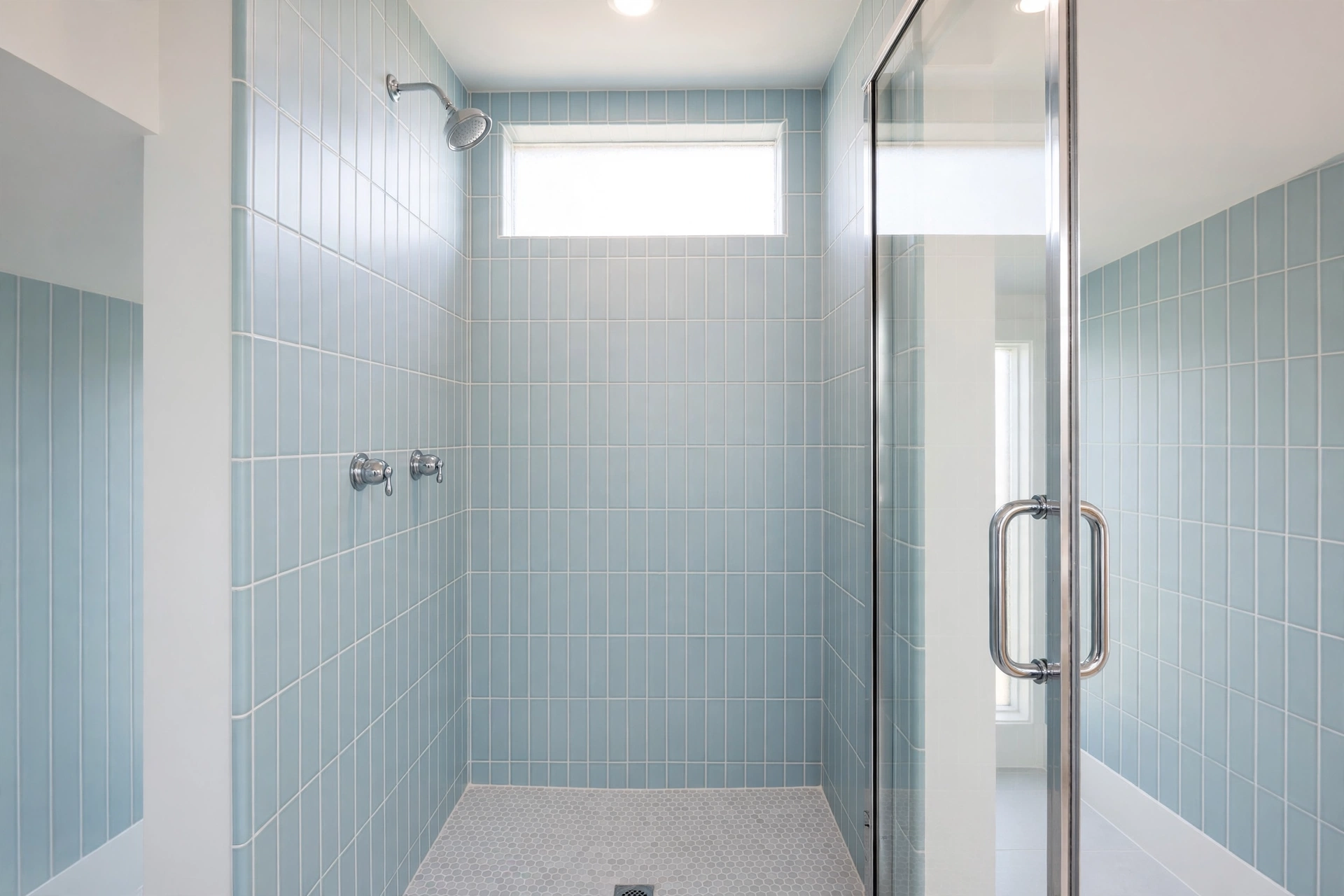
Stacking subway tiles vertically is the most repeated height trick in small-shower design. Long, narrow formats such as 3×12 or 2.5×8 tiles, set in straight vertical stacks, pull the eye up the wall and make a low ceiling feel taller. Pale blue tiles with white grout keep the effect soft, and tiling the front of a built-in tub in the same vertical stack makes the whole shower read as one taller unit rather than two separate surfaces.
2. Horizontal Running-Bond Subway Tiles
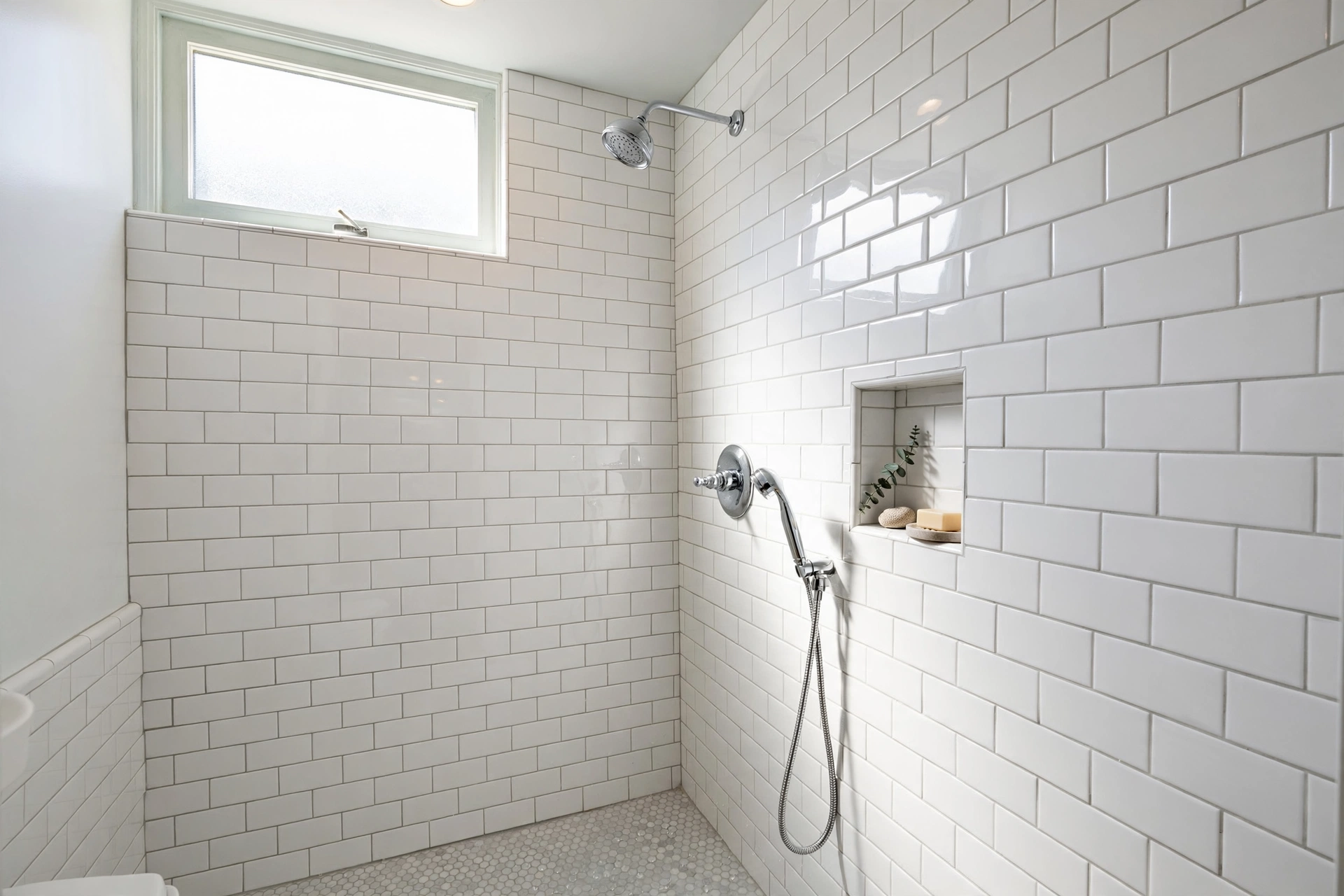
When the problem is width rather than height, lay the same subway tile horizontally in a classic running bond. The horizontal lines stretch the walls outward, which suits a tall, skinny shower that already has height to spare. Elongated 2×8 or 2×10 subway tiles make the effect stronger than short 3×6 tiles, and a glossy white finish keeps the stretched wall bright at the same time.
3. Diagonal Floor Layout
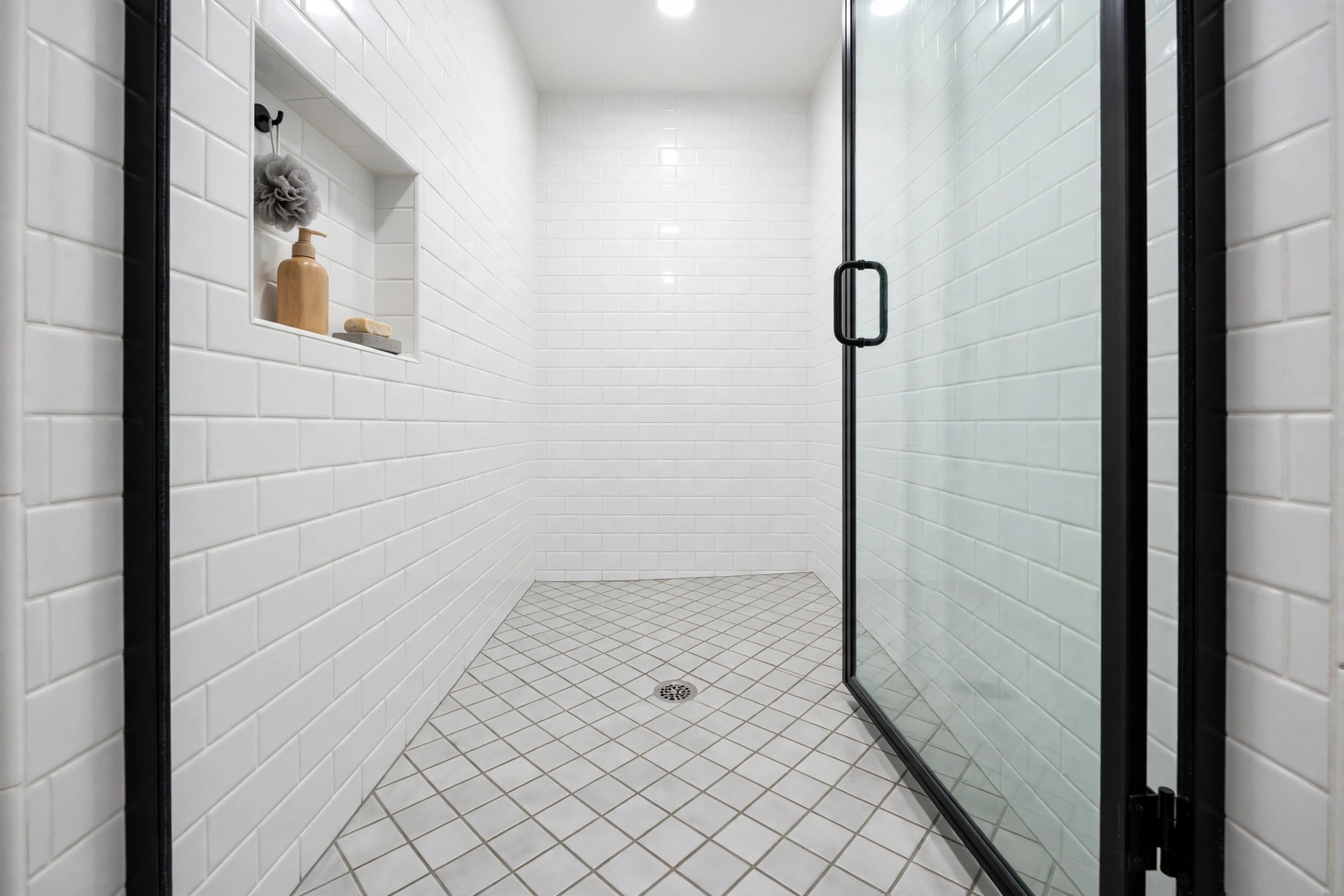
Rotating floor tiles 45 degrees tricks the eye into seeing more floor, because the longest line of the tile runs corner to corner instead of wall to wall. This works on the shower floor even when the walls stay plain, and it costs nothing extra beyond the cutting time. Keep the wall tile quiet when the floor goes diagonal, so the floor gets to do the widening work on its own.
4. Large-Format Tiles With Fewer Grout Lines
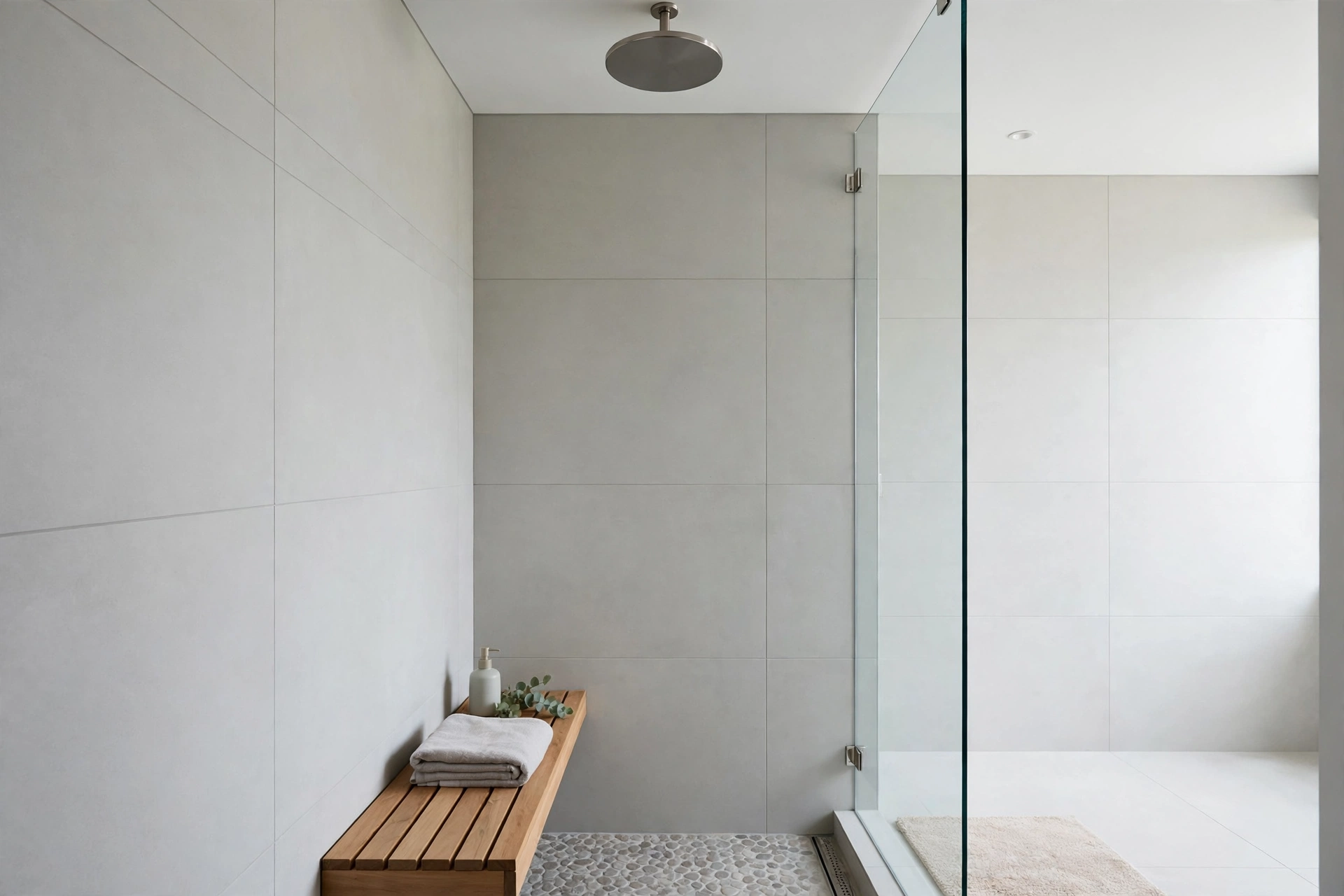
It feels counterintuitive, but bigger tiles make a small shower look bigger. Tiles of 12×24 inches or larger leave only a handful of grout lines on a shower wall, so the surface looks almost continuous and the eye moves across it without stopping. A light, neutral color such as soft gray or warm beige strengthens the effect, and a honed or matte finish is the better pick over polished here, since glare from shiny large tiles breaks the surface up again.
5. Herringbone Accent Wall
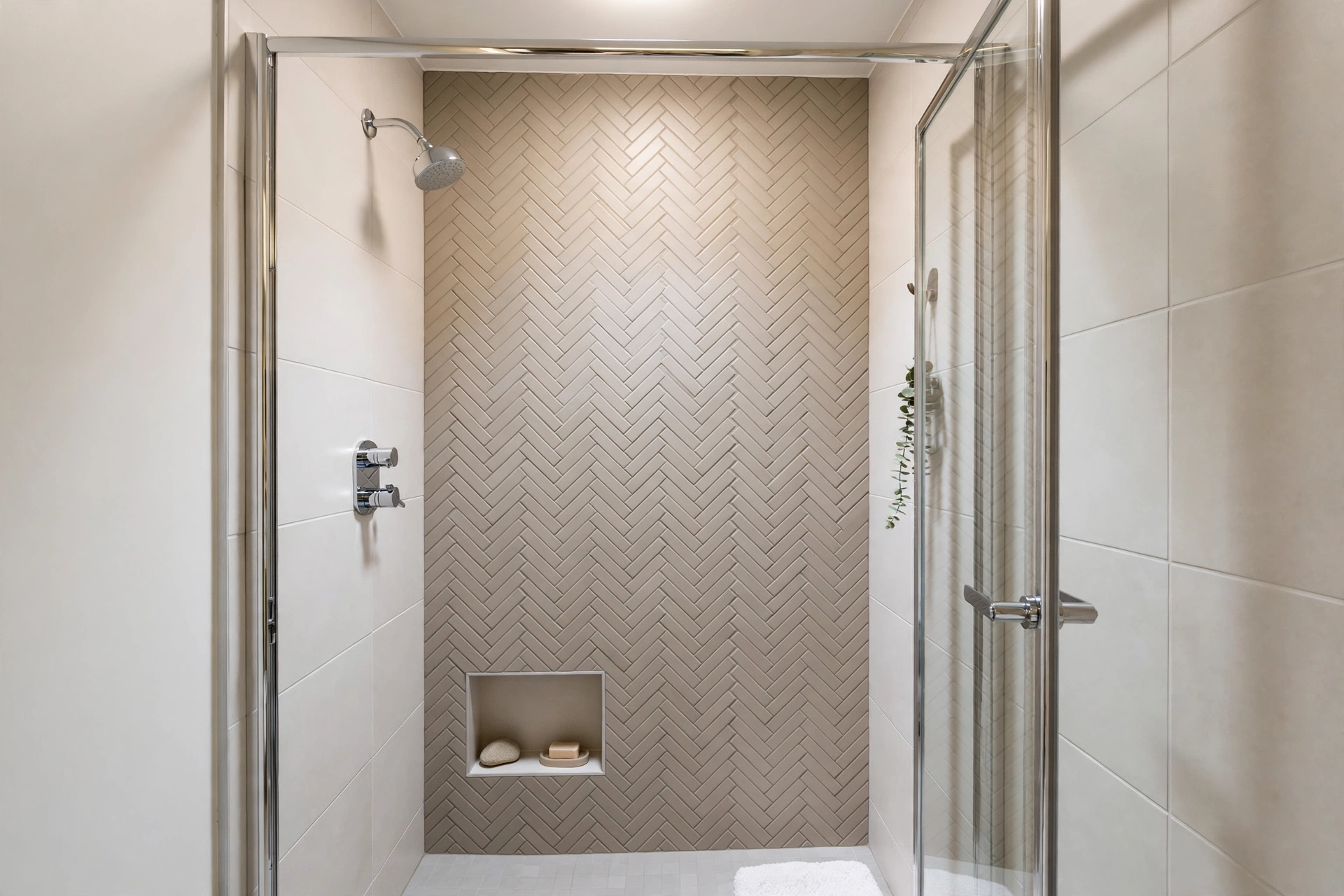
Herringbone is the pattern designers reach for when a small shower needs movement, but the small-space rule is to confine it. A single herringbone accent wall in a soft neutral, with plain tiles everywhere else, adds zigzag energy without turning the whole shower into a busy grid. Kept to one wall or a niche, the angled layout guides the eye up and across, which is exactly what a compact shower needs.
6. Chevron Pattern Wall
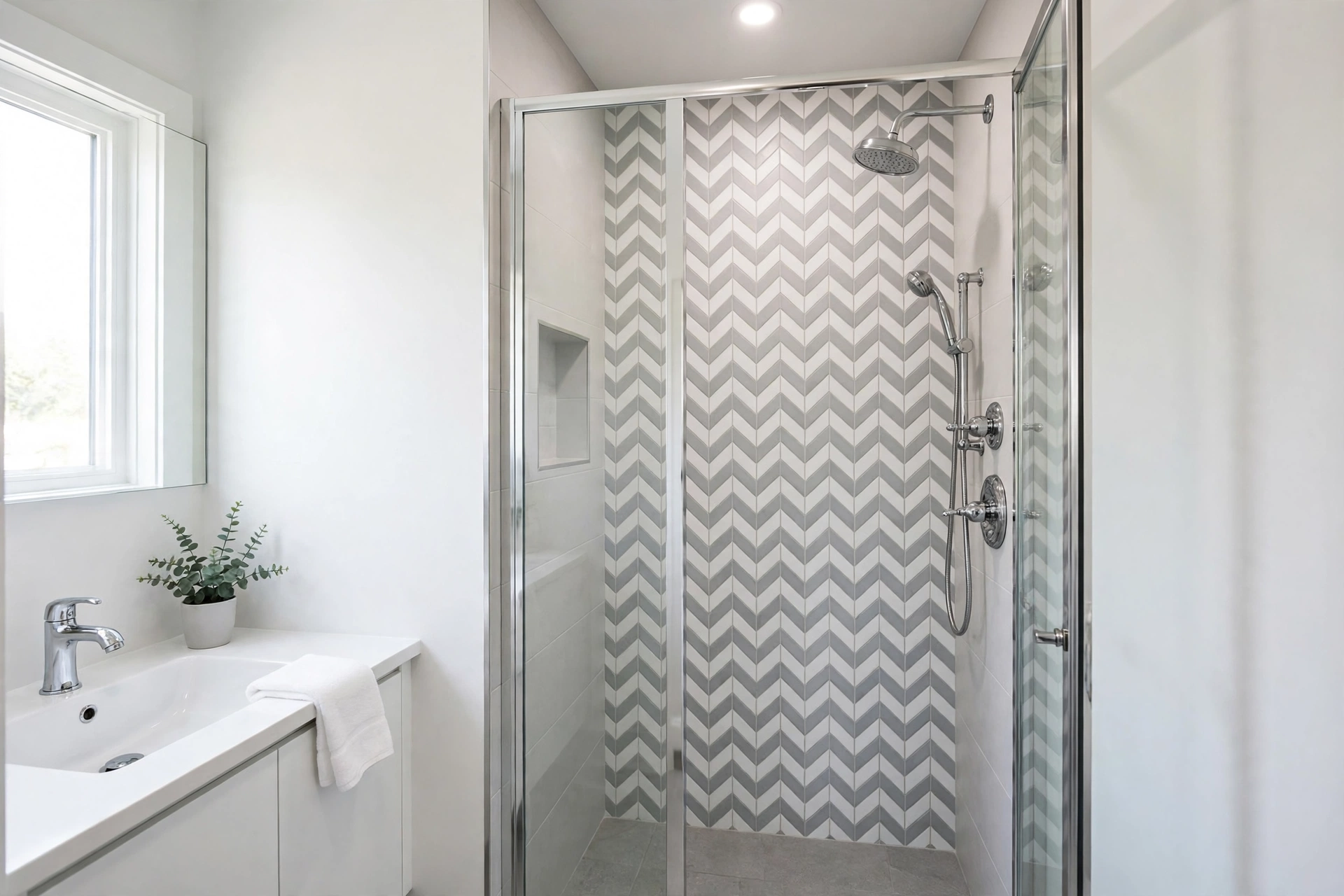
Chevron differs from herringbone in one useful way: the tiles meet in continuous V shapes, so the pattern reads as clean, unbroken zigzag lines running up the wall. That unbroken line elongates the space, which is why chevron works well as a feature wall in a small shower. The companion rule matters here: keep the floor and fixtures simple while the chevron wall does the talking, or the room tips from patterned into cluttered.
7. Basketweave Floor
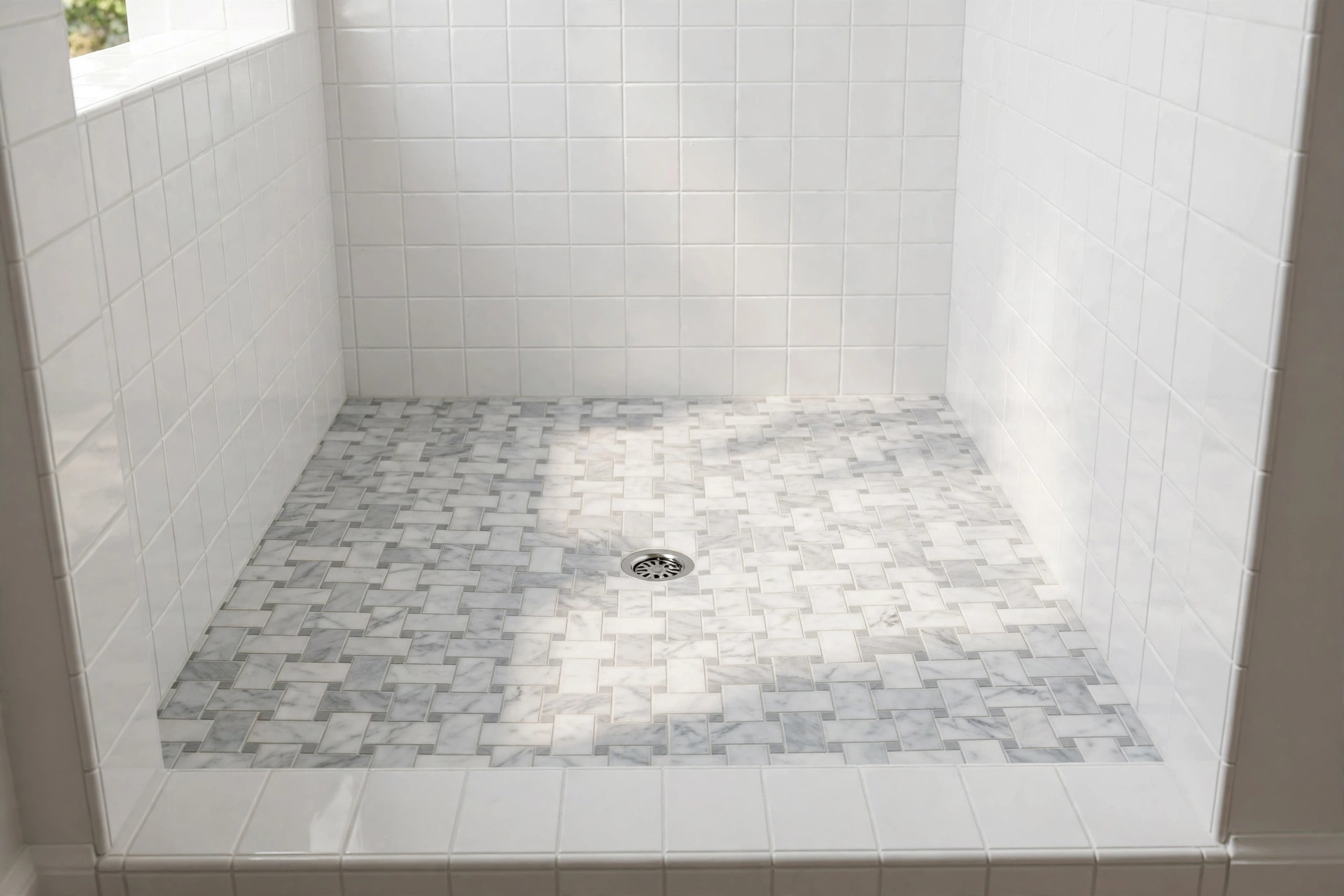
Basketweave is a classic woven pattern of small rectangular tiles, and the shower floor is its best home in a small bathroom. The small format suits a shower pan, the extra grout lines add grip underfoot, and the woven look gives the floor a tailored finish while the walls stay plain. White and soft gray marble-look basketweave keeps the pattern timeless rather than loud.
8. Vertical Accent Strip
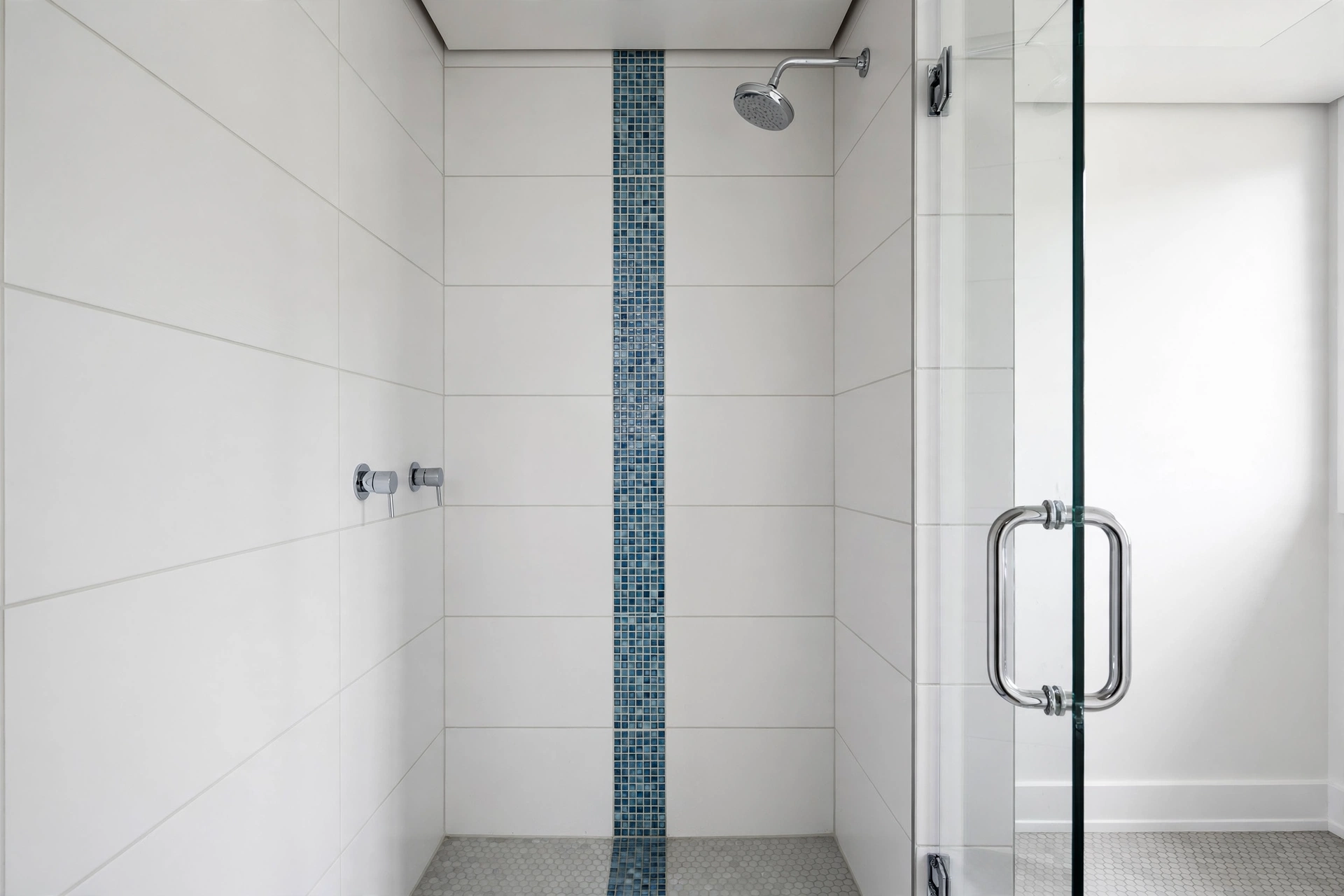
If a full patterned wall feels like too much commitment, a slim vertical strip of mosaic tile is the compromise competitors keep recommending. One narrow band running floor to ceiling guides the eye upward and adds a line of color or texture, while the rest of the wall stays plain. It works on shower walls, behind a freestanding tub, or anywhere a small bathroom needs lift rather than width.
Light, Color and Shine: Tiles That Brighten a Tight Space
Small bathrooms usually have little natural light, so color and finish do real work. Light, reflective, and single-tone surfaces bounce what light exists around the room instead of absorbing it, and that brightness reads as space.
9. Light-Colored Tiles
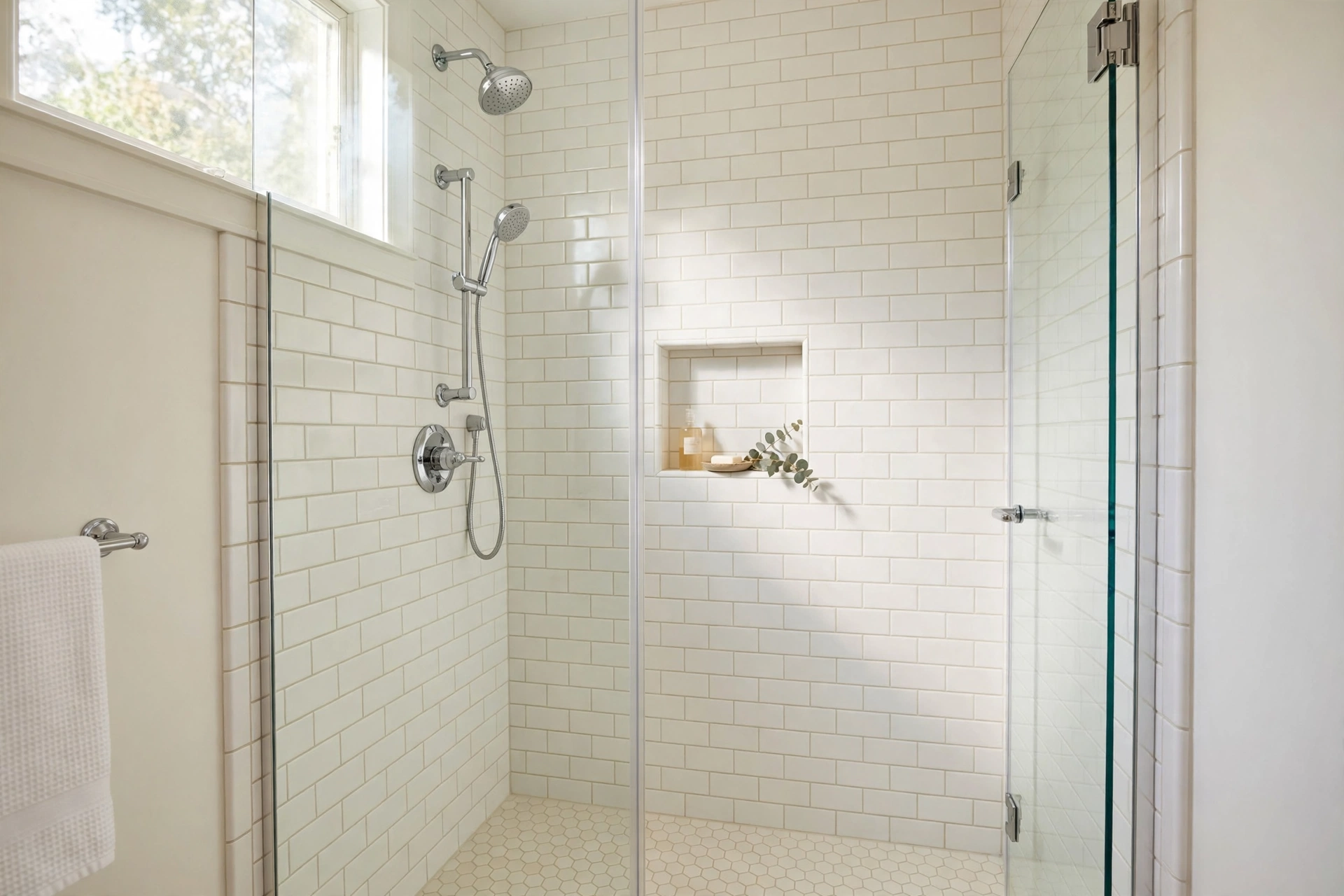
White, cream, light gray, and soft pastels are the most reliable small-shower colors because they reflect both natural and artificial light. A shower tiled entirely in light colors feels brighter and more open than the same shower in mid-tone tile, and pairing light tile with a clear glass door instead of a shower curtain keeps that light moving through the room. If you do keep a curtain, getting the right shower curtain size matters, since a curtain that hangs wrong blocks even more light.
10. High-Gloss and Mirrored Tiles
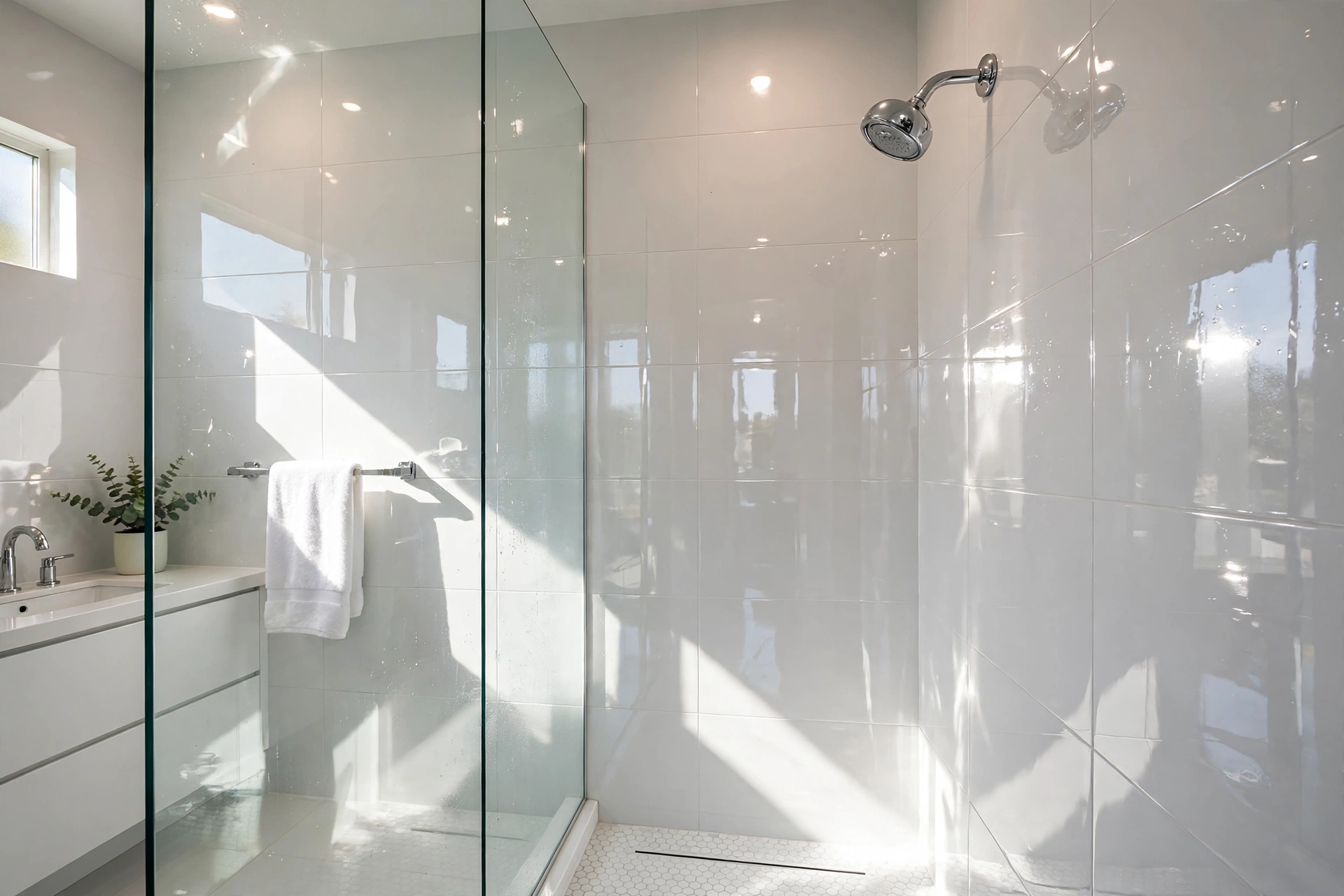
High-gloss tiles act like subtle mirrors scattered across the shower wall, reflecting light and doubling the sense of depth. Mirrored tiles take the same idea further and are the strongest single illusion in a small shower, since they reflect the whole bathroom back at you. Pair glossy walls with a matte, anti-skid floor tile, which keeps the footing safe while the walls do the reflecting. Glass doors suit this idea best, and if your shower has one, our guide to towel hooks for glass shower doors covers keeping towels off that glass without drilling into it.
11. Monochrome, One Tone Everywhere
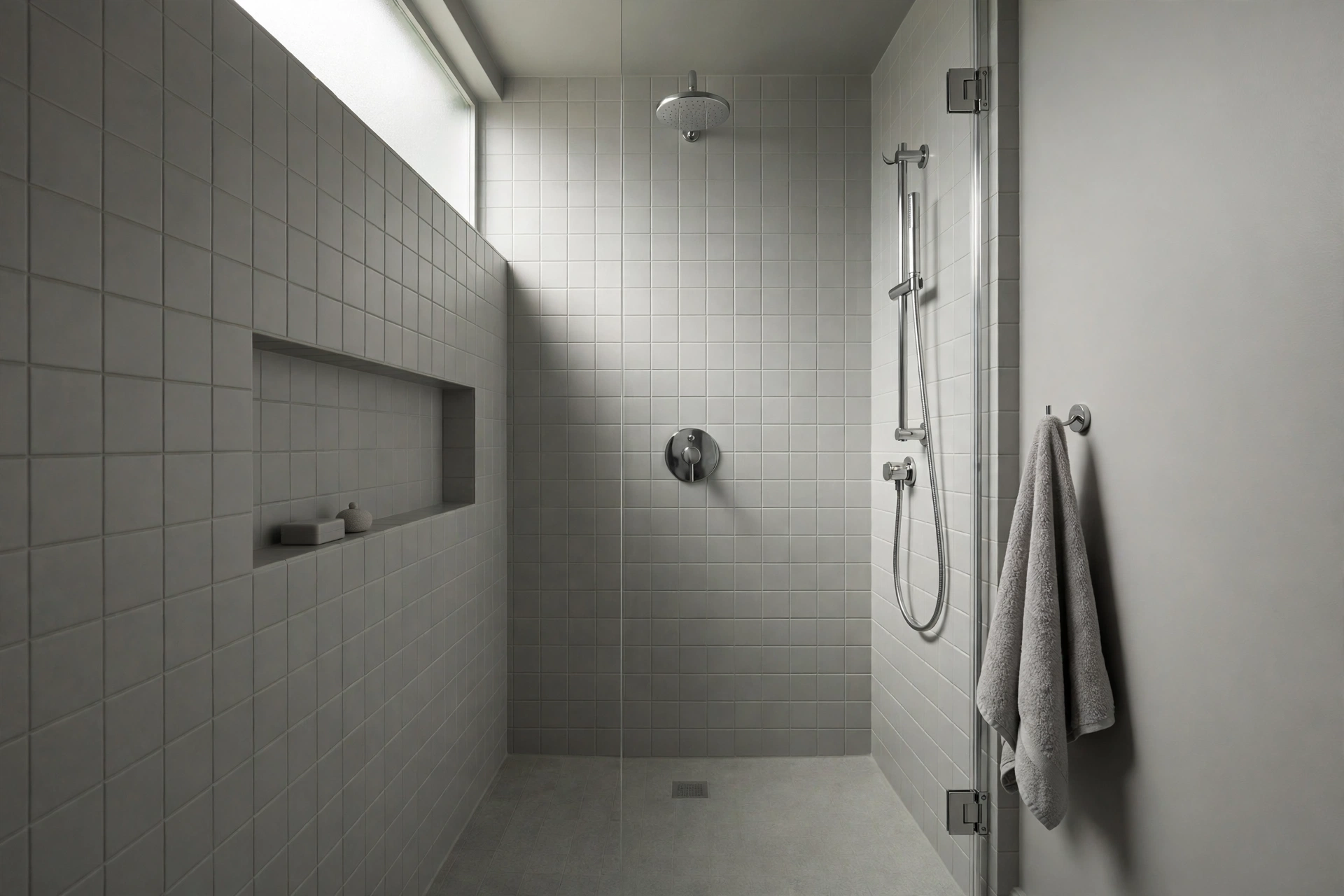
A single-tone palette across walls, floor, and trim is one of the simplest small-shower ideas because it removes visual breaks entirely. When wall tile, floor tile, and grout sit close in tone, the shower reads as one calm, intentional block rather than a set of separate zones. Soft gray is an easy monochrome to live with, and it stays calm even when the tile itself has texture.
12. Sage Green and Soft Pastels
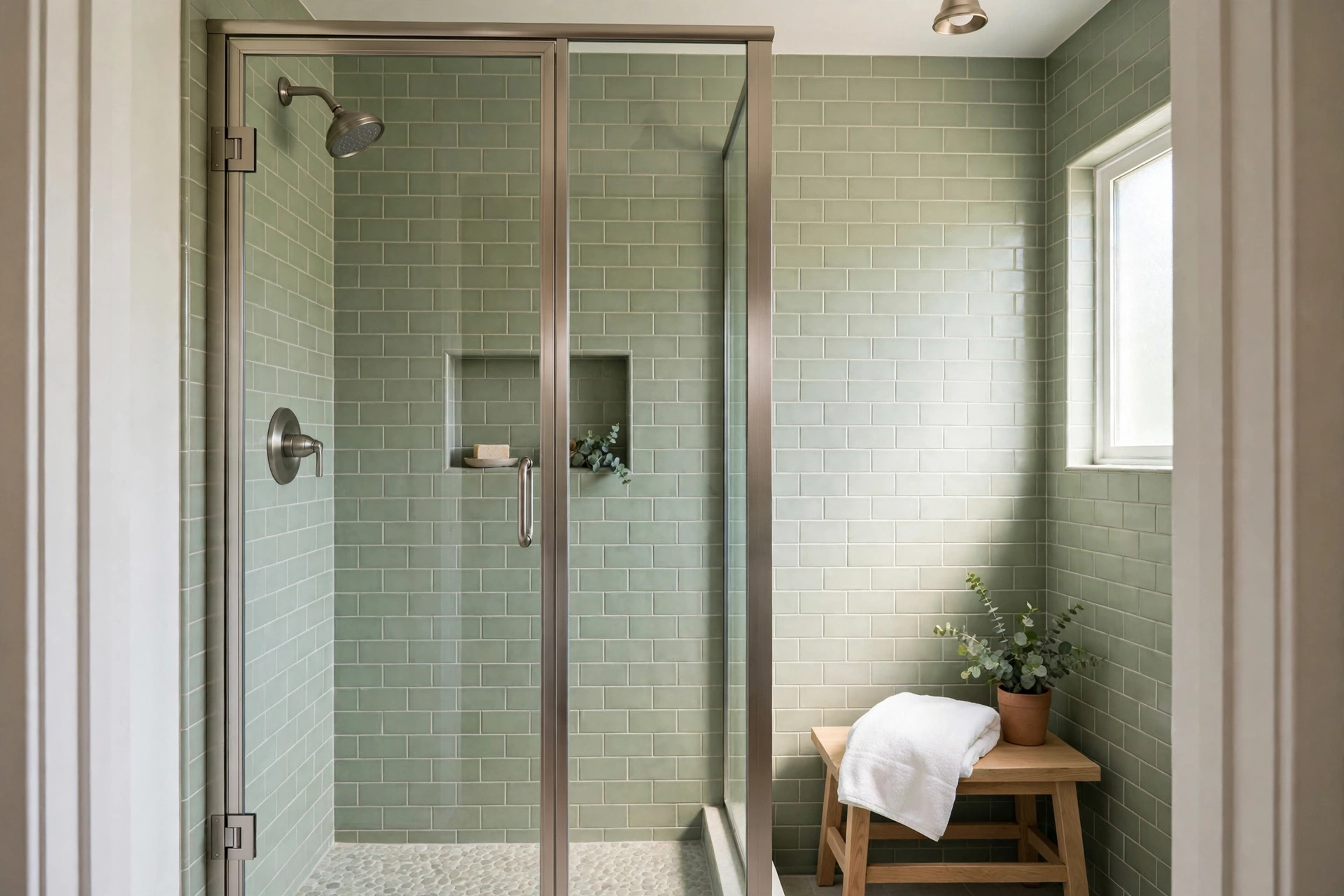
Light greens such as sage, pistachio, and eucalyptus make small showers feel bigger and brighter while adding more personality than plain white. Sage green subway tile in particular shows up across small-bathroom designs because it reads as color without reading as dark. The caution from the same sources is worth noting: very dark greens close a tight shower in, so keep the green light and let the grout stay light with it.
13. Marble-Look Porcelain Slabs
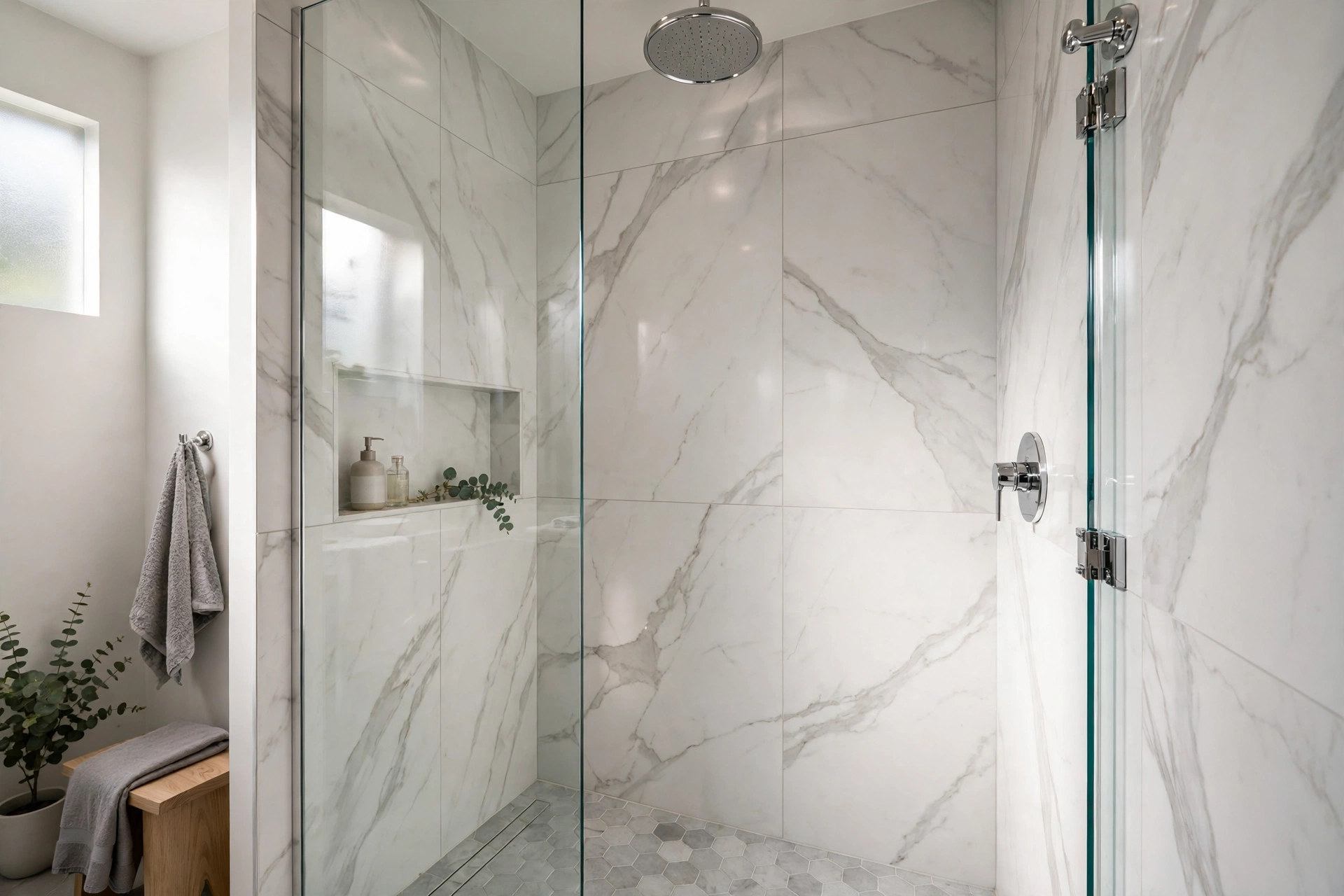
Marble-look porcelain gives a small shower the veining and luxury of real marble at a fraction of the price, and in large formats it doubles as a space trick, since slab-look walls have almost no grout lines to interrupt them. Soft white with gentle gray veining keeps the look bright, and the large panels make a compact shower feel like a continuous stone room rather than a tiled box.
14. Handmade Zellige Texture
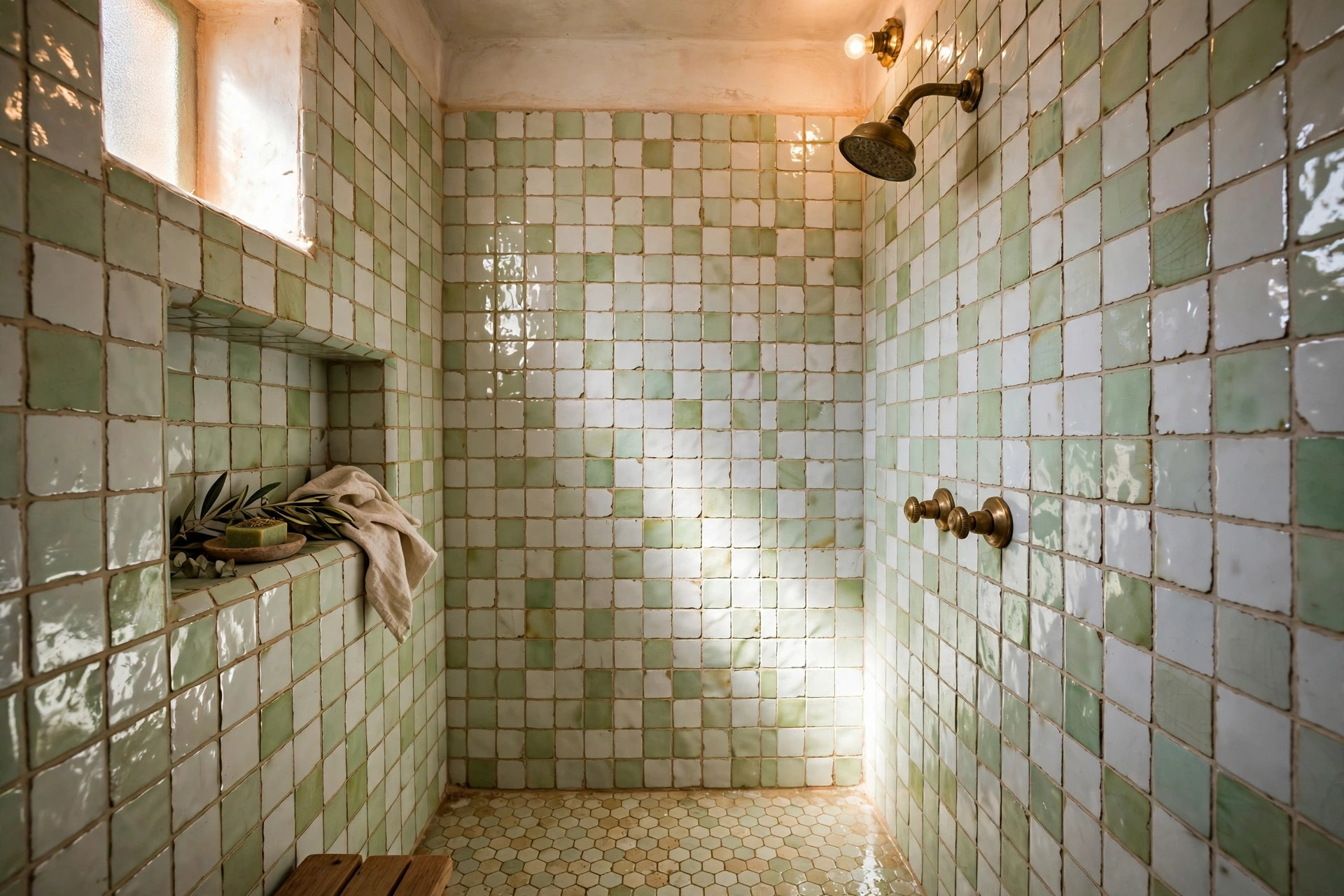
Zellige tiles are handmade, so each one catches light slightly differently, and that uneven glaze gives a small shower wall depth without any pattern at all. The texture reads as craft rather than clutter, which is why it works in tight spaces where a bold pattern would overwhelm. Glossy zellige in soft white or pale green suits a small shower best, since the shine adds the light-bouncing benefit on top of the texture.
15. Luminous Glass Mosaic Feature Wall
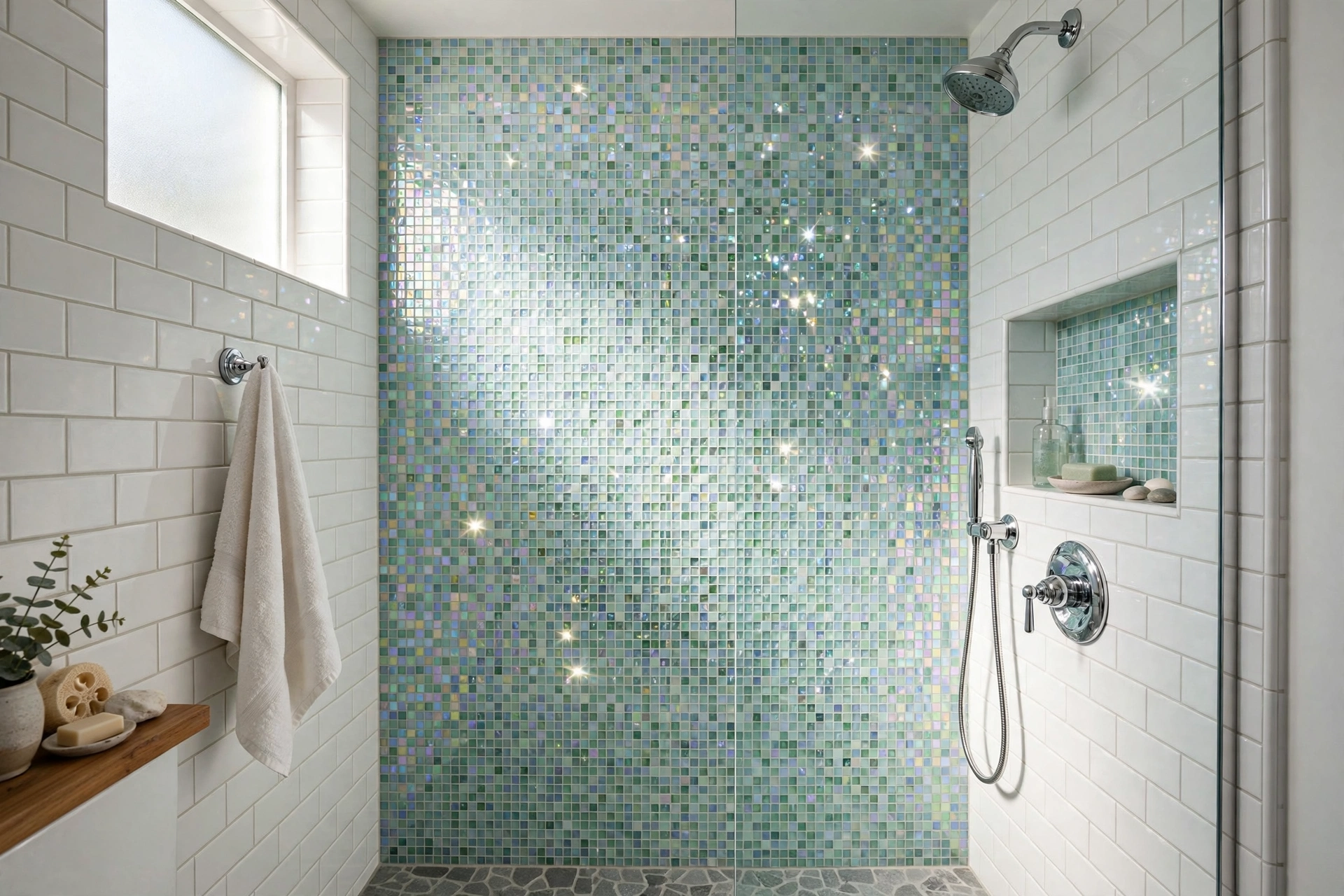
Small-format glass or mother-of-pearl mosaics reflect light and add tactile interest without breaking the space into busy pieces, which makes them ideal for one feature wall in a small shower. Used across a whole shower they can feel restless, but as a single luminous wall, or as a mosaic niche or waterline band, they become a jewel-like focal point that reads larger than it is.
Grout and Continuity: The Quiet Tricks
Grout is the detail most small-shower articles mention last, but it decides whether the tile reads as one surface or a grid. The same tile can look twice as large or half as large depending on what sits between the pieces, and continuity tricks work the same way at the floor edge.
16. Grout Matched to the Tile
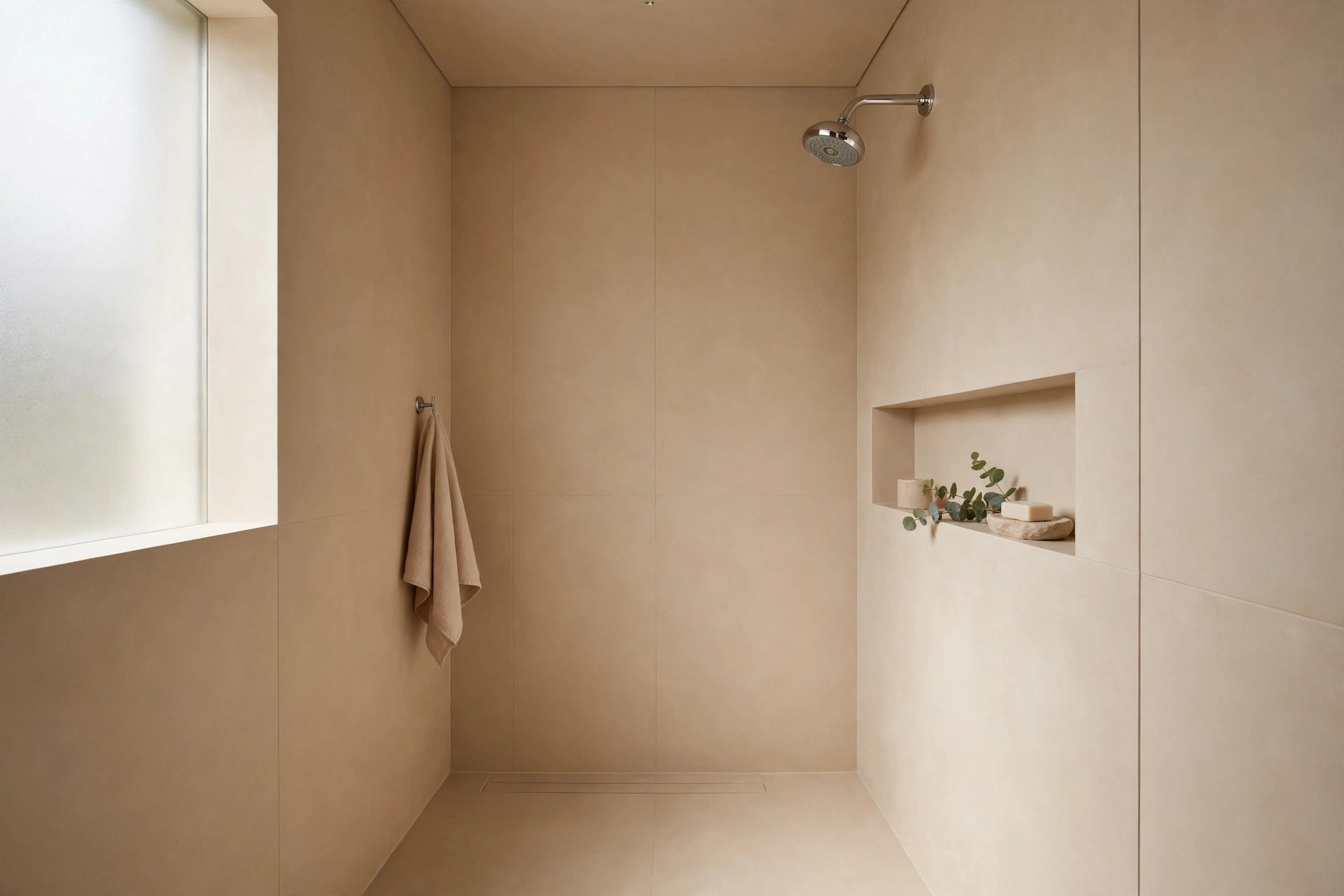
Matching the grout closely to the tile color is the quietest space trick there is. With narrow grout lines in the same tone as the tile, the joints nearly disappear and the wall reads as one continuous material rather than a grid of small pieces. This is the grout choice to pair with large-format tile, since both tricks serve the same goal: fewer places for the eye to stop.
17. Contrasting Grout That Pops the Pattern
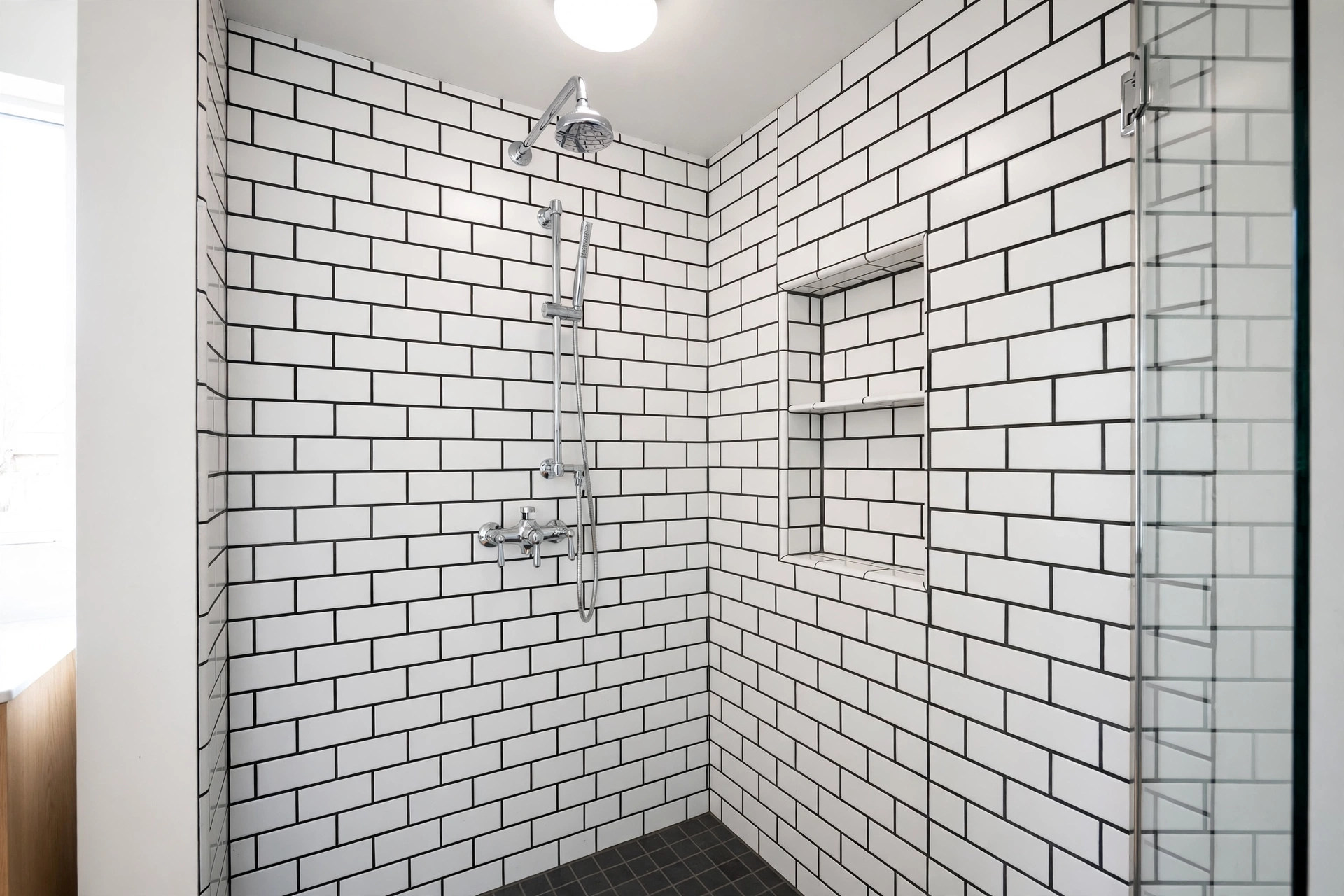
Contrasting grout does the opposite job, and it earns its place when the pattern itself is the feature. Dark grout against white subway tile makes every tile shape stand out crisply, which suits herringbone, hexagon, or subway layouts you actually want to show off. The warning from the same sources applies in tiny showers: heavy contrast creates a grid that can make the room feel busy, so use contrasting grout where the pattern is the point, and matched grout everywhere else.
18. The Same Floor Tile, Straight Into the Shower
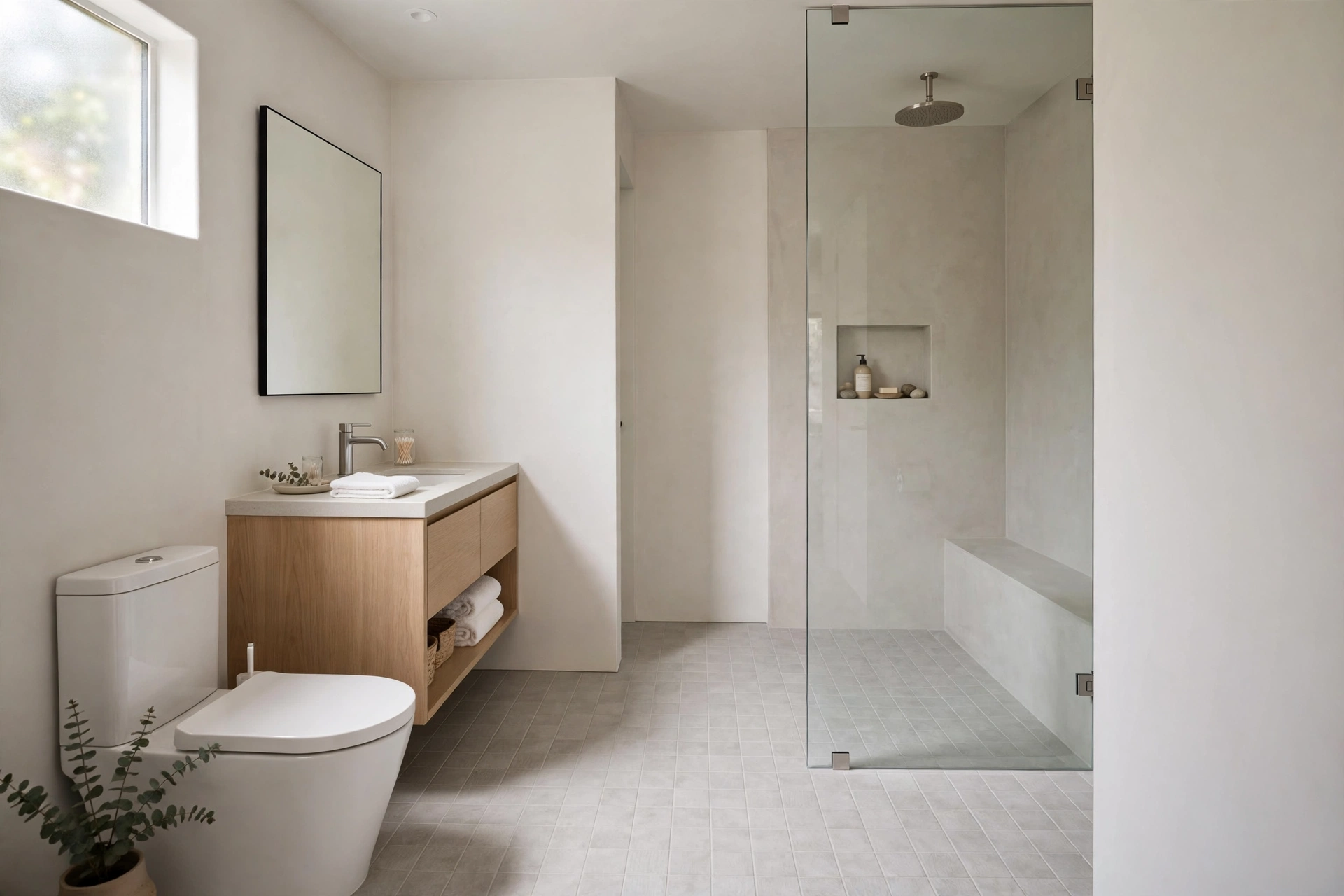
Running the same floor tile from the bathroom floor straight into the shower removes the visual boundary at the shower edge, so the whole room reads as one larger, unified space. The trick works best with a frameless glass divider or a curbless entry, since a raised threshold or a curtain rail would draw the boundary right back in. For a small bathroom, this single continuity decision can matter more than any pattern choice.
19. Tile Drenching: One Tile Everywhere
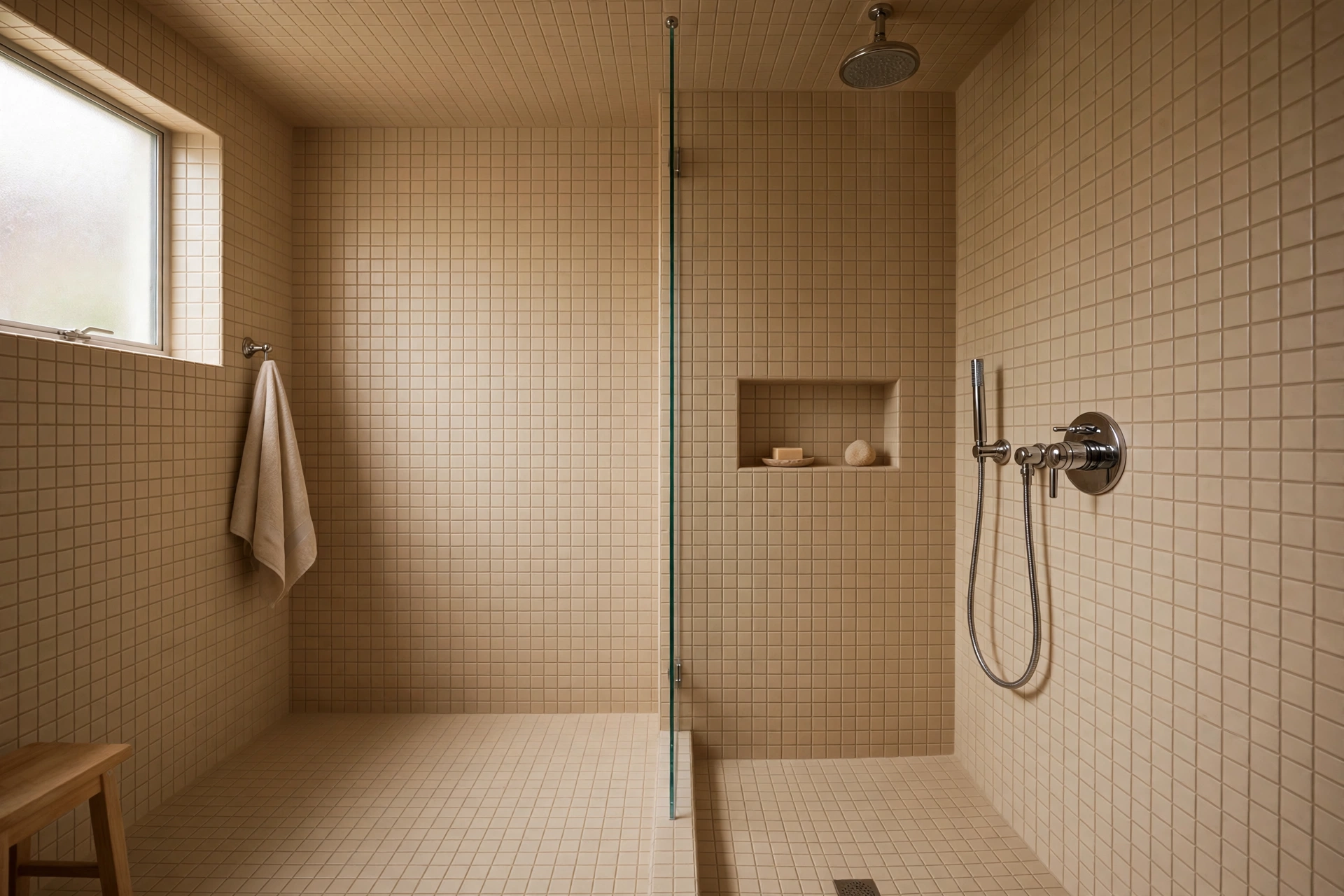
Tile drenching takes continuity to its limit: one tile on the shower floor, shower walls, bathroom floor, and sometimes the walls outside the shower, so the room reads as a single continuous space. A warm mushroom or beige drench is the easiest version to live with. If a one-color room worries you, vary the texture instead of the color, for example smooth walls with a fluted feature wall or a zellige floor, so the room keeps depth without gaining visual breaks.
Pattern in Small Doses
Pattern is not banned in a small shower, but the dose matters. Competitors agree on the rule: confine bold shapes to one surface, one wall, or one small area, and keep everything around them plain. These six ideas follow that rule.
20. Hexagonal Tiles
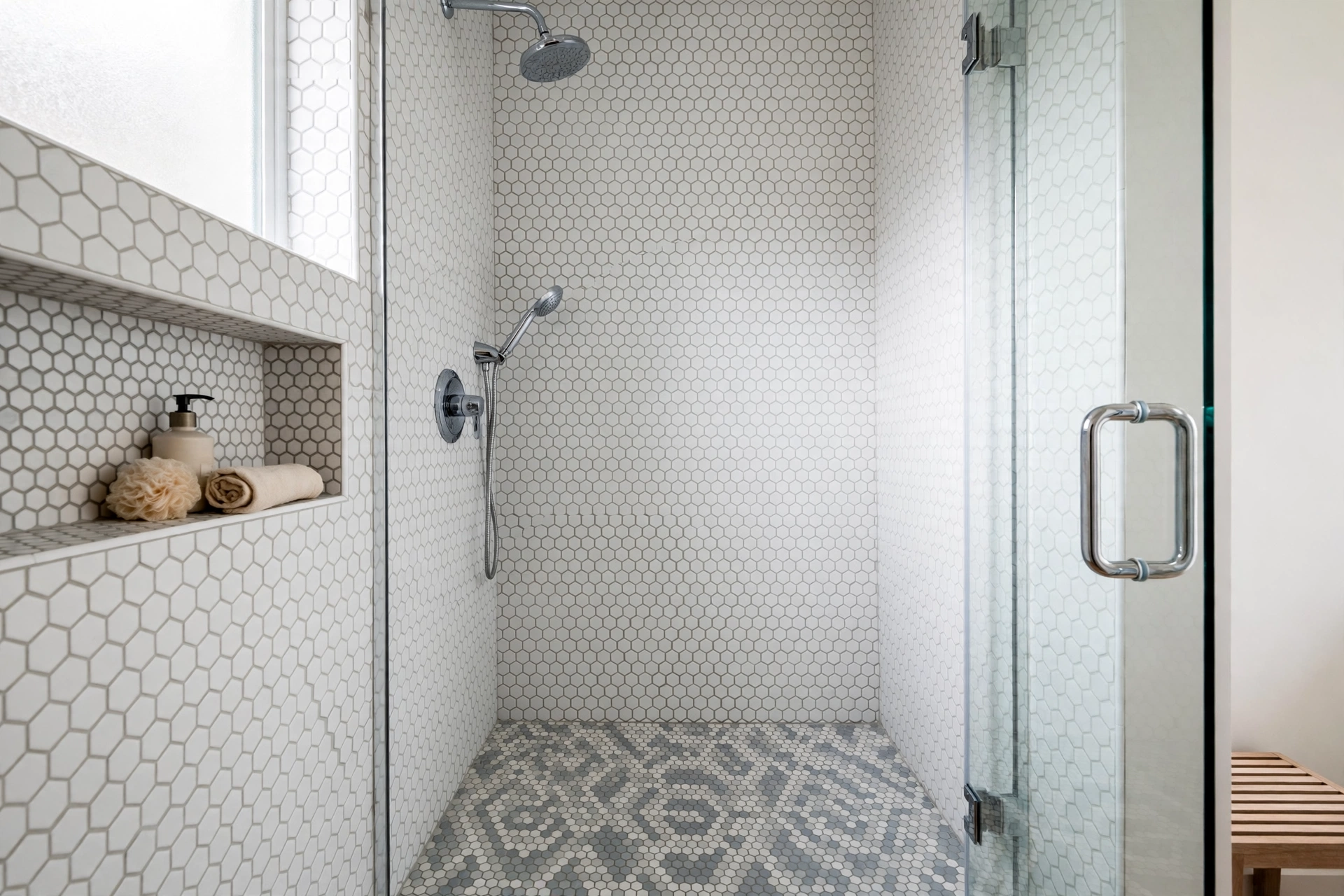
Hexagonal tiles add geometric interest through their honeycomb shape without taking over a small shower. Smaller-scale hexagons suit the shower floor, where their many grout lines also add grip, while a larger hexagon on the walls keeps the same shape language at a calmer scale. One color keeps the honeycomb calm; mixing colors is the louder version, best kept to a single wall.
21. Penny Round Mosaic Floors
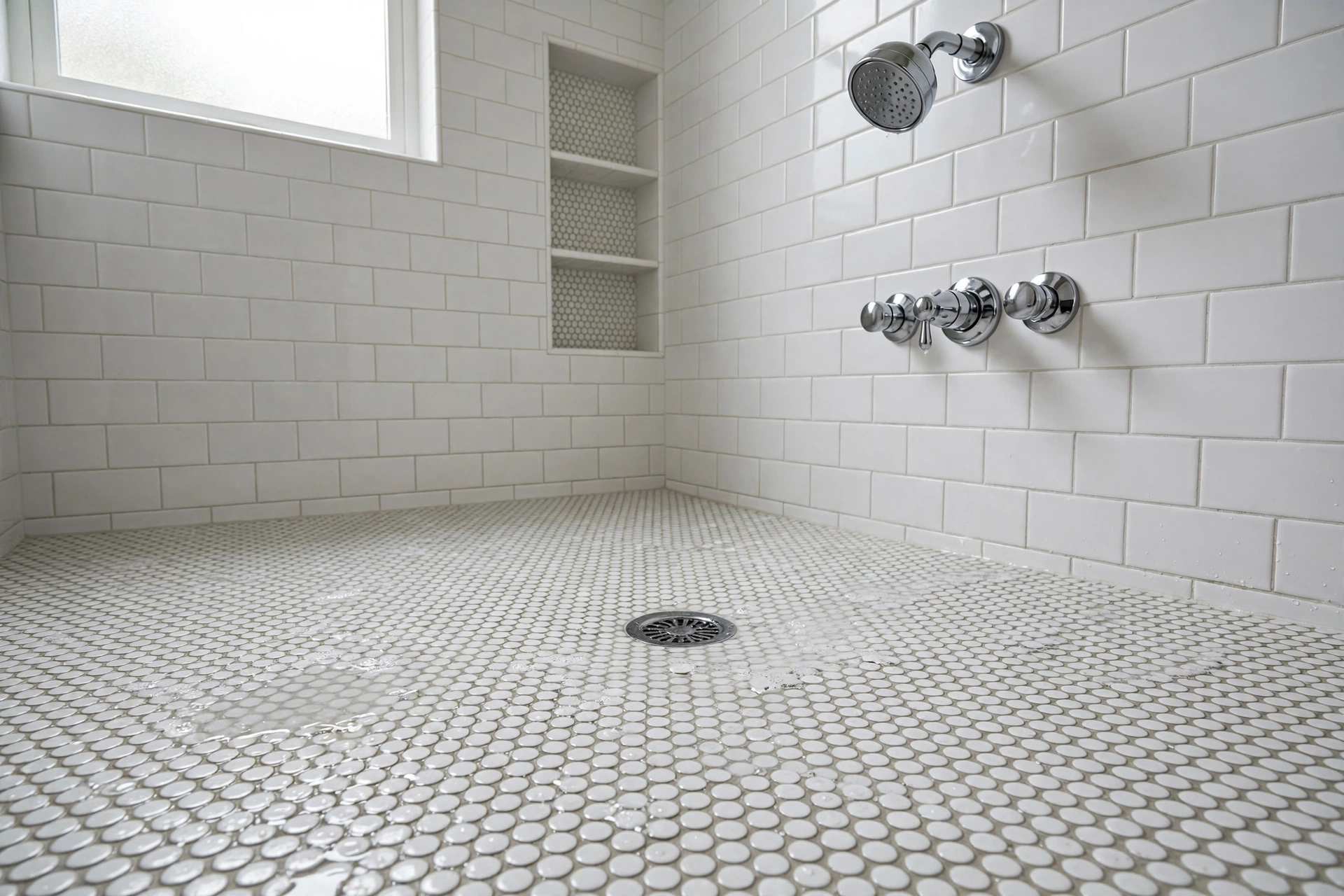
Penny round mosaics bring charm and practicality to a small shower floor at the same time. The small, rounded pieces conform easily to the slope of a shower pan, and their many grout lines mean more traction underfoot than a large tile could offer. White penny rounds with light gray grout keep the floor bright, and because the pattern lives on the floor, the walls can stay completely plain.
22. A Statement Tile, Just in the Niche
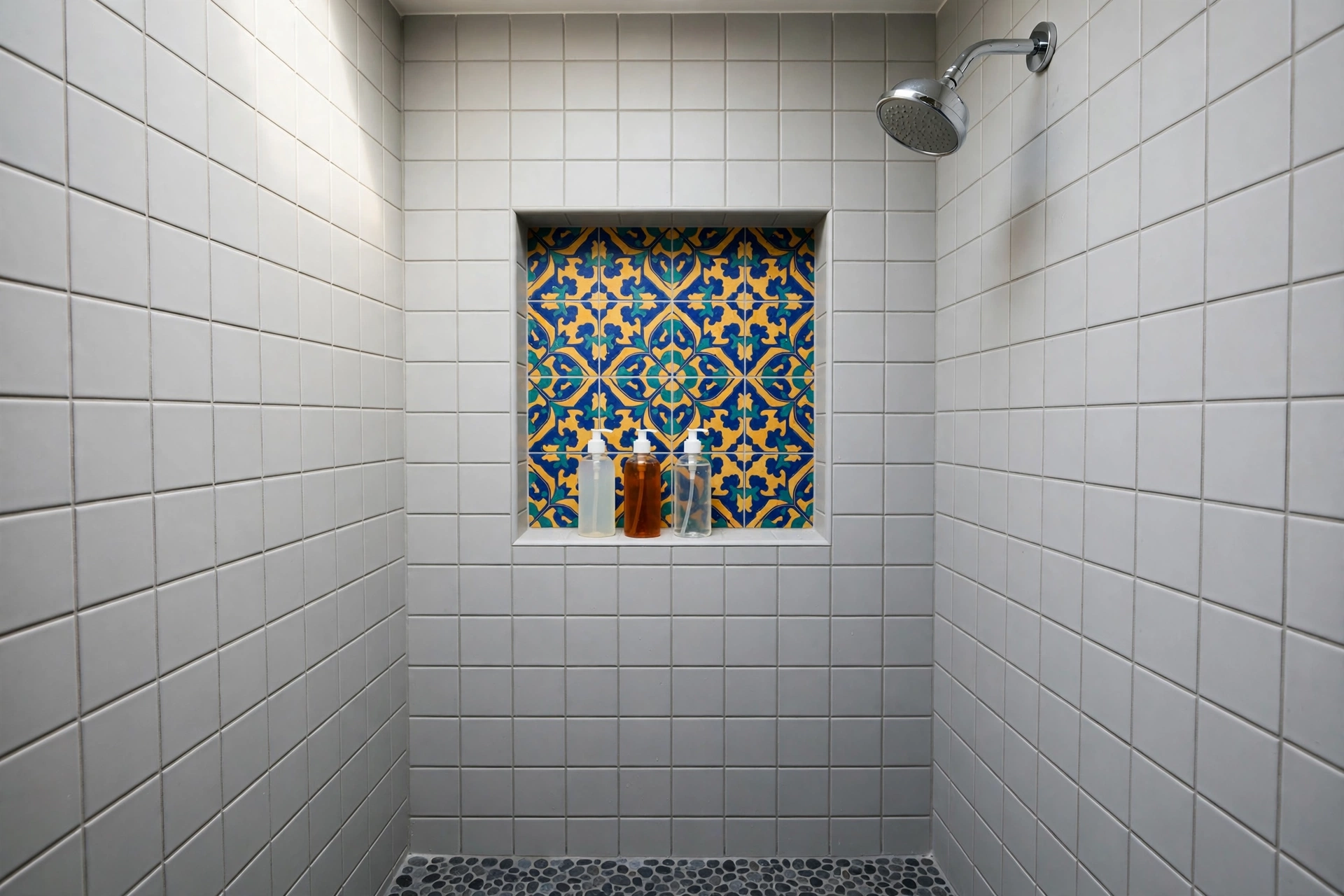
If you love a bold pattern but worry about scale, put the statement tile inside the shower niche and pair it with a subtle, neutral field tile everywhere else. The niche becomes a framed moment of pattern that draws the eye without shrinking the room, and the plain field tile keeps the shower calm around it. A niche is also the built-in alternative to hanging storage: if a remodel is not on the cards, a shower caddy gives you the same reachable storage without any tiling work.
23. Wall-to-Wall Niche
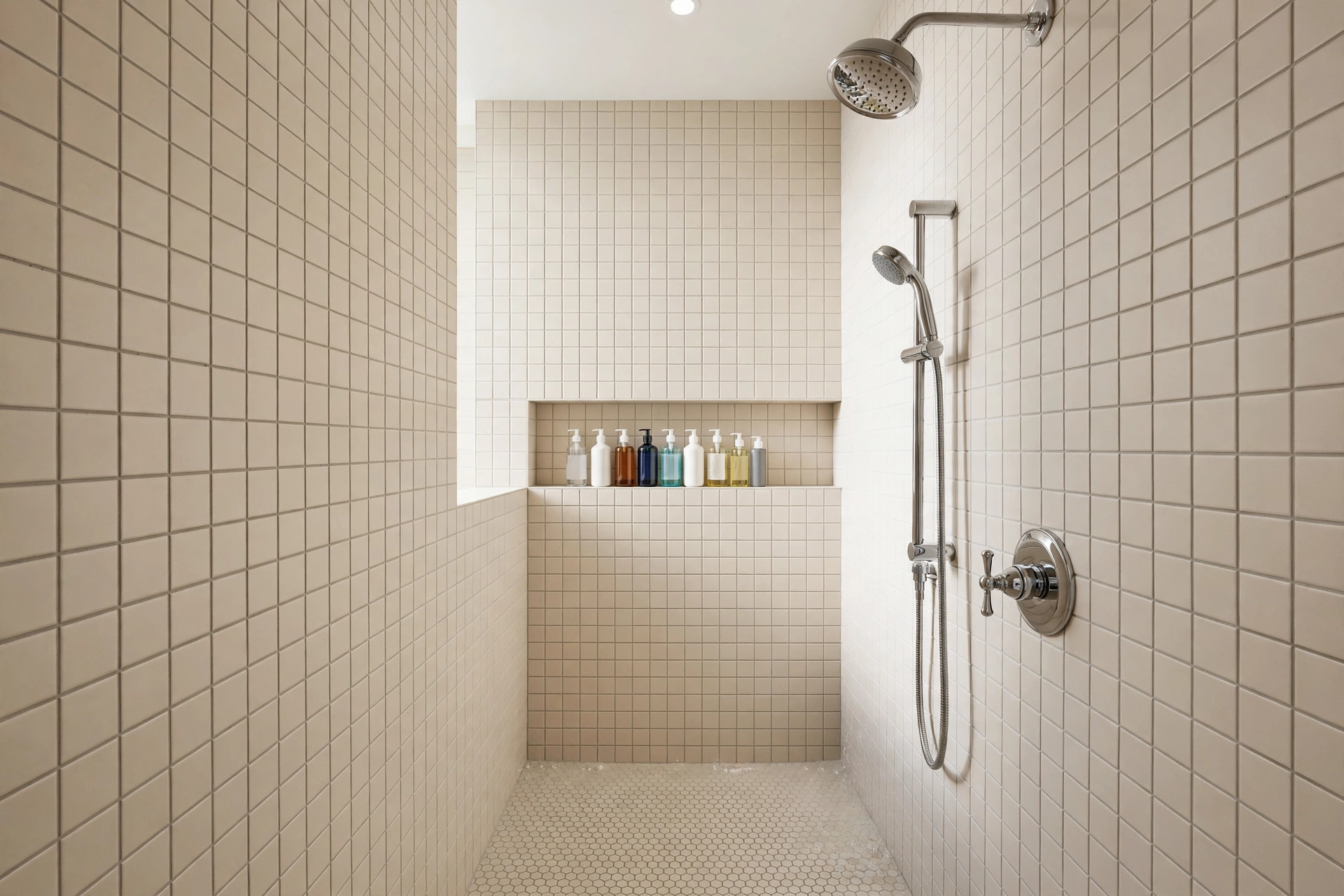
In a narrow shower, a niche that runs wall to wall on the far wall makes the space feel wider, because the long horizontal recess stretches the eye across the room instead of up it. Both small and larger rectangular wall tiles laid horizontally suit this niche, and the horizontal line is doing the same widening work as a horizontal subway layout. This is the built-in cousin of the tile corner shelves in our corner floating shelf ideas, except the storage sits inside the wall rather than on it.
24. Bold Floor, Simple Walls
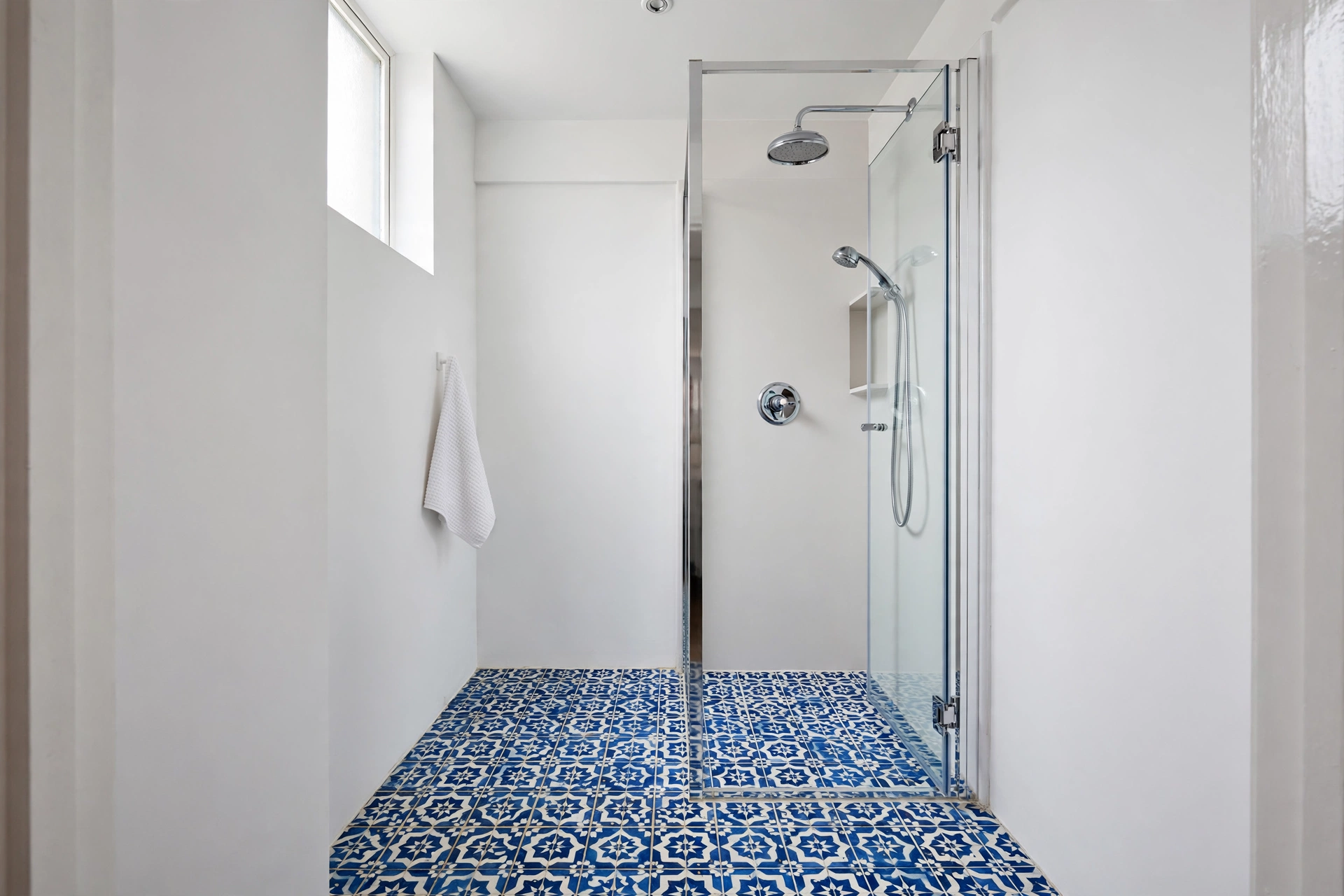
Want drama without shrinking the room? Put the pattern on the floor. Keep the shower walls simple, light, and sleek, then use a fun patterned encaustic tile for the shower pan. The floor carries all the personality while the walls stay out of the way, so the small shower keeps its sense of height and openness and still has a clear focal point underfoot.
25. Scallop (Fish-Scale) Tiles
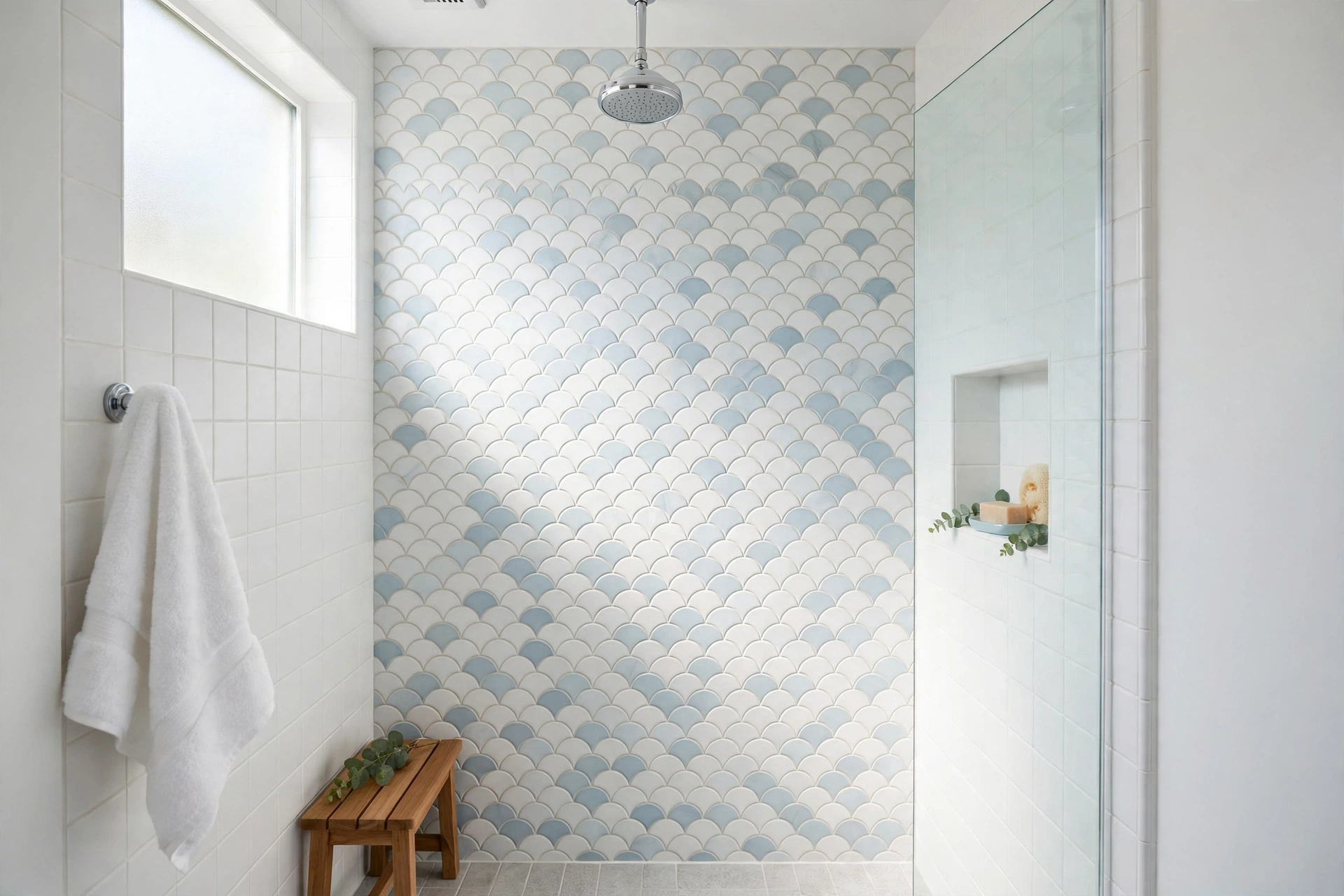
Scallop tiles let the tile shape do the talking: overlapping curves create a gentle, rhythmic pattern that reads as decoration even in a single color. Used as one accent wall in soft white and pale blue, scallops add movement to a small shower without the hard geometry of hexagons or herringbone. Keep the surrounding tiles plain and the grout light, so the curves stay the one detail the eye follows.
Whichever of these tile shower ideas for small bathrooms you pick, the through-line is the same: fewer visual stops, more light, and pattern kept to one confident place. Start with the layout and grout decisions, since those cost nothing extra beyond the tile itself, then add color or pattern on top of that calm base. For more bathroom tile and decor inspiration, browse our Bathroom Decor ideas.