Regular Command hooks do not work in the shower — their strips are not waterproof, so steam and water break the adhesive seal and the hook falls. Command Bath hooks do work, because their strips are water-resistant and made for wet, hot and humid conditions. The catch is installation: clean with rubbing alcohol, press firmly, and wait a full 24 hours before hanging anything.
That short answer hides the detail that decides whether a hook stays up for months or lands in the tub by morning. The difference is not the hook itself — it is the strip behind it, the surface it sticks to, and the 24 hours most people skip. This guide covers the exact difference between regular and Bath strips, which hooks belong in the shower, the install steps that actually hold, and the mistakes that bring even the right hook down. If suction cups have already let you down, our guide on why suction cup hooks keep falling off explains the other half of the story.
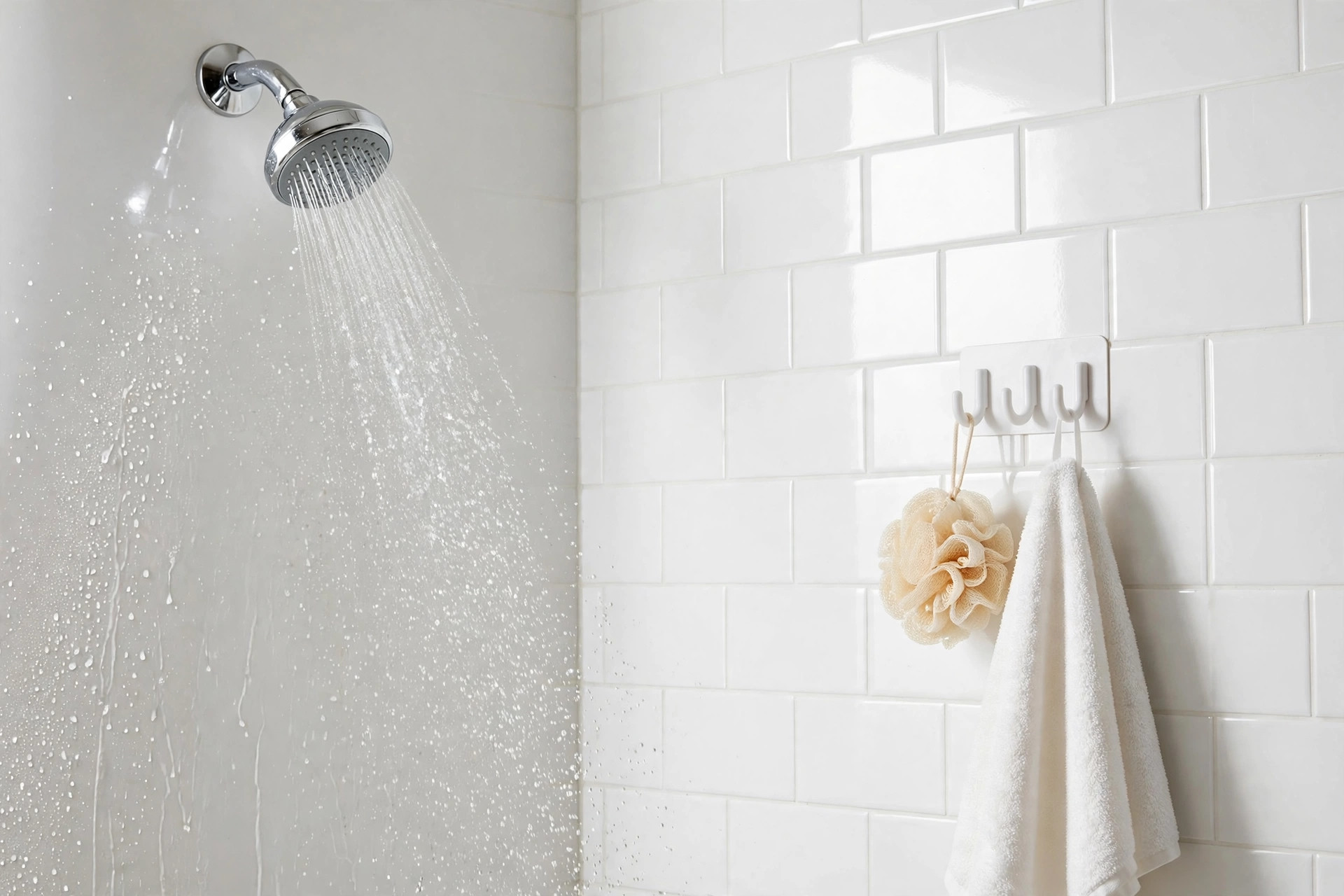
Why Regular Command Strips Fail in the Shower
Regular Command strips use a synthetic rubber resin adhesive. It is strong and long-lasting on a dry bedroom or living-room wall, but it is not waterproof. In a shower, the strip faces two things it was never designed for: constant humidity and direct contact with water. Moisture works its way under the edges of the strip, the seal weakens, and the bond lets go — often suddenly, and often in the middle of the night.
3M is direct about this: the company does not recommend regular strips near the shower, and its product pages point buyers toward the bathroom-specific range instead. Even a hook that never gets splashed directly is at risk, because steam alone is enough to compromise the adhesive over time. A strip that survives a week in a steamy bathroom is not proof it will survive a month — the breakdown is gradual, and the failure looks sudden only because the last bit of grip gives way all at once.
The same logic applies to any adhesive hook that was designed for dry rooms. The adhesive chemistry is the deciding factor, not the size of the hook or how firmly it was pressed on. That is why the fix is not a bigger regular hook — it is a different strip. For a wider look at how adhesive mounting compares with screws, see our adhesive hooks vs screw-in hooks comparison.
What Makes Command Bath Hooks Different
Command Bath hooks look almost identical to regular Command hooks, but the strip behind them is a different product: a water-resistant adhesive strip made for humid environments. 3M states that Bath strips are tested and proven to hold better than suction cups in wet, hot and humid conditions, and that Bath hooks can be used both inside and outside the shower. The hooks themselves are also built for the bathroom — the plastic Bath hooks and caddies are top-rack dishwasher safe, which tells you how much water exposure they are designed to tolerate.
The range sticks to the surfaces most showers are made of: glass, mirror, tile, fiberglass, wood and painted surfaces. That covers a glass shower door, a tiled wall, a fiberglass surround and a painted bathroom wall. What it does not cover is every surface — textured and porous materials weaken the bond, and that limit matters more in a shower than anywhere else, because a weak bond plus daily steam is a short road to the floor. Browse more step-by-step help in our How-To Guides archive.
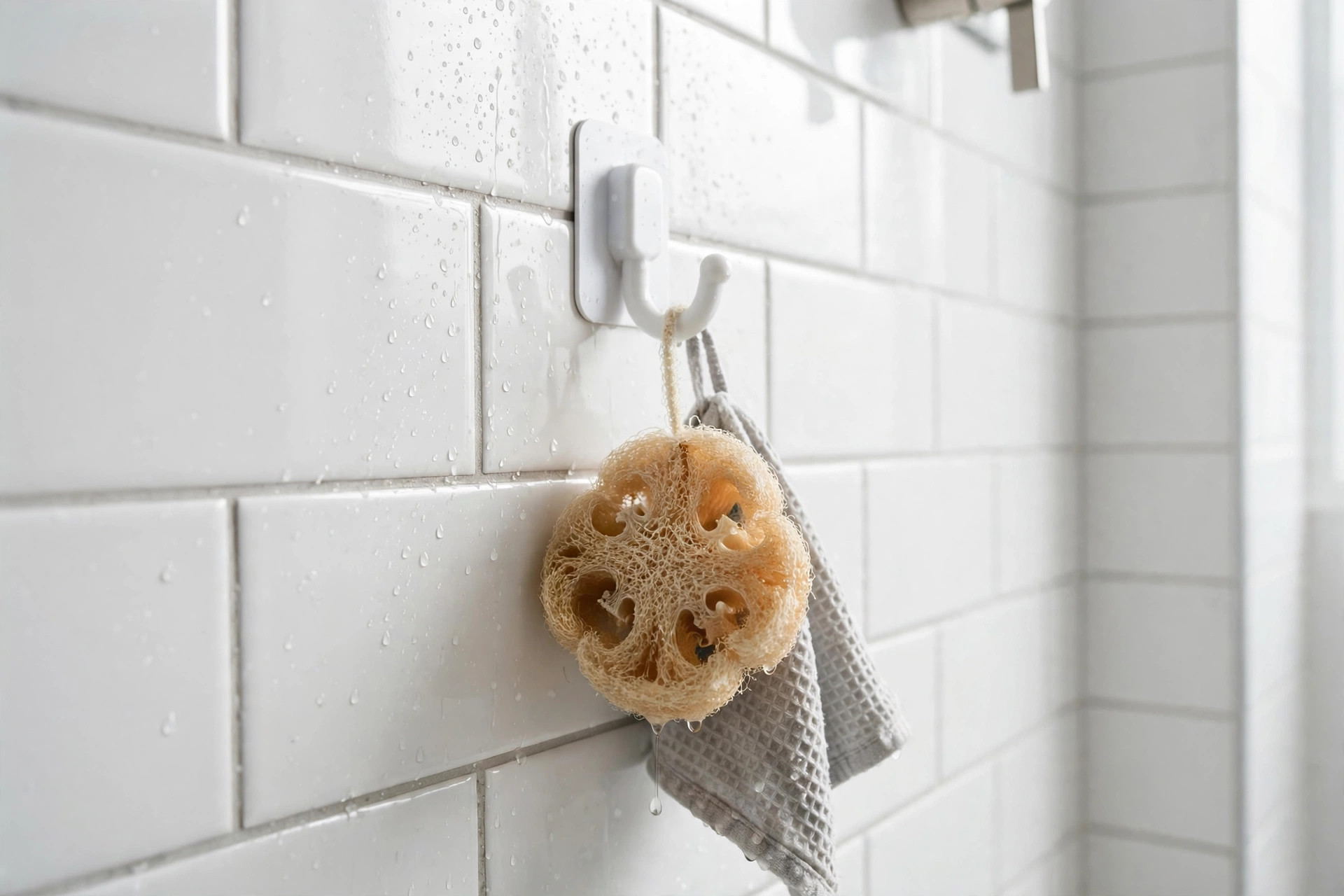
One limit deserves emphasis: water-resistant is not waterproof, and it is not an invitation to park a hook under a running showerhead. Bath strips are built for humidity, splashes and steam — not for constant direct flowing water or submersion. A hook placed where the spray hits it all shower long is being asked to do something no adhesive strip is rated for, and it will eventually lose.
Which Command Bath Hooks Belong in the Shower
The Bath range includes small, medium and large hooks, double hooks and bath caddies, all using the same water-resistant strips. The choice comes down to what the hook has to hold, and how heavy that item is when wet — a soaked bath towel weighs far more than a dry one, and a full shower caddy weighs more than the bottles look like they should.
The strongest single hook in the range that we can verify is the Command Large Double Bath Hook, which holds up to 4 lb and works well for a bath towel or robe. Its double-hook design also spreads the load across two hanging points instead of one. For lighter items — a loofah, a washcloth, a razor — a small or medium Bath hook is enough, and there is no benefit in oversizing: a hook that is too large for its spot is harder to place flat on a single tile. You can browse the Command Bath range on Amazon to match a size to the item you want to hang.
For anything heavier than a towel, or for a caddy loaded with full-size bottles, the honest answer is to use two hooks or a screw-mounted option instead of trusting one adhesive strip. Weight capacity is also lower in humid conditions than in dry ones, so a hook rated for a given weight on a dry wall should be treated as having less margin in a shower. If you need hooks for towels outside the shower as well, our best adhesive towel hooks for the bathroom roundup covers the strongest options.
How to Install a Command Bath Hook So It Actually Holds
Most Bath hooks that fall did not fail because the product is bad — they failed because one of these steps was skipped. The full sequence takes about five minutes of work plus a day of waiting, and the waiting is the part that matters most.
1. Pick the spot first — and keep it out of the spray
Choose a smooth, flat tile with no grout line running under the strip, on a wall the shower spray does not hit directly. A side wall or the wall opposite the showerhead is ideal. Hold the hook in place and check that the whole strip will sit on one flat tile — if a grout line crosses it, move the hook.
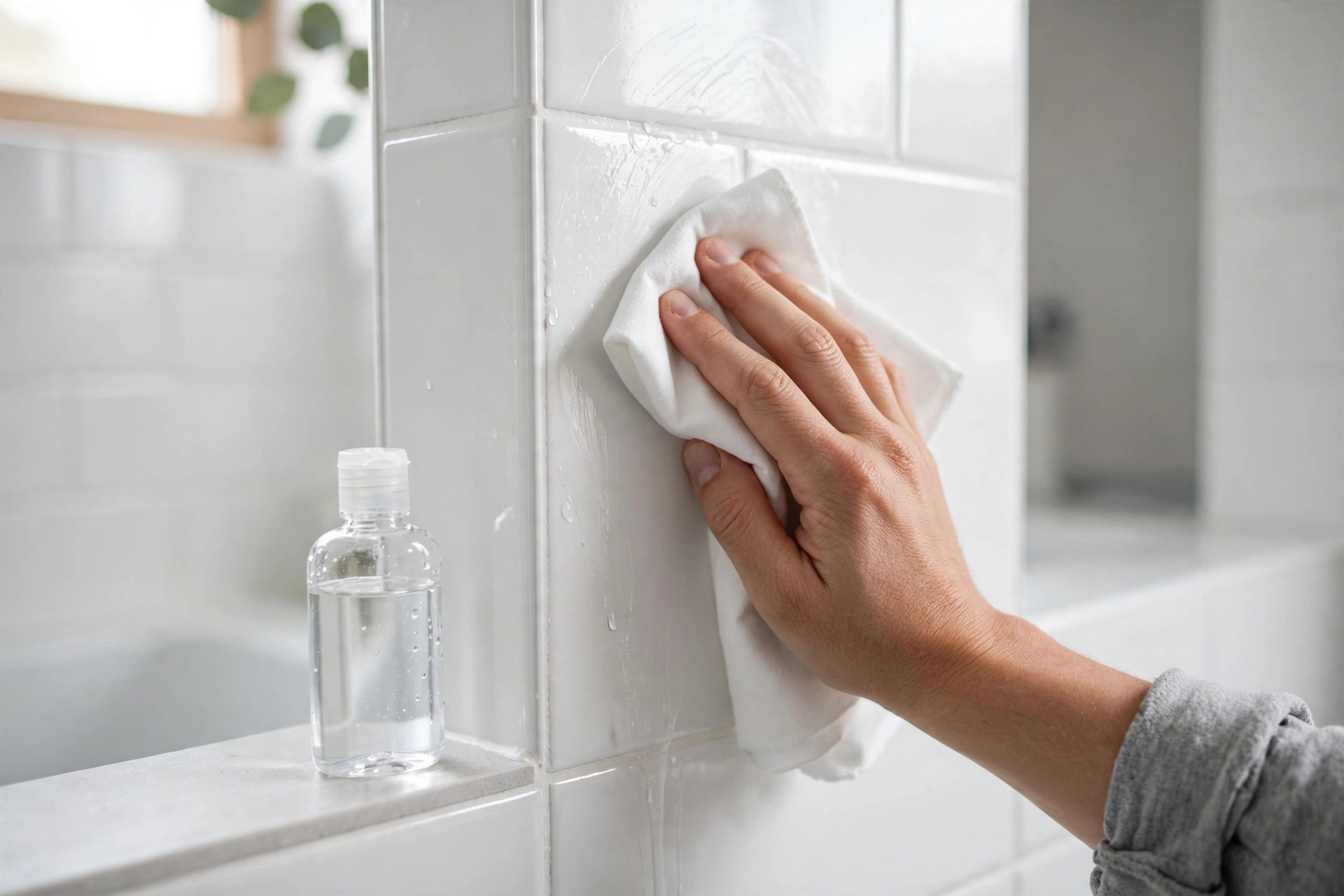
2. Clean with isopropyl rubbing alcohol only
Wipe the tile with isopropyl rubbing alcohol and a clean cloth, then let it air-dry fully. Do not use household cleaners or soapy water: they leave a residue that stops the adhesive bonding properly, and that residue is the single most common reason a well-placed hook falls. Do not use the shower until the tile is completely dry.
3. Apply the strip, then press for 30 seconds
Attach the water-resistant strip to the mounting base, press the base firmly onto the tile, and hold it with steady pressure for 30 seconds. Then slide the hook onto the base. Do not test the hold by tugging it — a fresh bond is at its weakest in the first minutes, and pulling on it can break the seal before it forms.
4. Wait a full 24 hours before hanging anything
Leave the hook empty and the shower unused for 24 hours. The adhesive needs that time to cure and reach full strength, and exposing it to steam or water during the cure weakens the bond permanently — it does not recover later. If you cannot keep the shower dry for a day, install the hook after your last shower of the day and let it cure overnight and through the next day. Placement matters just as much for anything hanging in the shower: our guide on how to keep a shower caddy from falling down covers the same placement logic for heavier loads.
Which Shower Surfaces Hold — and Which Don’t
The strip can only grip what it can fully touch. A smooth, non-porous surface gives the adhesive its full contact area; anything textured, porous or uneven takes that area away. Use this as the check before you stick anything up.
| Surface | Will a Bath strip hold? | Notes |
| Smooth glazed tile | Yes — best option | Keep the whole strip on one flat tile, away from grout lines |
| Glass shower door | Yes | Clean with rubbing alcohol first; avoid the door edge |
| Mirror | Yes | Works well outside the direct spray |
| Fiberglass surround | Yes | Use only on a smooth, flat section |
| Painted wall | Yes | Paint must be fully cured and firmly bonded |
| Unfinished grout lines | No | Porous grout breaks the seal — never place a strip across a grout line |
| Textured or stone tile | No | Uneven surface leaves air gaps under the strip |
| Wallpaper | No | Porous surface weakens the bond and the paper can tear on removal |
If your shower walls are textured tile or natural stone, adhesive hooks are the wrong tool — a suction hook on a smooth patch or a screw-mounted hook is the better call. And remember that weight capacity drops in humid conditions, so keep loads well under the rating: our guide to how much weight adhesive hooks can hold explains how ratings change once steam enters the picture.
5 Mistakes That Make Even Bath Strips Fall
1. Using a regular strip in the shower. The most common mistake of all. Regular strips and Bath strips look alike, and the packaging is the only reliable way to tell them apart. Check for the words “Bath” and “water-resistant” before you buy — a regular strip will fail no matter how carefully it is installed.
2. Cleaning with a household cleaner. Soap, bathroom sprays and all-purpose cleaners leave a film on tile that the adhesive cannot bond through. Rubbing alcohol is the only cleaner to use, because it evaporates and leaves nothing behind.
3. Hanging weight before the 24-hour cure. A hook loaded an hour after installation is hanging on a partial bond. Steam from a shower during the cure makes it worse. The hook may hold for a day and then drop without warning.
4. Placing the hook under the showerhead. Bath strips handle humidity and splashes, not a constant stream of running water. A hook in the direct spray line is being soaked every shower, and the seal will give out.
5. Sticking the strip across a grout line or overloading it. A strip that straddles a grout line only grips on part of its area, and a wet towel weighs more than the same towel dry. Both mistakes cut the safety margin at once — and a hook with no margin left is a hook on the floor.
Command Bath vs Suction Cups Inside the Shower
Suction cups are the other no-drill option for the shower, and the comparison is closer than most people expect — but the two fail in different ways. A suction cup needs a perfectly smooth, non-porous surface and a perfect seal; the smallest air leak or a speck of soap scum under the rim breaks the vacuum and the cup drops. A Bath strip, once cured, does not depend on a vacuum at all, which is why 3M states Bath strips are tested and proven to hold better than suction cups in wet, hot and humid conditions.
| Factor | Command Bath hook | Suction cup hook |
| How it holds | Water-resistant adhesive strip | Vacuum seal against the surface |
| Best surfaces | Tile, glass, mirror, fiberglass, painted walls | Only perfectly smooth glass or glazed tile |
| Steam and humidity | Made for wet, hot and humid conditions | Steam can break the vacuum seal |
| Repositioning | Needs a fresh refill strip | Peel off and re-stick, no parts needed |
| Removal | Slides off the base, strip pulls away clean | Peel off, but can leave a ring mark |
| Weak point | Needs a 24-hour cure and a clean surface | Any air leak or soap film under the rim |
The practical rule is simple: if the surface is smooth glass or glazed tile and you want to move the hook often, a good suction cup is fine. If the surface is fiberglass or painted, or the hook will hold something you do not want to find on the floor, a Command Bath hook is the safer choice.
How to Remove a Command Bath Hook From Tile Without Damage
Removal is where Bath hooks earn their damage-free claim — provided it is done the right way. Pulling the hook straight off the wall is the one move that can damage tile glaze or paint, so do not do it.
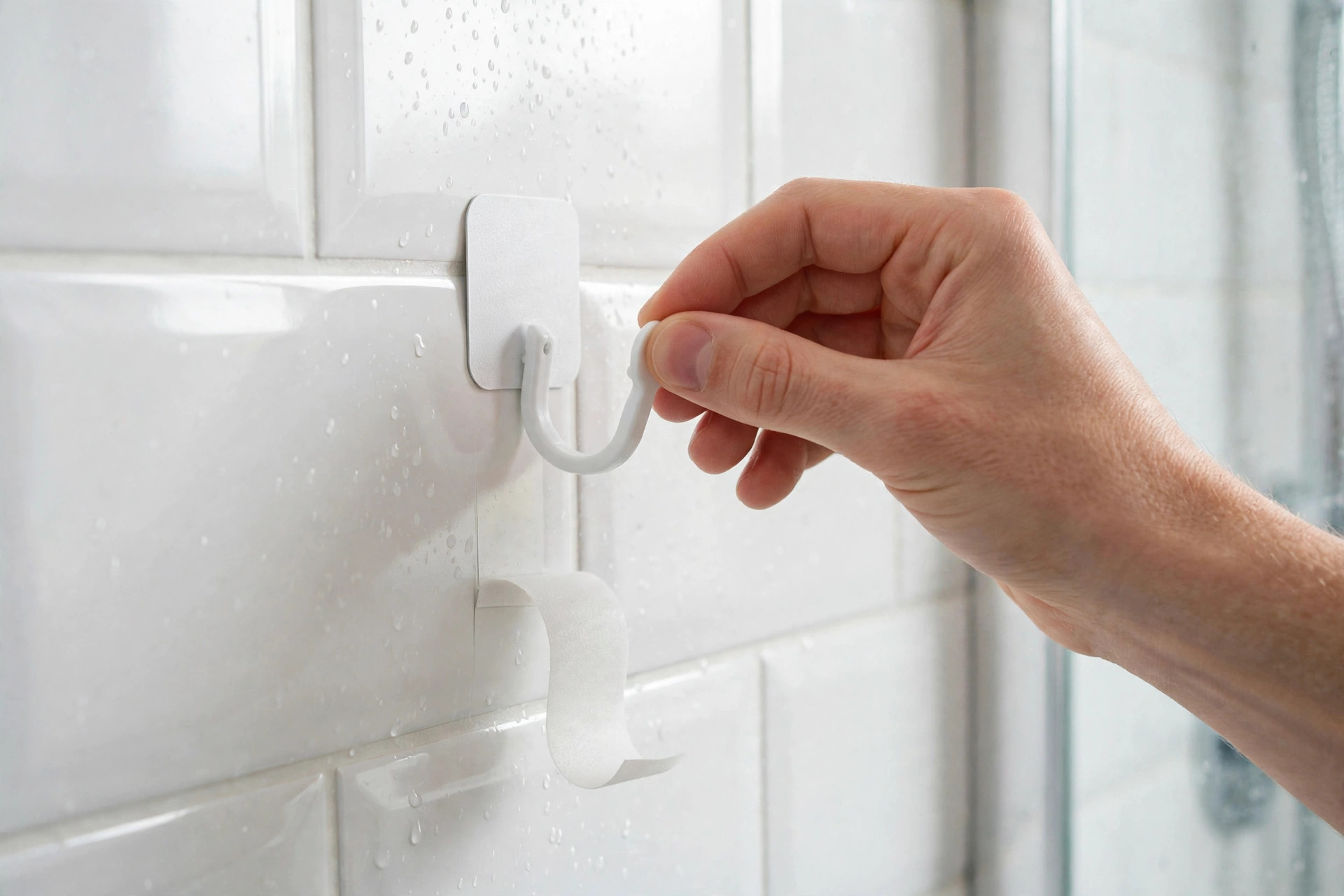
First, slide the hook up and off its mounting base — the base and strip stay on the wall. Then grip the strip tab at the bottom and pull it slowly straight down along the wall, stretching the strip as you go, until it releases. Keep the pull slow and close to the wall the whole way; a slow stretch lets the adhesive release cleanly with no holes and no sticky residue. If the tab snaps, the remaining strip can be rolled off gently with a fingertip — never scrape it off with a blade on tile glaze. The full removal steps are covered in our guide on how to remove an adhesive hook from a wall.
Conclusion
So, do Command hooks work in the shower? Regular Command hooks do not — their adhesive is not waterproof, and steam and water will break the seal. Command Bath hooks do, because their water-resistant strips are made for wet, hot and humid conditions and are tested to hold better than suction cups there. The difference between a hook that lasts and a hook that falls is the install: a smooth tile with no grout line under the strip, a clean wipe with rubbing alcohol, a firm 30-second press, a spot out of the direct spray, and a full 24 hours before anything gets hung on it. Get those five things right, and a Bath hook is one of the simplest no-drill upgrades a shower can have.