Tired of wet towels landing on the floor? Frustrated by hooks that either require drilling into your expensive tiles or fall off the wall at 2am with a loud crash?
You’re not the only one. As a carpenter with over 12 years of bathroom renovation experience, I’ve heard this complaint more times than I can count — especially from renters and apartment dwellers who simply cannot put holes in their walls. That’s exactly why bathroom suction cup hooks have become one of the most searched bathroom accessories in 2026.
But here’s the honest truth: not all suction cup hooks are created equal. Some hold strong for years. Others fall off the first week. Choosing the wrong one doesn’t just mean a mess on the floor — it can mean a cracked phone, a broken loofah, or a towel soaking in shower water all day.
In this guide, I’ll walk you through everything you need to know before buying: how they work, what makes a good one, which surfaces they actually stick to, common mistakes people make, and my top recommendations based on real product research and customer feedback.
Let’s dig in.
Some links in this review are affiliate links. If you buy through them, we may earn a small commission at no extra cost to you — this helps us test more products, update reviews, and bring you better buying guides
What Are Bathroom Suction Cup Hooks and How Do They Work?
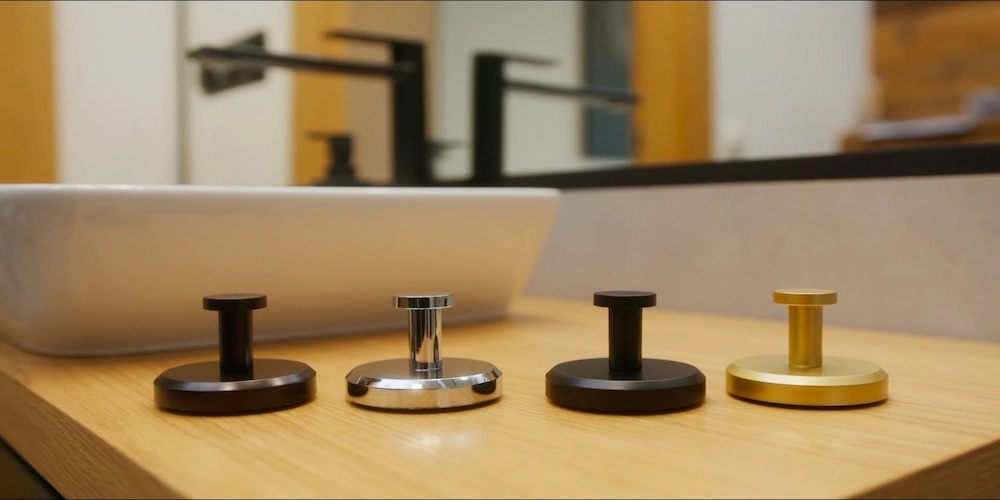
A bathroom suction cup hook is exactly what it sounds like — a hook attached to a flexible rubber or silicone cup that grips smooth surfaces by creating a vacuum seal. When you press the cup against a surface and lock it in place, the air between the cup and the wall is pushed out. That absence of air creates a negative pressure zone — and that’s what holds the hook in place without a single nail or screw.
Modern versions go a step further. Most quality suction cup hooks you’ll find in 2026 now feature twist-lock or button-press vacuum mechanisms, which manually pump out more air than simple pressing alone. This creates a much stronger, longer-lasting seal compared to the cheap clip-on versions you may have tried years ago.
The result? A hook that can hold 10 to 15 lbs when installed correctly — enough for a thick bath towel, a robe, or several small shower accessories.
Who Should Use Bathroom Suction Cup Hooks?
These hooks are genuinely a great solution in several situations:
- Renters who aren’t allowed to drill into walls or tiles
- Apartment dwellers with ceramic tile, glass shower walls, or acrylic shower panels
- Homeowners who want a temporary or flexible hanging solution
- Anyone who shares a bathroom and needs more hooks quickly
- People who want to keep their shower glass doors organized without permanent fixtures
- Those who like to rearrange their bathroom storage from time to time
If you own your home, have drywall or textured walls, and want something truly permanent — a wall-mounted hook with screws will always outperform a suction cup. But for the right environment and use case, suction cup hooks are a smart, budget-friendly solution.
The Key Things I Look for When Choosing a Suction Cup Hook
After reviewing dozens of options and hearing feedback from clients, here’s what actually separates a good bathroom suction cup hook from a disappointing one:
1. The Locking Mechanism
This is the single biggest factor. Cheap hooks just press on. Premium ones use a twist-to-lock or lever-press vacuum seal that pulls out significantly more air, creating a much tighter grip. Brands like SOCORIA and HOME SO have built their reputation around this exact technology.
If a hook doesn’t have any kind of locking system — skip it.
2. The Suction Cup Material
The cup itself should be high-grade silicone or TPE (thermoplastic elastomer) — not hard plastic. Silicone stays flexible in humid environments, molds better to micro-imperfections on your tile or glass surface, and maintains its elasticity over time. Hard plastic cups lose their shape, curl at the edges, and lose suction within weeks.
3. The Hook Body Material
Look for stainless steel or ABS plastic with a stainless coating. Bathrooms are humid by nature — cheap zinc alloy hooks rust within months. Stainless steel hooks, especially those with brushed silver, matte black, or brushed gold finishes, resist corrosion even in steamy shower environments.
4. Weight Capacity
Most quality bathroom suction cup hooks are lab-tested to hold 10 to 15 lbs. That’s more than enough for a bath towel or a robe. If you plan to hang heavier items like a fully loaded shower caddy, look for heavy-duty models or use two hooks instead of one.
5. Size of the Suction Cup
Bigger cups = stronger hold. A cup with a diameter of 3 inches or more gives you a much larger surface area for the vacuum to grip. For heavy items or glass shower doors, always go for the larger cup size.
Best Surfaces for Bathroom Suction Cup Hooks
This is where a lot of people go wrong — and where I see the most frustration. Suction cup hooks only work on specific surfaces. Using them on the wrong surface is the number one reason they fall.
✅ Surfaces They Work On:
- Ceramic tile (glazed and smooth)
- Glass — shower doors, mirrors, windows
- Polished stone — marble, quartz (if very smooth)
- Acrylic shower panels
- Smooth stainless steel
- Porcelain
❌ Surfaces They Will NOT Work On:
- Painted drywall or plaster walls
- Textured or matte tiles
- Rough, porous stone
- Wallpapered surfaces
- Unfinished wood
- Any surface with grout lines (the cup must sit flat)
If your bathroom walls are painted drywall or have textured tiles, a suction cup hook simply cannot form a vacuum seal — it will fall. In that case, adhesive hooks like 3M Command strips are a better choice. I’ll cover the comparison between the two later in this guide.
How to Install Bathroom Suction Cup Hooks Correctly
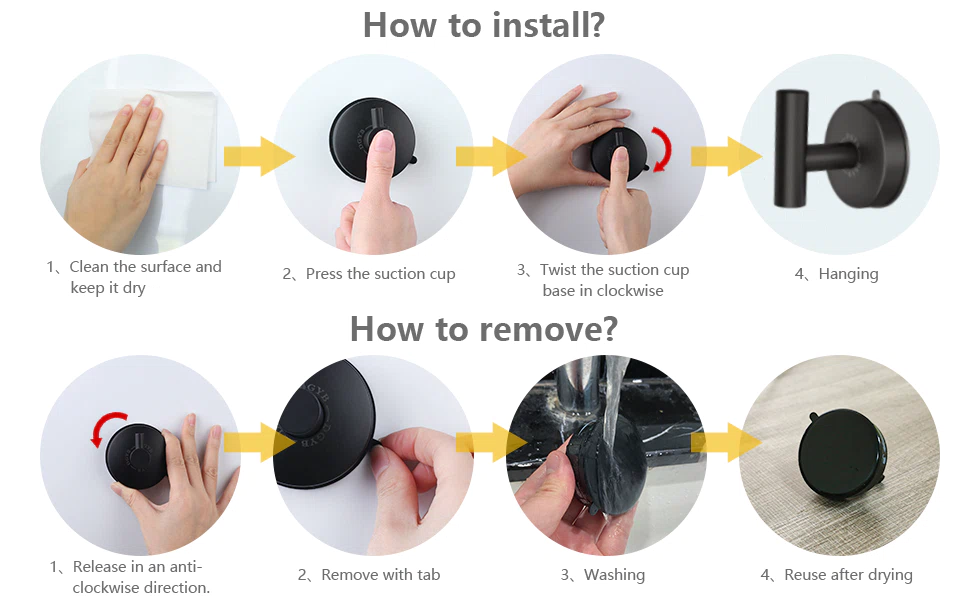
Most suction cups fail because of poor installation, not because the product is bad. Here’s the method I always recommend to my clients & the one that gets the best results:
Step-by-Step Installation
- Clean the surface thoroughly. Use rubbing alcohol (isopropyl alcohol) and a clean cloth. Remove all soap scum, moisture, and oils. This is the most important step. Even a thin film of soap residue will prevent a proper seal.
- Dry the surface completely. Wait a few minutes after cleaning before placing the hook. A damp surface feels smooth but actually prevents a tight vacuum.
- Wet the inside of the suction cup slightly. Just a tiny bit of water on the rubber cup creates an initial micro-seal that helps it grip while the vacuum forms. Too much water defeats the purpose — just a faint dampening.
- Press firmly and activate the lock. Place the cup squarely on the surface, press hard from the center outward, then engage the twist-lock or lever mechanism.
- Wait 24 hours before hanging anything. This is where most people fail. The vacuum needs time to fully settle. Hanging a heavy towel on the first day almost guarantees failure.
- Hang lighter items first. Start with a washcloth before going straight to a thick bath robe. This lets you test the hold before trusting it with heavier loads.
Advantages of Bathroom Suction Cup Hooks
Let me be honest about what these hooks do well, because I think it’s important to give you a balanced picture rather than just telling you they’re perfect.
No drilling required. The most obvious advantage — you get a hook up in under a minute with zero tools, zero damage to tiles or walls. For renters, this alone makes them worth considering.
Completely removable and repositionable. Changed your mind about placement? Just twist the lock, pull the cup off, and move it. No residue, no holes, no repair work. Try doing that with a wall-mounted hook.
Renter-friendly. You keep your security deposit. That’s a real, practical benefit that thousands of apartment dwellers genuinely care about.
Budget-friendly. A pack of two to four quality suction cup hooks typically runs between $8 and $25. That’s a fraction of what you’d spend on installed bathroom hooks.
Highly reusable. Good silicone suction cups can be detached, cleaned, and reinstalled hundreds of times. Unlike adhesive hooks where the sticky pad is a one-time use, suction cups are a long-term investment.
Works on glass shower doors. This is something wall-mounted hooks can’t touch. If you have a frameless glass shower enclosure, suction cup hooks are often your only no-damage option for keeping towels or accessories within reach.
Disadvantages of Bathroom Suction Cup Hooks (Being Honest Here)
I wouldn’t be giving you real expert advice if I didn’t talk about the downsides. These hooks aren’t magic, and they do have real limitations.
Surface dependency. If your walls aren’t smooth and non-porous, these simply won’t work. Period. No amount of pressing harder or cleaning more will make a suction cup hold on a textured wall.
Steam and humidity can weaken the seal over time. Long hot showers create steam that gradually works its way into the vacuum seal. Even the best suction cup hooks may need to be re-sealed every few weeks in heavy-use showers. It’s a minor maintenance task — but it’s real.
Weight limits are genuine. A bathroom suction cup hook is not designed for heavy loads. Heavy wet towels stacked together, or a fully loaded shower caddy, will exceed most hooks’ capacity. Respect the weight limit listed on the packaging.
The unexpected crash. We’ve all been there — 2am, the hook finally gives up and the whole thing clatters onto the floor. This usually happens when the seal was never set properly in the first place, or the surface had invisible soap residue. Follow the installation steps correctly and this risk drops dramatically.
Bathroom Suction Cup Hooks vs. Adhesive Hooks — Which Is Better?
This is one of the most common questions I get, so let me give you a straight answer.
| Feature | Suction Cup Hooks | Adhesive Hooks |
| Installation | Instant, no tools | Peel and stick, 1 hour cure time |
| Removal | No residue, fully reusable | Can damage paint, single-use pad |
| Surface types | Smooth tile, glass, mirror only | Wider range including some painted walls |
| Hold strength | 10-15 lbs on right surface | 10-30 lbs depending on adhesive type |
| Steam resistance | Weakens gradually in humid areas | Not affected by air pressure |
| Best for | Renters, glass shower doors, temp use | Long-term installations on compatible walls |
| Repositionable | Yes, easily | No, typically damages surface when removed |
My honest take: If you’re using these on a glass shower door or smooth tile and you need to move them occasionally — go with suction cup hooks. If you want something that you set once and forget for years, and your surface is compatible with adhesive. A good adhesive hook, like 3M Command, will outlast a suction cup in a steam-heavy environment.
The best bathrooms often use both — suction cup hooks on glass shower doors and adhesive hooks on dry tile walls outside the shower zone.
Top Types of Bathroom Suction Cup Hooks You’ll Find in 2026
Single Suction Cup Hooks (2-Pack)
The most common format. Two hooks per pack, ideal for glass shower doors, mirror hangers, or adding a quick hook beside the sink. Look for twist-lock models with stainless steel hooks. Popular for hanging loofahs, razors, washcloths, and small hand towels.
Best for: Minimalist setups, glass shower doors, renters wanting a quick solution.

Bntuk Suction Cup Hooks for Shower
Powerful suction cup hooks with VacuumLock Pro technology – no drilling or screws needed! Hold up to 15 lbs, rustproof stainless steel, super sticky silicone base. Perfect for showers, mirrors, tiles, glass doors, robes, towels, loofahs, wreaths & RV storage.
Check Price on AmazonHeavy-Duty Suction Cup Hooks with Dual Lock
These feature a larger cup diameter (3 inches or more) combined with a two-point locking system. Built for heavier loads — bath robes, thick towels, shower caddies. Usually sold in packs of two to four and priced slightly higher than standard versions.
Best for: Heavy bath towels, robes, family bathrooms, shower walls.
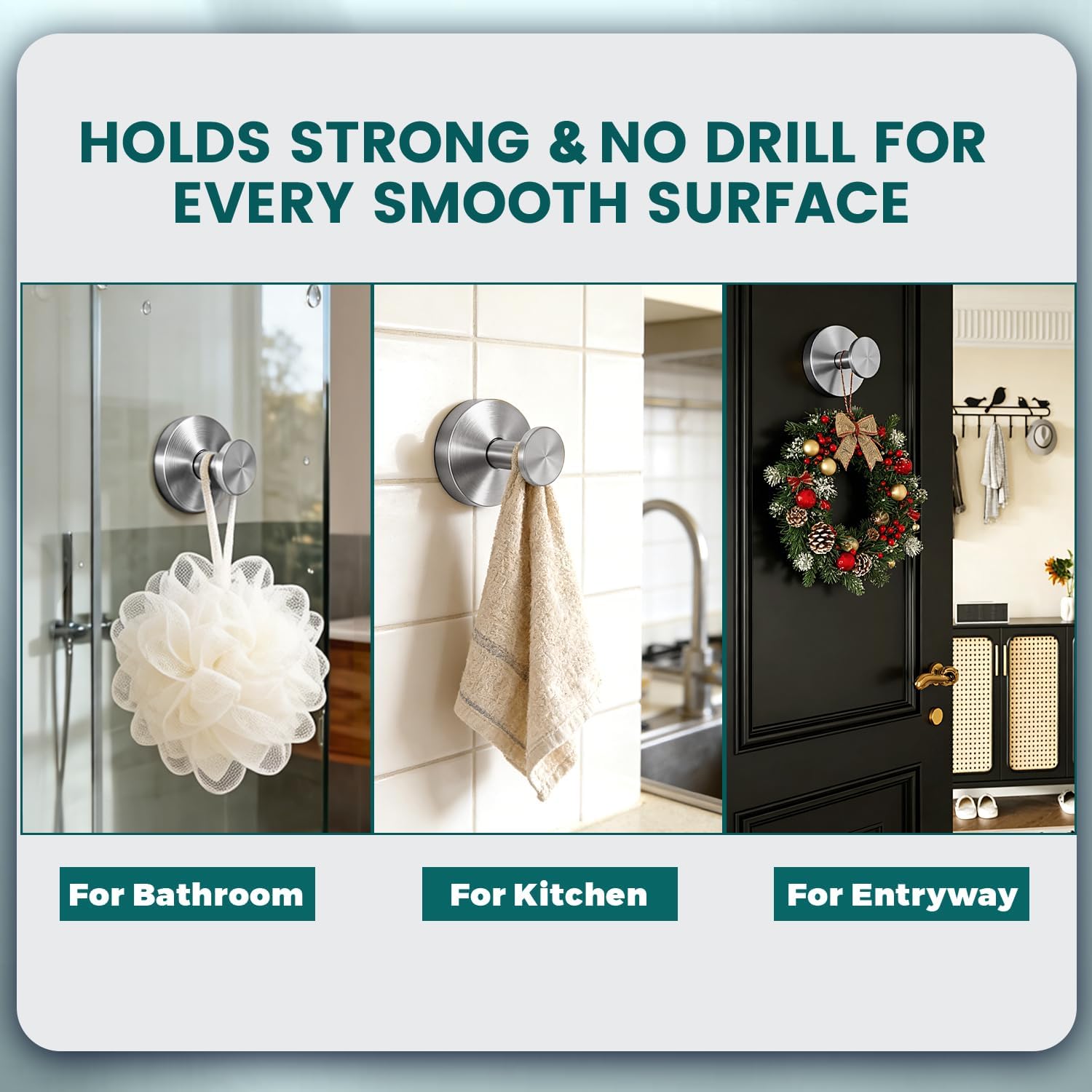
2026 Upgraded Suction Cup Hooks
Strong vacuum suction design built for smooth surfaces like tiles, mirrors, and glass. Perfect for hanging towels, bath accessories, and everyday bathroom organization.
Check Price on AmazonDouble Arm Suction Cup Hooks
One suction cup, two hooks sticking out. You get double the hanging capacity from a single mounting point. Clever design for small bathrooms where wall space is limited but you need to hang multiple items — like a towel and a washcloth simultaneously.
Best for: Small bathrooms, maximizing a single wall location.

Flexible Suction Hook with Dual Moldable Arms
Strong vacuum suction system designed for smooth surfaces like tiles, mirrors, and glass. Perfect for towels, robes, and bathroom organization without drilling or damage.
Check Price on AmazonClear Suction Cup Hooks (12-Pack or Bulk Packs)
Transparent PVC or silicone cups with small stainless hooks. Less heavy-duty but perfect for lighter items. Great for organizing shower accessories, hanging back scratchers, or keeping a loofah off the shower floor. The clear design makes them nearly invisible on tile or glass — a bonus for minimalist bathrooms.
Best for: Lightweight accessories, multiple small items, discreet organization.

KORCCI Clear Suction Cup Hooks 12 Pack
Heavy-duty clear suction hooks – holds up to 10 lb, no drilling, no damage. Perfect for shower, bathroom, kitchen, glass & tiles. Reusable & renter-friendly.
Check Price on AmazonDecorative Suction Cup Hooks (Brushed Gold / Matte Black)
These have evolved significantly. Today’s decorative suction cup hooks come in finishes that genuinely match premium bathroom hardware — brushed gold, matte black, polished chrome, and brushed nickel. They use the same vacuum-lock technology as functional versions but are designed to look like permanent fixtures from a distance.
Best for: Style-conscious homeowners, rental bathrooms that need to look polished.

YOBEYI 5 Pack Decorative Suction Cup Hooks
Strong vacuum-lock design for smooth surfaces like glass, tile, and mirrors. Ideal for towels, robes, and bathroom organization without drilling or damage.
Check Price on AmazonHow to Maintain Bathroom Suction Cup Hooks for Long-Term Hold
Good maintenance extends the life of your suction cup hooks dramatically. Here’s what I tell every client:
Clean the cup and surface monthly. Soap scum and mineral deposits from hard water gradually coat both the suction cup and the tile surface, breaking the seal. A quick wipe with rubbing alcohol every few weeks keeps both surfaces ready for a strong hold.
Re-press and re-lock after any repositioning. If you take a hook off to clean behind it, don’t just stick it back and expect the old seal to hold. Follow the full installation process again — clean, dry, wet the cup slightly, press, lock, wait.
Rejuvenate an old suction cup with hot water. Over time, suction cups can develop a slight curl at the edges, which prevents a flat seal. The fix: submerge the cup in near-boiling water for about 60 seconds. Remove it, shake off the water (don’t touch the cup surface with your hands), then press it firmly onto the clean surface while it’s still warm and flexible. This trick works remarkably well and has saved me from replacing plenty of otherwise good hooks.
Apply a micro-thin layer of silicone grease if needed. A barely-there film of silicone grease on the cup’s rim fills micro-gaps on textured surfaces and extends the life of the seal. This is a tip from scuba diving equipment maintenance — divers use it on their rubber seals. Hardware stores sell it. Important: too much grease is worse than none — you want the thinnest possible film.
Don’t overload. Always stay below the stated weight capacity. Over time, consistent overloading slowly pulls the cup away from the surface even if it doesn’t fall immediately.
My Expert Verdict — Are Bathroom Suction Cup Hooks Worth It?
Yes — with the right expectations and the right surface.
After years of bathroom renovations and seeing hundreds of products come and go, I genuinely believe that quality suction cup hooks with a locking mechanism have earned their place in the bathroom accessory market. They’re not a permanent replacement for wall-mounted hardware, but they’re also not the cheap, fall-off-overnight gimmick they used to be.
The key is buying a hook with a proper vacuum-lock system, installing it correctly on a smooth non-porous surface & maintaining it with a simple monthly clean. Do those three things & a bathroom suction cup hook will serve you reliably for a long time.
They’re especially valuable for renters, for organizing glass shower doors, and for anyone who wants the flexibility to rearrange their bathroom without any permanent commitment. For a $10 to $20 investment, the return in convenience and organization is genuinely worth it.
Quick Buying Checklist Before You Purchase
Before you hit “add to cart,” run through this quick checklist:
- ✅ Does my bathroom surface qualify? (smooth tile, glass, mirror, polished stone)
- ✅ Does the hook have a twist-lock or lever-press vacuum mechanism?
- ✅ Is the suction cup made from silicone or flexible TPE, not hard plastic?
- ✅ Is the hook body stainless steel or ABS — not zinc alloy?
- ✅ Is the weight rating high enough for what I need to hang?
- ✅ Does the pack size match how many locations I need to cover?
- ✅ Does the finish match my existing bathroom hardware?
If you can tick every box above, you’re making a solid buying decision.
Henry Carter is an expert carpenter with over 12 years of hands-on bathroom renovation experience. He reviews and tests bathroom accessories to help homeowners and renters make smarter, more informed choices.